
Refuge
“I take refuge in the Buddha, Dharma, and the supreme Sangha until I reach enlightenment. Through the merit I gain from practicing generosity and other virtues, may I attain enlightenment for the benefit of all sentient beings!”
In Buddhism, taking refuge in the Three Jewels (Buddha, Dharma, and Sangha) is the first step that anyone embarking on the path of Buddhism must take. This act of taking refuge is crucial as it serves as the entry point to the Buddhist path.
Each religion has its own approach to taking refuge, but Buddhism stands out in its understanding of the object and method of refuge. In Buddhism, the object of refuge is seen as inseparable from oneself, and it emphasizes the importance of personal effort rather than blind faith or devotion. It is believed that relying solely on external objects of refuge will not lead to salvation.
A genuine understanding and internalization of the concept of refuge are essential for one to be considered a Buddhist. Fear and belief are said to be the driving forces behind seeking refuge, as one must first recognize their own limitations and seek help from external sources. Fear in this context refers to the fear of suffering in lower realms and the fear of suffering in Samsara. If one has already overcome all fears, there is no need to seek help.
Even if one intends to take refuge in the Three Jewels, without conviction and faith that the objects of refuge can provide protection, taking refuge is not possible. According to the Seventy Verses on Taking Refuge, “the Buddha, Dharma, and Sangha are the refuge for seeking liberation”.
The object of refuge in Buddhism is the Three Jewels – the Buddha, the Dharma, and the Sangha. These three entities are seen as essential for attaining liberation, as they provide guidance, teachings, and companionship on the spiritual path. Just as a sick person needs medicine, a doctor, and a caregiver, a Buddhist practitioner relies on the Three Jewels for support and guidance.
The reason he is considered a Buddha is because he is free from all fears, skilled in liberating others from fear, and has great compassion for all without bias. While the Buddha may be adept at liberating others from fear, without unbiased compassion for all living beings, there is a risk of only being able to protect some and not all.
In essence, we take Refuge in the Three Jewels with a strong belief in their qualities. Once we have taken Refuge, we should refrain from harming other beings, show reverence towards Buddha’s images and scriptures, and avoid disrespecting the Sangha.
Taking Refuge is the basis for all other precepts, purification of negative deeds, accumulation of merits, avoiding lower realms, protection from harm by non-human spirits, fulfillment of wishes, and swift attainment of Buddhahood.
The Buddha
In Buddhism, taking refuge in the Three Jewels – Buddha, Dharma, and Sangha – is the gateway to the Buddhist path. Buddha is the one who shows the way of life, Dharma is the way of understanding that leads to Buddhahood, and Sangha is the community that lives in harmony and awareness. As Buddhists, we seek refuge in these Three Jewels until we attain the state of enlightenment. Taking refuge in the Three Jewels is not about relying on them to save us from the lower realms, but rather about following the teachings of the Buddha, practicing the Dharma, and seeking guidance from the Sangha.
The Buddha serves as our Teacher, and we must follow his teachings. The Dharma provides us with the path to enlightenment, which we must practice diligently. The Sangha, our spiritual friends, support and guide us along the path to enlightenment. By practicing techniques and wisdom, such as the eighty-four thousand heaps of Dharma taught by the Buddha, we can save ourselves.
I can guide you on the path to liberation, but ultimately, it is up to you to achieve it.
The Historical Buddha
The historical Buddha Sakya Muni, also known as Siddhartha Gautama, was born 2568 years ago to a royal family in Kapilavasthu. His birth is celebrated as a day of enlightenment and spiritual awakening for millions of people around the world. It is through the power of his omniscience and knowledge that the Buddha reached the state of enlightenment.
Buddha’s teachings of compassion, mindfulness, and inner peace have inspired countless individuals to lead more meaningful and fulfilling lives. His message of love and understanding transcends time and continues to resonate with people of all backgrounds and beliefs.
The Buddha taught that all living beings are fundamentally the same – ordinary beings continuously wandering in the cycle of existence. He discovered the truth about life after sacrificing many lifetimes, ultimately becoming the awakened one, the Buddha. His teachings are rooted in wisdom and compassion, aiming to help us understand the true nature of the mind and achieve liberation. By developing wisdom and compassion, we can follow the path to enlightenment.
In Buddhism, it is believed that the Buddha imparted a vast array of teachings, with the concept of TRUTH being the most significant. The entirety of the Buddha’s teachings can be categorized under the umbrella of TRUTH. Following his enlightenment under the Bodhi tree in Bodhgaya, the Buddha, at the behest of Brahma and Indra, delivered the sermon, The Four Noble Truths, to five disciples at Sarnath.
Within Buddhist literature, the teachings on the Four Noble Truths, the Eightfold Noble Path, and Karma – the universal law of cause and effect – are considered essential principles that every individual embarking on the Buddhist path must grasp. The Buddha offered eighty-four thousand sets of teachings as methods to cultivate mindfulness and discipline the mind. His teachings serve as a foundational tool for transforming negative emotions and mental afflictions into wisdom through various skillful means and methods.
The Gautama Buddha did not establish a religion called Buddhism; instead, he proclaimed that he had discovered a path that leads to the cessation of human suffering, known as the Noble Eightfold Path. The path the Buddha found was not taught by anyone; rather, it was discovered as a result of his own deeper understanding of things.
What the Buddha discovered 2568 years ago, known as enlightenment, was not transmitted to him by any divine being or someone with a higher realization. It was achieved through understanding the inherent nature of things. Siddhartha attained the perfect state of enlightenment as a result of gaining a direct experience of the true nature of things. For this reason, his teaching transcends the idea of religion, views, dogma, and philosophy, which are concepts that arose from discursive thoughts.
Buddha’s teaching is not a religion; it is a way of life and a method to develop a direct experience of the true nature of things, referred to as REALITY. The Buddha denied the idea of rituals and prayers because liberation is only possible through understanding phenomena as they are, by breaking the prison wall of IGNORANCE. The entire universe evolved as a result of dependent co-arising; nothing came into existence on its own. All things are impermanent, and there is no separate SELF-existing independently.
All living beings possess the Buddha nature, which is the capacity to awaken ignorance and become a Buddha if practiced as instructed. “The Buddha nature is present in all living beings” (Uttaratantra). To understand the true nature of things, we must look at them deeply. This deeper understanding of things gives rise to the development of AWARENESS, and through this, we can reach the other shore called liberation. It is important to be mindful of what we are doing, as this will help us do everything with awareness. Simply put, liberation is an understanding. As we understand, we become liberated.
The Four Noble Truths
Buddhism’s Four Noble Truths are considered noble because they lead to liberation from suffering. This fundamental teaching of the Buddha encompasses the entire Buddhist path. The Buddha delivered his first sermon to his five foremost disciples at Deer Park, Sarnath, 49 days after attaining enlightenment. The teachings of the Buddha, known as Dharma, were shared with all beings in the human and celestial realms.
The Truth of Suffering
Suffering is an inherent part of life, manifesting in various forms. Even in times of apparent well-being, feelings of insecurity and anxiety persist. This suffering is rooted in Samsara itself.
The Cause of Suffering
Ignorance and the craving mind are identified as the root causes of suffering. Everything arises due to specific causes and conditions, and the misconception of an independent and concrete self leads to ongoing suffering within the cycle of Samsara.
The Cessation of Suffering
Despite the constant suffering resulting from our misconceptions, the negative emotions and obscurations that cloud our understanding can be purified. Just as the sun is obscured by passing clouds, our true nature can be revealed through the removal of temporary afflictions, leading to the cessation of suffering.
The Path to the Cessation of Suffering
The Eightfold Noble Path is the path that leads to the end of suffering. By cultivating mindfulness, ethical living, and wisdom, one can follow this path towards liberation from suffering and the attainment of enlightenment. We often blame external circumstances and others for our suffering, failing to recognize that the root of our suffering lies within our own afflicted minds. True inner peace arises from within, not from external sources.
The Eightfold Noble Path
The Eightfold Noble Path is the path that the Buddha traversed to reach the perfect state of enlightenment. It is the middle path, free from extremes, that every individual seeking enlightenment must practice. It is on this path that the Buddha attained enlightenment, allowing one to live in the present moment with awareness.
Thich Nhat Hanh, in his book “Old Path White Clouds,” describes the Noble Eightfold Path as the path of living in awareness, with mindfulness as its foundation. By practicing mindfulness, one can develop concentration, leading to understanding. This understanding, in turn, can liberate individuals from suffering and bring true peace and joy.
Right Understanding:
Through the right understanding, one develops a clear vision and wisdom, penetrating the true nature of things. This involves understanding the Four Noble Truths, the law of Cause and Effect, and seeing reality without delusions or distortions.
Right Thoughts:
Developing the right thoughts means resolving not to hold attachments, greed, anger, or ill will. It involves refraining from causing harm to others and cultivating pure intentions.
Right Speech:
Right speech involves speaking the truth and avoiding slander, harsh words, and idle gossip. It is about speaking with honesty and kindness, without causing harm.
Right Action:
Right action entails respecting all life, refraining from harming others and engaging in wholesome actions. It involves refraining from taking life, stealing, engaging in sexual misconduct, and harming living beings.
Right Livelihood:
Right livelihood means abstaining from trades that harm oneself or others, such as slavery, prostitution, animal breeding for slaughter, and trading in intoxicants or weapons.
Right Effort:
One should make efforts to avoid unwholesome thoughts, overcome existing unwholesome thoughts, and develop wholesome thoughts. This involves striving to let go of grasping thoughts and limited views.
Right Mindfulness:
Maintaining mindfulness of the body, feelings, mind, and phenomena allows for the development of concentration and awareness, enabling one to live in the present moment.
Right Concentration:
Through the right concentration, one can cultivate a calm and tranquil mind, seeking to realize the true essence of the mind and transform negative emotions. By following the Eightfold Noble Path, individuals can cultivate wisdom, compassion, and inner peace on their journey towards enlightenment.
Karma (The Law of Cause and Effect)
Karma, the law of cause and effect, is a fundamental concept in the philosophical schools of Buddhism. It is part of a set of beliefs that form the basis of Buddhist philosophy. Karma plays a crucial role in the evolution of the universe and individual beings, determining the outcome of our actions and shaping our existence for better or worse.
The concept of karma is closely related to the idea of action and freedom of will in sentient beings. It forms the basis of Buddhist ethics, asserting that the entire universe is governed by a similar law. This law connects us to both our inner selves and the external world, influencing our existence in profound ways.
Every action we take has consequences, both in the physical world and within ourselves. Our present circumstances are believed to be the result of past karma, and our future is shaped by our present actions. The law of cause and effect is undeniable, impacting our existence in significant ways.
The theory of karma is based on the doctrine of causality, where all actions, whether positive or negative, lead to corresponding results. Different types of karma, such as good and evil, right and wrong, are determined by the intent and motivation behind our actions. Each individual is responsible for the consequences of their karma, as actions cannot be transferred to others and the results cannot be avoided.
While karma has no beginning, it can be brought to an end. The Buddha taught that the chain of karma can be broken through the practice of the eightfold path. This path offers a means to overcome the cycle of cause and effect and attain liberation from the consequences of past actions.
Cause and effect should be in complete harmony with one another. If we accept such a dictum, then we have reached a point where our behavior is bound to become morally sound. That is one of the reasons why Buddha‘s sermons during his first turning of the wheel of dharma are closely associated with moral conduct. There is no beginning to our intelligence and souls. So, our birth is not a beginning, and our soul is primordially veiled by ignorance. And therefore the antidote to overcoming this ignorance should also be beginning-less.
Conclusion
It is through self-realization and understanding that we can transcend the illusions and find true meaning and fulfillment. We find ourselves lost in a world where truth is elusive and the fabric of reality seems distorted. Words and the external world can deceive us, appearing as mere illusions created by our own minds.
In our quest for purpose and significance, we navigate through a vast ocean of falsehoods. Paradoxically, the more we search, the more our vitality dwindles. We relentlessly pursue wealth and material possessions, believing they hold the key to our happiness. Yet, in the end, we are left with a profound sense of emptiness and despair.
Love and a sense of belonging are essential to our well-being. However, we find ourselves trapped in a never-ending cycle of suffering and longing, unable to escape its grasp. In this samsaric existence, we are prisoners of our own creation. Our desires and egos bind us, compelling us to constantly strive and take. But amidst this entanglement, there exists a way out—a path towards liberation, truth, and self-discovery.
Let us break free from the chains of illusion and delusion that confine us. In doing so, we can uncover a profound sense of peace and freedom that transcends the confusion of the samsaric realm. Ultimately, it is our own awakening that holds the power to liberate us from the ceaseless cycle of birth, death, and the anguish of the Samsaric world.
Through self-reflection and introspection, we can unveil the eternal and unchanging essence that lies within us. Beyond the transient nature of the external world, there exists a deeper reality that transcends time and space. By connecting with this inner truth, we can cultivate a lasting sense of serenity and liberation.
Let us embark on this transformative journey of self-discovery and liberation. By shedding the illusions that bind us, we can break free from the relentless cycle of birth and death, and attain a state of enduring peace and fulfillment in our lives.
Note:
Through this article, I would like to bring out the outline of the Buddha’s teaching in a precise way by subsuming the core concepts of Buddhist ideas under a few selective topics. I have made every possible attempt to include and refer to available references carefully to make this article worth reading in a specific way. This article attempts to encourage the readers in preparing to embark on an introduction to Buddhist studies.
Nima Gyelpo
A short note about the author
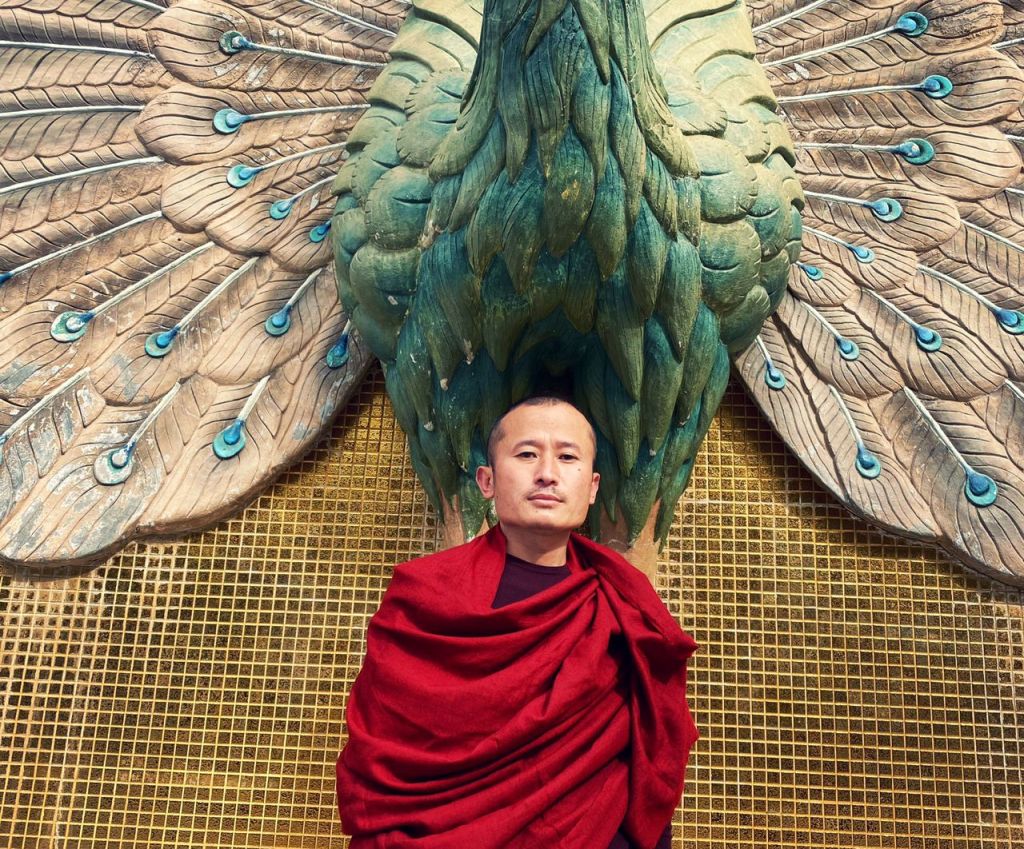
My name is Nima Gyelpo and I am a Buddhist monk belonging to the Kagyu lineage. I have completed my graduation from one of the Kagyu monastic institutions in Sikkim and an MA degree in Buddhist studies, philosophy, and comparative religion from Nalanda University in India. I am passionate about sharing my knowledge and experiences with others, especially beginners who are interested in Buddhism. I hope that this article will be helpful to those seeking to learn more about this ancient and profound spiritual tradition.
 The Garden of Maitreya
Great article
LikeLike