We have already spent some time together, so I would like to simply share a few thoughts with you. Please do not expect anything new or unusual; all genuine teachings are essentially the same. Every master, regardless of time or lineage, brings us back to the same points. As Shantideva once said, he had nothing new to offer, only the words of the Buddha. And in that humility, he revealed the essence of Dharma: to remember what has already been given, and to make it alive again.
At Nalanda Monastery, Shantideva was viewed by many monks as a lazy and unremarkable figure. They mocked him. One day, hoping to expose him, they prepared an elaborate high throne and invited him to speak before the assembly. Their intention was not to honor him but to humiliate him, assuming he would be too embarrassed to say anything. But Shantideva stepped onto the throne, lowered it with his meditative power, and began reciting verses that would later form the Bodhicaryāvatāra. What he shared was not a performance but a direct flow of the Dharma, rooted in compassion, clarity, and deep realization. This story has remained for centuries not because of its spectacle, but because of its teaching: Dharma must be sincere.
I do not compare myself to Shantideva. I am a translator, a listener, and a student. I have spent my life with books, with teachers, with long hours translating texts that are far more eloquent and wiser than I could ever be. If I speak today, it is only to share what I have learned, not to impress, not to innovate, but to hand forward the blessings that I myself have received.
Among the many teachers I have encountered, Lama Zopa Rinpoche stands out for his unshakable patience and devotion to practice. When he taught, he didn’t rush. He repeated points again and again, allowing the meaning to soak in. He encouraged people to pause after hearing each teaching and meditate on it. Not just to understand with the intellect but to internalize with the heart. Some people found his style too slow, too repetitive. But those who stayed with him, who endured the long sessions, often found that the real transformation happened in those pauses, in the space between words.
The Dharma is not something we master. It is something we enter into, slowly, with humility. When the Buddha taught, he tailored his words to his audience. Some people heard one sentence and awakened. Others needed years. And still others, like ourselves, need the teachings explained in detail, step by step. That is why we have texts like the Lamrim Chenmo, the Great Treatise on the Stages of the Path to Enlightenment, composed by Je Tsongkhapa.
Tsongkhapa lived in the fourteenth century and saw clearly that people were losing their ability to comprehend condensed teachings. Where once a few lines might suffice, now entire volumes were needed. He responded not with criticism, but with compassion. He wrote for people like us, distracted, uncertain, longing for clarity. His Lamrim is a vast ocean of Dharma, organized with precision and filled with insight. It is not meant to be read in haste. It is meant to be lived.
The Lamrim begins by guiding the practitioner through reflections that form the foundation of the path: the precious human life, death and impermanence, the workings of karma, the sufferings of samsara. It then moves toward cultivating renunciation, generating bodhicitta, the mind that seeks enlightenment for the benefit of all beings, and understanding emptiness. These are not abstract ideas. They are trainings for the heart.
We begin with the recognition that this human life is rare and valuable. To be born with a human body, with the mental clarity to discern right from wrong, with access to the Dharma, this is not a small thing. It is said that the chances of such a birth are like a blind turtle surfacing once every hundred years and placing its neck through a wooden yoke floating on the ocean. We have that chance now. But this life is fragile. Death will come. We don’t know when.
Reflecting on impermanence does not make us morbid. It makes us real. Everything we grasp will eventually slip through our fingers: health, possessions, relationships. When we know this, we start to live differently. We become more grateful, more patient, more intentional.
Karma follows us like a shadow. Every action of body, speech, and mind leaves an imprint. When we act out of anger or greed, we sow seeds of suffering. When we act with kindness and honesty, we plant the causes of future peace. Karma is not punishment, it is precision. What we put into the world returns to us.
With these foundations, we begin to see samsara for what it is: a cycle of suffering driven by ignorance, craving, and aversion. Even the pleasures we chase are unstable. Renunciation arises when we stop pretending that worldly achievements will satisfy us. It is not a rejection of the world, but a clear seeing. A letting go.
And then bodhicitta arises, a vast, open-hearted wish that all beings be free from suffering and attain enlightenment. This is not just a feeling. It is a commitment. A life orientation. With bodhicitta, our practice becomes vast. We no longer sit just for ourselves. We sit for all sentient beings.
The Lamrim also teaches the six perfections: generosity, ethics, patience, joyful effort, concentration, and wisdom. Each is a training. Each softens and strengthens the mind. Each leads us deeper into the truth.
Wisdom, especially the wisdom of emptiness, is subtle and profound. It reveals that things do not exist inherently. Everything arises in dependence. There is no solid, separate “self.” This does not mean that nothing exists. It means that everything is interwoven. When we see this, clinging loosens. Compassion expands. Fear dissolves.
The beauty of the Lamrim is that it integrates all of this into a path. It meets us where we are. It guides us forward. It does not ask us to believe blindly, but to test, to contemplate, to experience.
Now, in our time, these teachings have come to the West, to places like Romania, Italy, and France. The transmission is young here. The roots are still growing. But the potential is vast. We do not need grand temples. We need sincerity. We need people who will read, practice, and preserve the Dharma.
Even one person practicing with sincerity can benefit countless beings. One person who studies, who reflects, who teaches with humility, keeps the lineage alive. So do not underestimate your role. You may not be famous. Your name may not be remembered. But if you carry even one piece of the Dharma forward, you are fulfilling a sacred task.
Our lives are short. We do not know when they will end. But while we are here, we can do something meaningful. We can practice. We can serve. We can love. And when the time comes to die, we can let go with grace, knowing we lived with intention.
The Buddha did not teach to create followers. He taught to awaken beings. He pointed the way. The path is long, and sometimes hard. But it is also joyful. It is lit by wisdom and compassion. And it is open to all.
This is only the beginning. In the sections that follow, I will continue to expand each step of the Lamrim path with depth and reflection, drawing from the original teaching. Please take your time with it. Let each word rest in your mind like a seed. It will grow.
Let us now go deeper into the stages of the path. In the Lamrim, the practitioner is encouraged to reflect again and again on the nature of this life. Why is it so precious? Because it offers something extraordinarily rare: the chance to act with intention, to direct the mind, to transform our experience. Other realms of existence, if you believe in them, do not easily provide this opportunity. The suffering of the hell realms is too overwhelming. The distraction of the god realms is too seductive. Only in this human life, balanced between pleasure and pain, do we have both the incentive to change and the capacity to do so.
But we forget. We take this life for granted. We fill it with trivial concerns. That is why the first meditation is on appreciating this precious life. Not with guilt, but with resolve. We reflect: how rare it is to be born as a human, how rare it is to have access to the teachings, to have leisure time, to have a functioning mind. This reflection should not make us feel burdened. It should uplift us. We are not meant to waste this life. We are meant to use it well.
Then, we reflect on impermanence and death. Everything we see, touch, love, and fear will pass. This body, too, will die. We don’t know when. Perhaps today, perhaps decades from now. But the certainty of death is not a cause for despair, it is a call to presence. It reminds us that time is precious, that arguments are petty, that our inner development cannot wait. People often ask, “How can I find time to practice?” But the real question is, “How can I not?”
Reflecting on death, we prepare ourselves for life. We clean up our intentions. We prioritize the heart. We become less attached to the shifting tides of praise and blame, gain and loss. Death puts things in perspective. And with that clarity, we turn to the workings of karma.
Karma means action. Every thought, word, and deed creates an imprint on the mind. These imprints shape our experiences. When we act from love, honesty, and generosity, we strengthen those qualities in ourselves. When we act from hatred, greed, or delusion, we deepen our confusion. Karma is not fate. It is momentum. And it can be changed.
Understanding karma empowers us. We stop blaming others for our suffering. We stop expecting the world to fix itself. We look within. We take responsibility. This is not easy. But it is liberating.
Next, the Lamrim guides us to contemplate the suffering of cyclic existence, samsara. Often, we seek happiness in external things: relationships, careers, possessions. But all of these are unstable. They bring pleasure for a while, then change. What we love decays. What we fear arrives. Even at our happiest, there is the anxiety of loss. Samsara is not just a place, it is a pattern. A way of relating to the world that is fundamentally unsatisfying.
Seeing this clearly, we develop renunciation. Not rejection. Not disgust. But a gentle, honest turning away from the belief that samsara can ever fulfill us. We begin to seek something deeper. Renunciation is the soil in which true spiritual growth begins.
Then comes the turning point: bodhicitta. When we look around, we see that all beings are caught in the same cycle. Everyone wants happiness. No one wants suffering. Yet we are all confused. All grasping at what cannot last. In that recognition, compassion arises. And with compassion, the wish to free others. Bodhicitta is the mind that says, “I will not rest until all beings are free.”
This is not a poetic ideal. It is a practical shift in orientation. With bodhicitta, everything we do becomes vast. Studying, meditating, even resting, if done with the intention to benefit others, becomes the path.
To cultivate this mind, the Lamrim offers meditations: equalizing and exchanging self with others, seeing all beings as mothers, recalling their kindness, wishing to repay it. These practices soften the heart, dismantle pride, and create the space for true altruism.
Then we come to the six perfections, generosity, ethics, patience, joyous effort, concentration, and wisdom. Each perfection is like a facet of a jewel. Together, they form the path of the bodhisattva.
Generosity begins by giving material things, food, shelter, protection, but matures into the gift of fearlessness, the gift of the Dharma. It is not about how much we give, but how we give: without attachment, without expectation, with joy.
Ethics is the ground of all practice. Without ethical conduct, the mind is restless, defensive, burdened. Ethics means refraining from harm, speaking truthfully, acting with kindness. It also means guarding our intentions, recognizing when we slip, and returning again and again to integrity.
Patience is the antidote to anger. It does not mean passivity. It means strength. The strength to bear difficulty without collapsing into resentment. The strength to listen without reacting. The strength to remain open in the face of insult or confusion.
Joyous effort is the fuel that keeps us going. It is not grim determination. It is delight in goodness. Enthusiasm for practice. Courage in the face of obstacles. Without joyous effort, we give up too soon.
Concentration is the gathering of the mind. In daily life, the mind scatters, here, there, a thousand places at once. With concentration, we bring it back. We train in mindfulness, in stillness, in presence. And in that presence, we prepare for the deepest wisdom.
Wisdom sees things as they are. It sees that all phenomena are empty of inherent existence. They arise in dependence. They change. They do not possess fixed identities. When we see this, our grasping begins to loosen. We stop clinging to things as solid, permanent, and real in the way we imagined.
This wisdom is not cold. It is freeing. It allows compassion to move more freely. It dissolves fear. It does not erase appearances, but it changes our relationship to them. We engage the world not as something to conquer or cling to, but as something to serve and understand.
These perfections are not linear stages. We cultivate them together, over a lifetime. We return to them again and again, each time more deeply. This is the way of the bodhisattva. And it is available to all of us.
I will continue with the final third of the teaching shortly, drawing together the reflections on practice, lineage, death, and legacy. Please pause here and let these words settle before we continue.
Now let us consider how these teachings unfold in our daily lives. Many people feel overwhelmed by the idea of spiritual practice. They imagine long retreats, perfect concentration, or complete renunciation. But the Lamrim shows us that practice begins exactly where we are. Each moment of kindness, each effort to restrain harmful speech, each choice to be mindful rather than distracted, these are the stepping stones of the path.
You don’t have to live in a monastery to train your mind. You can practice while walking, eating, cleaning, working, raising children. The key is intention. When we infuse daily activities with awareness and compassion, they become sacred. Sweeping the floor can be an offering. Listening patiently to someone’s struggle can be a form of generosity. Resisting the urge to speak harshly can be a great act of ethics.
We should not underestimate the power of small actions. When done consistently and with the wish to benefit others, these acts accumulate merit. Merit is not some abstract reward. It is the inner capacity to understand, to feel, to awaken. It clears the obscurations of the mind and creates the conditions for wisdom to arise.
At the same time, we must also purify. We all carry the weight of past actions, some remembered, some forgotten. Through practices like Vajrasattva meditation, confession with regret, and making offerings, we can purify these imprints. Purification is not about self-condemnation. It is an act of renewal. A way of saying: “I see clearly now. I choose differently.”
Alongside these practices, we maintain our connection to the lineage. The teachings we receive did not appear out of nowhere. They were passed down through generations of practitioners who devoted their lives to realization. When we study the Dharma, we are not alone. We are held by a great river of transmission that flows from the Buddha to our present teachers.
This lineage gives the teachings their authenticity. It reminds us that the path has been walked before. That awakening is possible. That we are part of something larger than ourselves. And that the guidance we receive is not mere philosophy, it is the distilled wisdom of centuries.
To deepen our trust, we reflect on the qualities of the teacher. A genuine spiritual teacher does not seek power, wealth, or fame. They seek only to benefit beings. Their life becomes a mirror of the teachings. Their words point beyond themselves. And their presence invites us to discover our own capacity for wisdom.
With devotion, we receive their instructions. Not blindly, but with open hearts. We test their words in our own experience. We meditate. We observe. We adjust. And gradually, confidence grows, not just in the teacher, but in the teachings and in our own potential.
As we progress, we face obstacles. Laziness, distraction, doubt, pride, discouragement, they all arise. This is natural. What matters is not that we are perfect, but that we do not give up. We acknowledge our difficulties. We apply antidotes. We seek support. And we keep going.
Sometimes the mind is clear. Sometimes it is cloudy. Sometimes we feel inspired. Sometimes we feel lost. But the path is long, and the weather will change. Our job is to stay the course.
Eventually, we come to the deeper practices, calm abiding (shamatha) and special insight (vipashyana). Shamatha trains the mind in stability. It develops the power of sustained attention. With it, we can calm the turbulence of thought and dwell in a state of relaxed clarity.
Vipashyana builds upon this foundation. It investigates the nature of reality. With refined attention, we examine the nature of self and phenomena. We begin to see their emptiness, not as a concept, but as a direct perception. This seeing changes everything. It cuts the root of suffering.
But even here, there is no pride. Realization brings humility. We see how much we do not know. We see the depth of others’ suffering. And our compassion grows. We become less interested in our own awakening and more devoted to the awakening of all beings.
This is the hallmark of a bodhisattva, not someone who has all the answers, but someone who refuses to abandon others. Someone who returns again and again to help, even after attaining great realization.
In the end, the path is simple. Not easy, but simple. Turn the mind toward virtue. Let go of what causes harm. Serve others. Study the teachings. Meditate. Be honest. Be kind. Keep going.
When death comes, and it will, we can look back without regret. We can say, “I used this life as best I could.” We can face the unknown with peace. And perhaps, if we have practiced well, we will carry the seeds of awakening into our next life.
Until then, we continue. We support one another. We rejoice in each other’s progress. We weep at each other’s pain. We share the burden. We celebrate the light. This is the sangha, the spiritual community. Not perfect people, but sincere companions.
May this teaching support your journey. May it bring clarity where there is confusion, courage where there is fear, peace where there is agitation. And may it remind you, always, that you are not alone.
The Dharma is vast. The mind is luminous. The path is open. Walk it well.
When we speak of mental peace, or mental pacification, it’s important to ask: what is it that keeps us from experiencing that peace? Why is the mind so often unsettled?
The answer lies in the condition of our mind as it is now, currently, our mind is not free. It is under the influence of the afflictions, those habitual patterns of desire, anger, ignorance, pride, and so forth. And because the mind is ruled by these afflictions, the body too is not truly free, it follows wherever the afflicted mind leads. So when we feel mental unease, restlessness, dissatisfaction, what is really happening? It is simply that the afflictions are very active. They disturb the mind, they disrupt its natural clarity, and thus we find ourselves far from peace.
When we talk about pacifying the mind, we’re not speaking about a passive, dull state. We’re referring to a mind that is deeply relaxed, free of agitation, free of anxiety, yet alert and clear. But this peaceful state doesn’t just arise on its own. At present, the afflictions are running the show. So if we wish for peace, we need to take the reins back. That begins with stabilizing the mind, developing a firm, steady, and settled awareness.
To do this, we must first come to understand the afflictions themselves. What are they? How do they operate? What are their faults? And what are their antidotes? These questions are essential. The Buddhist teachings provide profound methods for investigating the mind in this way, especially through the study of lorig (Mind and Mental Factors) and Buddhist logic.
We also speak of cultivating single-pointed concentration, but again, what disrupts that concentration? Here, the main obstacles are excessive conceptualization, as well as laxity and excitement. When we try to focus, our mind either becomes dull or overly agitated. So part of our training is to recognize these states clearly and to apply the correct remedies, gradually strengthening our capacity for stable attention.
All of this is part of what we call Buddhist psychology. Through careful study and practice, we begin to identify the true causes of our inner turmoil, and we learn how to heal them from the root.
In the Gelug tradition, much emphasis is placed on searching for the “self”, investigating the nature of the “I.” Where is this self we so strongly grasp at? What exactly is it? In other systems, such as the Nyingma, there may be more emphasis on directly recognizing the nature of mind. But in either case, to progress meaningfully, we must understand what mind is, how it functions, and how it is influenced by affliction.
Now, you may ask: if I attain mental peace, is that liberation?
Not necessarily. We need to distinguish between temporary mental peace and ultimate liberation. Liberation, nirvāṇa, is defined as the true cessation of all afflictive obscurations. It is not merely a state of calm; it is the complete and irreversible elimination of the very causes of suffering.
So while a peaceful mind is certainly a wonderful thing, and a necessary step along the path, it is not yet liberation. There are many levels and gradations of mental pacification. For example, in the practice of calm abiding (śamatha), the Tibetan word for “calm” or “pacified” is the same as the one used when speaking about peace of mind. Calm abiding refers to a mind that can rest continuously on an object without distraction. It is a deep state of mental stability, free from agitation, but even this is not the true cessation.
True cessation, as described in the teachings on the Four Noble Truths, has four attributes: cessation, pacification, purity, and emergence. So yes, pacification is one of them, but pacification alone does not equal liberation. One may attain calm abiding and still not be free from the deeper obscurations.
Therefore, we can say there are many types of mental peace, ranging from the most temporary and surface-level quiet, all the way to the complete peace of a Buddha’s mind. It is like the word “happy”, we can be just a little happy, or deeply, abidingly joyful. The same word spans many experiences.
Similarly, the Tibetan word dewa, often translated as “pleasure” or “bliss,” can refer to a happy, pleasant feeling or to the profound bliss of enlightenment itself. In the Buddha ground, it becomes what we call great bliss, yet it is still called dewa, just on a vastly different scale.
So too with pacification of mind. It can begin as a moment of quiet and lead all the way to the complete and final pacification, where the afflictions are not merely subdued, but utterly abandoned.
In this way, we come to see the path as a journey through increasing levels of clarity, peace, and insight, each step building on the last, until we reach the state beyond all suffering, beyond all disturbance: true liberation.
When someone hears a Buddhist teaching or reads a text, their understanding can vary. Some people grasp the meaning clearly and deeply right away. Others might hear the same teaching but don’t fully understand it, or they might miss the deeper message. This difference is important because if a person doesn’t understand or doesn’t develop certain impressions from the teaching, it shows that they may not yet be ready for more advanced or profound teachings. In other words, they are not yet “vessels” prepared to hold deeper wisdom, at least for the moment.
However, even when someone doesn’t immediately show signs of understanding, there is still value if they follow the instructions of a wise lama with faith and care. By listening closely and practicing as the lama advises, they begin to plant positive seeds or imprints in their mind. These seeds are like potential energy that can grow over time, helping them develop insight and realization in the future. This process can lead to a deeper understanding of important concepts that we should all eventually come to grasp, such as the nature of emptiness, even if the insight doesn’t appear right away.
The reason why different people respond so differently to the same teachings has to do with the imprints they carry from their past lives. Each person’s mind carries traces or impressions left by their past actions, experiences, and learning. These imprints influence what kinds of teachings they find easy to understand and which ones they struggle with. For example, some of my students may really enjoy studying the Perfection of Wisdom texts because their past imprints make those teachings resonate with them. Others, I am sure, might find Madhyamaka teachings more appealing and easier to connect with because of the imprints they bring from previous lifetimes.
Je Rinpoche, in his book Destiny Fulfilled, points out that all different teachings are important because each one creates new imprints in our mind-stream. These imprints shape our future learning and realization. Even if a teaching feels difficult or less interesting at first, studying it still helps build the potential for understanding in later lives or later in this life.
You can also observe this effect in places like monastic universities. Among students, you may notice some who find the Perfection of Wisdom teachings very challenging at first and seem lost. But then, when the class moves on to Madhyamaka, those same students suddenly become much sharper and more engaged. This shift shows how past imprints influence their ability to understand different teachings.
In summary, the way we respond to Buddhist teachings, whether we understand them quickly, struggle with them, like one teaching more than another, is shaped by the imprints we carry from previous lives. Following a good lama’s guidance and practicing patiently helps us build new imprints that will support deeper realization in the future. This process is a reminder of the continuity of our mind-stream and the importance of perseverance in study and practice.
Understanding the role of past-life imprints helps us be more patient and compassionate with ourselves and others on the spiritual path. We recognize that not everyone will grasp every teaching at the same time or in the same way. Some lessons may come easily, while others take more time and effort to mature. By continuing to listen carefully, follow wise guidance, and practice sincerely, we create the conditions for deeper insight to arise, both now and in the future. This perspective encourages us to value every stage of learning and to respect the unique journey each of us is on. Ultimately, it reminds us that spiritual growth is a gradual unfolding that gently covers the continuity of our past and the potential of our future.
Geshe Jampa Gelek
April 8, 2025 during Madhyamaka Teaching
Excerpt Translated and lightly edited by Veronica Anghelescu
In the Photo: Geshe Jampa Gelek at White Tara Center in Romania, 2024
Among the various forms of unwholesome speech, meaningless and idle gossip is often regarded as the least harmful. Unlike harsh words that wound, divisive speech that sows discord, or falsehoods that deceive, idle chatter appears, on the surface, to be benign. And yet, despite its seemingly harmless nature, it is one of the most pervasive habits of speech, one that we engage in almost daily, often without a second thought.
We may not frequently lie or deliberately cause harm through our words, but gossip flows effortlessly into our conversations, filling the spaces between moments. And in this very act of idle speech, we unknowingly cultivate the conditions for delusion to take root. Without mindfulness, such speech becomes a fertile ground for attachment, craving, jealousy, pride, and aversion, poisons that cloud the mind and disturb our inner peace.
Consider how often our words revolve around objects of attachment, speaking about things we desire, experiences we long for, or people we admire. When we do so, we may not only strengthen our own craving but also awaken the seeds of attachment in the hearts of others. A seemingly casual remark about someone’s wealth, success, or beauty can stir jealousy in the listener, just as a boastful recounting of our own experiences can inflate pride within ourselves.
Likewise, when we discuss the faults or perceived wrongdoings of others, even in what we believe to be an innocent way, we plant the seeds of anger and resentment. We may feel justified in our speech, thinking that we are merely sharing observations, but in reality, we are feeding a cycle of aversion, both within ourselves and within those who listen. Over time, such habitual speech conditions the mind to take pleasure in negativity, reinforcing patterns of dissatisfaction and disharmony.
This is why the Buddha, as well as the great masters of the Kadampa tradition, advised us to cultivate mindfulness in speech. When we are in the presence of others, we should be vigilant, ensuring that our words are spoken with care, wisdom, and purpose. But mindfulness does not end when we are alone. Even in solitude, the mind continues its dialogue, engaging in unspoken conversations that can be just as unwholesome as spoken words. We may replay past events, rehearse arguments, or dwell on imagined scenarios, all of which reinforce attachment, aversion, and suffering.
True mindfulness, therefore, requires an awareness not only of our outward speech but also of the silent conversations within. When we recognize the nature of idle gossip, its tendency to give rise to afflictive emotions and perpetuate unwholesome habits of mind, we naturally develop a greater inclination toward meaningful, skillful, and beneficial speech.
Instead of speaking idly, we can cultivate words that uplift, heal, and bring clarity. Instead of reinforcing delusion, we can use speech as a tool for wisdom, compassion, and understanding. By doing so, we transform our words from sources of distraction and disharmony into instruments of peace, both for ourselves and for all beings.
Through mindfulness, restraint, and a sincere commitment to wholesome speech, we gradually purify the mind, allowing it to rest in the tranquility of awareness. And in this silence… this space free of idle chatter, we come to know the profound beauty of stillness, the wisdom that arises when words are no longer wasted, and the boundless freedom that lies beyond the realm of needless speech.
Sometimes, Teachers ask us very difficult questions, to test our understanding and knowledge on certain topics that are being studied, or perhaps just to test our mindfulness and attention – the quality of which can always be improved.
And sometimes, it may happen that a Teacher can ask very simple questions, and more often than not, those puzzle us, we feel that perhaps “it’s a trap!” – The question cannot possibly be that simple, and we stumble in our own words and give only half of a decent answer.
A few weeks ago, one such extraordinary moment took place at Lama Tsongkhapa Institute in Pomaia, Italy, during one of Geshe Jampa Gelek’s teachings from the Masters’ program. It was a very “normal” teaching day, on a difficult Madhyamaka topic; we were all paying careful attention to a debate that was being explained to us – and both residential and online students were taking assiduous notes. In our minds, I am very sure, we were all complaining just a little bit about how difficult this was – because it really was. We had all studied the Ornament for Clear Realization and were somewhat acquainted to a certain level of difficulty, and Madhyamaka is… well… next level.
Our beloved Master, Geshe Jampa Gelek, I think, caught the flow of the teaching room and understood that we were struggling a little bit. He knows that the teachings are difficult, and we are ever so lucky to be able to study those treatises under the skilled guidance of a perfect Teacher; so he gently encouraged us to not lose patience and to pour all our energy into it. He often tells us that “it gets easier”. He advised us that the study of those great texts – such as the Lamrim, The Ornament for Clear Realization, The Abhidharma, Madhyamaka and all the supplementary topics that surround them – those give the measure of true, profound knowledge.
He then took us all by surprised and asked us a series of question – not for immediate response, but for later reflection and consideration – because we are buddhists and students in a prestigious institute, and perhaps, some of us, future teachers; and so, if one person were to come to us and ask us simple things such as – Hey, what does it mean to be a Buddhist? What is the difference between a Buddhist and a non-Buddhist? What’s Samsara? So how do we get out of it? Those Four Noble Truths, what are they? Oh and I keep hearing about afflictions, what are those, is there a list? Can you name them?
We seemingly know those things. But can we all respond quickly and without stuttering? Can we give a good, well-rounded, complete answer to any of those questions (and to some others; mind you, there’s a little list!)? We should. And if we cannot immediately do so, we should prepare and always be ready to respond to the respective questions in a correct and wholesome way, because here we are, having studied so much, having put so much effort – we shouldn’t not know.
Our Master gave us some general examples of practitioners who engage in so much meditation, in extensive mantra accumulations, but without having studied properly, without having first accumulated solid knowledge of what should at least be – basics, how will you know what to meditate on? How will you know the purpose of a mantra and what it means, and what use is there to even… accumulate it? Therefore, in all things, study should come first, and we should be precise in what we study, in how we memorize, on what we are able to explain to others if needed, and not to be vague or imprecise. Wrong knowledge can bring about a lot of harm.
I carefully collected the list given by our venerable Teacher and transcribed it with the precious help of Lotsawa Sherab, the translation from Tibetan is done to the best of my abilities and any mistake might be present, it is solely mine.
It’s a good list to study, a beginning. I’d suggest, get a small notebook, copy this list and carefully add the answer, look up good scripture quotations (not from the Internet, where there is an ample amount of fake Buddha quotes) and make sure you know those concepts well.
V.A: It is my great joy to welcome you all to this teaching that our beloved Dharma friend, Ani Thubten Dechen from Lama Tsongkhapa Institute accepted to hold for us, for which reason we are very grateful. And so this is the first event organized by the FPMT study group, the Garden of Maitreya in Bucharest, Romania, and which we did not want to limit only to our community, but rather to offer it to our numerous friends worldwide, so that as many people as possible could benefit. So we thank you, Venerable Dechen, for having taken a moment from your precious time to share with us from your wisdom. And so we promise to listen carefully and to integrate your advice into our daily lives.
Ven. Dechen: Thank you so much, Veronica. Well, it’s such a wonderful pleasure to be with you. And maybe we take a moment just to settle the body, shake off any energy of the day and just take a deep breath together.
All right, so let’s all just get a comfortable position. And wherever we’ve come from, whatever we’ve been doing before, we just let it go and we bring ourselves into the present moment. And when you’re ready, you can take a long breath in and exhale. And another long breath in and exhale, completely letting go of any thoughts, tensions, anything you had your attention on during the day and just be here and now. And we can really rejoice that we have this precious opportunity together with like-minded friends, wonderful space for us to think about the Dharma. And so we think that we’re going to listen and reflect, hopefully to get something of benefit to our mind that we can put into practice for our own benefit, but also so that we can benefit others. Like a stone landing in a lake, rippling outwards. Whatever we learn, whatever we practice, may it bring peace, wisdom and compassion to this world, which needs it.
I take Refuge until I’m enlightened in the Buddha, the Dharma and the Supreme Assembly. By my merits of listening to the Dharma, may I become a Buddha to benefit transmigratory being.
So that’s our little Refuge formula. So this talk is about you’ve taken Refuge… and now what? It’s a little bit like you bought the mala, now what do we do? And I was saying this to a friend in the shop at lunchtime, and she said, “Oh yes, it is so important to think about this…” and she’s been a Dharma practitioner for a long time, so this isn’t necessarily just for those of you who took Refuge last week… actually we might have taken Refuge a long time ago, and still feel like… “Oh, where am I, where am I going? What am I doing? Am I doing it right?” So the purpose of this is to give us a little bit of direction.
And with that in mind, I sat down the other day beside a picture of Lama Tsongkhapa and I asked myself: “What is the most useful thing I can share?” And so I’ll share what came to mind, and the first thing that came to mind is… it’s not that hard. From where we are right now to where we want to get to, be that enlightenment, becoming a bodhisattva, it’s not that hard. I’m going to explain what I mean by that, okay? I have to qualify that, because we’re going to put this in perspective.
So I have a book about enlightened beings. And we hear all the stories of how people got enlightened and what they did. And I was looking at this book of enlightened beings, and I wanted someone who got enlightened, who wasn’t already a bodhisattva when they were born. And so there’s a chap in here called, what’s his name? He is called Baso Chokyi Gyaltsen. I’m guessing none of us have heard of him. And he just seemed, you know, pretty regular guy. So he studied, he did his practice. He started by meditating on precious human rebirth, and then renunciation. And it said he went to the feet of Manjushri and Maitreya. So I checked with Geshe Jampa Gelek, I said: “Does that mean he got enlightened?” It’s not clear. So I had to go back to the text and tucked away, hidden, hidden in a paragraph is a story about three of his disciples: they’re the three Dorje brothers, Cho Dorje, Peldun Dorje and Dorje Pelwa. And they all got enlightened in one life, one body, meaning they started as ordinary beings. They entered a path in that lifetime and got enlightened in that life.
I have to try and find the page now, because the commentary on it is wonderful; it’s talking about Cho Dorje, and the commentator says: “Not much is known about him.” We don’t know anything about him. He got enlightened. We don’t know where he came from. Nothing is known about his whereabouts. We don’t know if he lived with ordinary beings or dakinis, but he got enlightened. So this is important information, because we hear all the stories of people who jumped off buildings and sat in fire and built towers, but we don’t hear about the ordinary ones that met the Dharma, quietly went about their business, and then got enlightened. And whilst those other stories are encouraging for one purpose, I find these stories really encouraging for another purpose.
So, you know, all the stories of Naropa and Milarepa are very motivating, but it’s good to know that people like us made progress too. So that’s not to say that, oh, you know, we’re going to get enlightened this lifetime, but at least let’s look at our options. So we probably heard of Vasubandhu, who recited the Abhidharmakosha every day, and the pigeon on his roof was born human the next life, and became a scholar, and wrote four commentaries on the Abhidharmakosha. That’s kind of impressive, I’d be satisfied with that, right? Then there were some swans that Buddha Shakyamuni gave teachings to and in their next lifetime they were born human and became arhats. They were birds.
Lama Zopa Rinpoche says: “To even hear the word bodhichitta, you need so much merit.” Pabongka Rinpoche says: “We’re sort-of circling in the neighborhood of the path of accumulation.” We haven’t got there yet. So because we haven’t got there yet, we have no idea how near or far we are. But he says, we’re in the neighbourhood. We’re sort of, you know, in the heading in the right direction. And we’re probably a lot farther than we think, making a lot more progress than we know. And so we have a lot of potential.
So from that perspective, it’s quite encouraging. So now I’m gonna do, we’re gonna do a little thought experiment. Don’t have to answer out loud, okay? But just in your mind, have a think and ask yourself, how long do you think you would need to realize bodhichitta? It doesn’t matter what the answer is. It could be five lifetimes, could be ten, could be a few years. But just ask yourself honestly, how much time do you think you need? All right, do you have a number? You can pick a big number if you want. You can be conservative. Just a number.
The point is this. Whatever number you’ve chosen, it’s probably not that much. In the grand scheme of beginningless lifetimes, it’s not that much. Even if you said ten lifetimes, twenty, it’s not that much, comparatively speaking. So the point is, we’re further ahead than we know. We have so much going for us that we might not necessarily recognize, and we can do this.
We’re already human, so we have a lot going for us. So that’s what I mean by it’s not hard. I’m not saying it’s easy. I’m just contextualizing and saying, for where we are and what we’ve got, we’re in pretty good shape. And Pabongka Rinpoche actually says: “We might even be starting from a vantage point that’s further ahead than some other people did, and they did well.” So we should take confidence and have self-confidence. So if that’s our situation, then the second point is… don’t get distracted. Don’t get caught off guard, going off in other directions. And this comes from Tara. Tara said this to a teacher. It’s in the Lamrim. She said, because his parents were trying to arrange his marriage and showing him all these women he could choose from – “If someone like you gets distracted, that would be a shame.” So it’s the same for us. We have so much. And if we get distracted, that would be a shame. It’s not a criminal offence. It’s not disaster of the century, but it would be a shame.
We’ve got this life of incredible fortune, we have intelligence, we have interest in the Dharma, which is so rare in the world. Pabongka says: “With it, we can do whatever we wish. We can make prayers to get another precious human rebirth. We can achieve enlightenment, liberation. And even if we think we need a life better than this one, this is the lifetime.” We can do it. So we have to start with a position of self-confidence. Tara said, “If we got distracted, that would be a shame.” So now, that doesn’t mean that we should become fundamentalist because, first of all, it doesn’t work. The mind has to proceed gently.
And honestly, nobody will like us if we become like that. So the Kadampa say: “Take a long-term view, relax, have a long-term vision, take it easy, and just be farsighted, don’t squeeze.” But the point is… just put one foot in front of the other, one step at a time and eventually we will get there. So then in that context what Refuge is, if you like, it is our North Star. Refuge is giving us the direction of both where we’re headed, and what we’re relying in. So we can think of Refuge as a goal, Buddhahood. We can think of it also as the path that helps us get there. And we can also think of Refuge as the help we have along the way, the Sangha. And so the purpose of Refuge is to help us achieve our goal.
But what is our goal? And this needs to be clear. Our goal is to help sentient beings. Enlightenment, strictly speaking, is just the means and the instrument to help us do that. It’s not the end in itself.
So an enlightened mind is just a state that permits us to benefit others in the most spontaneous and natural and unmistaken way. But the goal is to help sentient beings. So for that, it’s helpful for us to know what have we taken Refuge in? So if that’s our goal, if that’s our objective, what have we taken Refuge in, and why? So we’ll go through the three, Buddha, Dharma and Sangha.
The Buddha: why do we follow the Buddha? Why is the Buddha a valid teacher? In Pramanavartika, it said: “The Buddha is a valid being. The Buddha is Pramana because he became valid.” And that right there goes to the very heart of some of the essence of the Buddhist teachings. His enlightenment was a dependent arising. He wasn’t a created God. He wasn’t born perfect from the beginning. He started like us. I mean, he was a prince, but that aside, he was like us. But he became valid. So this captures the view of dependent arising, cause and result. If you create the causes, you get the result. And that we have Buddha nature. We have something within us that is suitable to transform into the bodies of a Buddha. And that is incredibly unique. So this is very important for us to know.
The Buddha became valid. It was a dependent arising. It was a result. A result of what? Really two things. So first of all, he cleaned up. So he used the wisdom, seeing reality correctly, to remove all the layers of distortions and wrong concepts that keep us in samsara. So one job was the removal job, which wisdom does, but he also cultivated the positive qualities, love, compassion, bodhicitta. And those two together gave rise to the two results the two bodies of a Buddha so the enlightened mind is the result of having done the wisdom work and then the form body is the result of having done the cultivating work and this is also important because it’s sometimes said, oh, all we need to do is remove things. That’s true to a point.
Removing obscurations will get you to nirvana, to personal liberation. It won’t get you to Buddhahood. Buddhahood is a choice. You choose to develop the form body of a Buddha, and you invest effort in creating the causes through method, love, compassion, bodhichitta. So it isn’t just the unlearning and removal, there’s active cultivation, there’s active choice in cultivating yourself to become a Buddha. And that’s what he did. So the Buddha removed all the superimpositions, all the distortions, and cultivated all of the positive qualities, wisdom, compassion, through work, through familiarization.
And so we respect the Buddha, we respect the images, we treat images of the Buddha with respect, because if we don’t have the karma to meet the Buddha in daily life, at the very least, we try and treat the representations with respect.
The Dharma: the Dharma is essentially what the Buddha – I should say Prince Gautama, what the prince mixed his mind with, to become a Buddha. And what he did, we can do too. And this is another fundamental principle of Buddhism. The goal of omniscience and perfect qualities and no obscurations is something we can attain. That’s our job. That’s the fulfillment of our human potential. We can attain that too. So what the Buddha did give us a clue about the practice, about the job to be done. Remove the distortions with wisdom and cultivate the positive. And because we have Buddha nature, we can do the same. Again, this is the fundamental, dependent arising.
You create the causes, you get the result. You stop creating the unhelpful causes, you stop getting the unhelpful result. So because we are not set in stone, this is the culmination of our potential. And the afflictions, the disturbing emotions, they’re produced phenomena. They’re not the nature of our mind. If they were, we’d have them all the time, and sometimes we don’t. I think we can all, sometimes they’re not there, right? So we know they’re not the nature of our mind. We get a glimpse of the fact that we can live without them. They’re not the nature, they can be removed. We just have to stop producing causes so that we’re getting them as a result. They’re not definite to be experienced. They’re not the nature of our mind. The nature of the mind is clear light. The afflictions are advantageous and they can be removed. And so the Dharma then is what we use, what we mix our mind with to do that.
The purpose of the Dharma is really to reduce the causes of suffering, and increase the causes of happiness. And we might say… chocolate does that. It’s true, but we’re looking for lasting happiness. So that’s why we rely on the Dharma. And chocolate, they’re not mutually exclusive, but we’re aiming for long-term goals and long-term happiness and fulfilment.
So the Dharma is the real Refuge because the Dharma in our continuum is our Refuge. So the Buddha teaches, but the Dharma in our continuum is what helps us to achieve our goal. And so that’s why it’s so important to study. And in the Refuge precepts, there is actually a precept that we should listen and reflect. It also says that understanding can be challenging, but our job is to listen, to reflect, to understand to the best of our ability, and practice. So that again gives us a really good direction. If we’ve taken Refuge, that’s something we should be looking at. To listen, to understand, so that we know what to practice. It’s easy to say we want to practice, but practice what if we haven’t learned, if we’re not familiar?
Shantideva, rather depressingly, says “We drive away the causes of happiness as if happiness was our enemy.” I mean, that’s a fairly dismal prescription, right? And “We chase after the causes of unhappiness as if it were our friend.” So that’s why we study to learn to make educated informed choices that help us. And then so when we study and this is something that Geshe Jampa Gelek said, we need to actually understand the distinguishing features of this tradition that we’ve taken Refuge in. So what makes Buddhism distinct from anything else are things that we’ve taken Refuge in.
So what makes Buddhism distinct from anything else are things that we need to know if we’re going to proceed correctly.
So we’ll go through some of them, first on the side of wisdom, and then on the side of method. All right, so I am starting with the wisdom.
Some people say that, in terms of method and ethics and so on, Buddhism is kind-of pretty similar to everything else. That’s not entirely true, I have to say.
Sidebar, I used to work in Afghanistan. And so I used to follow the Taliban on Twitter. And one of the Taliban was posting in English that “Oh, you Westerners should not be criticizing our methods of enforcement of the rule of law, because that’s impinging on our religious freedom.” And you know, the Talibans’ methods for enforcing the rule of law are quite severe, but they see that as their religious freedom, that’s to be upheld and respected. And I’m pretty sure that neither in Buddhism, nor Jainism, nor Christianity, will we find such methods. I mean, if I remember rightly, I think there were beheadings and amputations in there. So the point being, it isn’t all the same, right? So even if we say that ethics is the same, it actually isn’t.
So let’s get back to wisdom, because wisdom is the really key distinguishing feature. And Lama Tsongkhapa wrote a beautiful Praise to Dependent Arising, in which he praises the Buddha; he says, “Whatever exists in dependence on conditions, is empty of existing by way of its own essence.” And he says to the Buddha, “Nobody else has taught this. You alone taught this. And for that, I’m offering praise and homage.”
So the combined view of emptiness and dependent arising is a distinguishing feature of Buddhism. Why do we care? Because another premise of Buddhism is that at the root of our suffering is a grasping to ourselves as having an essence, as being essential. There is some findable, graspable, take holdable “I” that we desperately need to protect at all costs, and in so doing, we identify and push away any other, and all our afflictions and negative karma depend upon that. And that’s so instinctive to us, we can hardly imagine what it would be like to be without that.
Dharmakirti says: “Freedom from that view is freedom from the very cause of what is causing us suffering.” And how to reach that is… with wisdom, realizing that that way we think we exist, that graspable essential I, that, that it doesn’t exist in that way at all. And so Lama Tsongkhapa says: “This view that we don’t exist that way… we still exist, just not in the way we thought.” The fact that we don’t exist in that way, he says only the Buddha taught that. Meaning that the distinguishing feature of Buddhism from the wisdom perspective is that it presents the wisdom that cuts the root of samsara. And many other traditions actually strengthen a view of the self. And there’s nothing wrong with that if those traditions are very helpful, it’s just different.
So in other traditions, there might be a view of the self as a pure soul or a pure being that’s held within the aggregates. And for some people that might be very beneficial for their mind. But it’s different, and it has different implications. Because if we’re holding to ourself, then everything we do is still from the perspective of self and other, self and other, self and other. And if we do enough internal work, we can start to see the impact of that in our own lives. Now, as well as, so that’s in the arena of ultimate truth.
But wisdom in Buddhism is not just about emptiness, it’s also about conventional truth. It’s also about let’s have a correct view of how things conventionally exist. And in that regard, impermanence is really important. So the way we view reality, the way we see reality, then has an impact on our ethics, on our conduct, on our love, on our compassion. Buddhism is said to be fundamentally non-harming.
In Buddhism, we say there are three main kinds of suffering. The first one we all know, the suffering of suffering, okay? Unpleasant experiences, hunger, earthquakes, you name it, all the unpleasant stuff that nobody wants. And I think everybody recognizes that, they’re pretty familiar. Now everybody has a measure of compassion, so when we see this kind of suffering, we are moved, we want to do something. So what does our compassionate action do? We might give food, we might give shelter, we might give warmth, and we should give these things to the extent that we are able to. There are many, this is common across religious traditions, there are many traditions that do outstanding work in this area; if you see the Sikh organisations, they’re always in disaster zones giving food, they give medical care, in outstanding work.
So this is the first kind of suffering. So already that’s incredible. So moved by compassion for beings experiencing suffering of suffering, this is the kind of help we might give. But because we also talk about impermanence within the Buddhist view of wisdom, there’s a second type of suffering that invites us to expand our compassion a little bit more.
And here we talk about the suffering of change. So this is when the good things run out. The chocolate, the job, the money, the partner, you get it. It’s happened to all of us, right? And you don’t have any more chocolate left, crucially. Okay, so when the good things run out, the person leaves us, right? And you don’t have any more chocolate left, crucially, okay? So when the good things run out, the person leaves us, we lose our job, whatever it is, basically when the karma finishes, the happy, pleasant feelings stop. And quite often, then another karma ripens. Why does this matter? Because from the perspective of impermanence, there is no moment of abiding. Things are changing momentarily. And in the moment, the moment that something is experienced as ripened results, the karma that gave rise to it is finished. Like it’s like burning a candle. Once you’ve burnt the wick, the flame isn’t coming back. And our karma is like this. Once you use up the causes as ripened result, that’s it. The cause is finished.
So how can we apply this when we have a view of impermanence and karma? We can even have compassion for the people in good situations, the rich, the beautiful, the healthy, the people that spend billions of dollars using their hard earned fruition of generosity flying into space. Because they’re using up, they have all of this wonderful result of hard work that they did accumulating positive karma, they experience the result, and if that result isn’t used well, the causes are gone, and what are they left with? It’s like going to Vegas and spending all your money in the casino in one night and then the next morning you’re broke. What are you left with? So if we were a friend to our rich friend in the Vegas casino who’s blowing all their money in one night, we might tell them, before you blow everything, how about making some investments? Maybe don’t blow everything in one go. We would have compassion for the fact that tomorrow morning they can’t afford breakfast.
So in the same way, from this point of view, for someone who has incredibly good fortune and is using it up, our compassion might help them create positive karma, advise them to be generous. Our compassion, thinking of the future results, will say, you know, help them maybe practice philanthropy. We will try and help them use their good situation to do more good. This isn’t really what we normally do. Normally, if someone is well off, rich, powerful, and so on, the last thing we experience towards them is compassion. But from the point of view of impermanence and karma, they’re also at risk of suffering, and they’re also worthy of compassion. So the view there expands our compassion.
And then there’s another one, there’s suffering number three, which is pervasive compounded suffering. This essentially just means that – because we are samsaric beings, we are programmed at any given time to experience one of the other two kinds of suffering. It’s a little more tricky to understand. But it’s this view of… we just keep going around and round and round, and we’re not getting out and we go from high to low, we gain, we lose in continuation. And from that perspective, what would compassion do? From that perspective, we study wisdom. We might say: “I wanna study wisdom to free sentient beings from samsara.” That’s one option. But even having some understanding of that, there’s actually more we can do.
So, so, and Shantideva teaches it; in his chapter on patience he says: “Sentient beings don’t choose what arises in their minds. They don’t choose to get angry. They don’t choose their imprints. They’re born, the mere person is designated on the aggregates and they are born with these aggregates.” They did not pick it off the supermarket shelf. They’re born with imprints on their mental continuum, a body that was done of their choosing. It is a fruitional result of karma, but they didn’t choose this.
And from this point of view, two things. First of all, however bad they might be, however unpleasant, however much we want to reject and discard them, they’re not intrinsically bad. You give them different causes, different conditions, and they can change. And in fact, I don’t know if I’ve shared this with you before, but after the Rwandan genocide, one of the men who admitted to having killed a lot of people said, people aren’t born bad. They can be made that way, and they can be taught to be good.
If we are holding to a view of intrinsically existent self, we will never give them the chance. We’ll just discard them and chuck them in the bin. But if we have a view of dependent arising, at least dependent arising, then we understand that in dependence upon different inputs, different causes and conditions, that person also gets a second chance. And in that way, we can have compassion for the really undesirable people. The ones that we think should just be expelled from our society, because what they are is a dependent arising. And if you get different causes and conditions, you will get a different result. And that’s the kind of compassion our Lamas have. It’s hard for us.
You know, I remember one centre I worked at, I was told that for 24 hours, someone was on paper, a director of the centre. And the police arrived at the door saying, “Listen, this individual has a criminal record and there’s absolutely no way, there’s no way he can be a director, absolutely not, a crime of this severity, just no.” So I don’t think he ever actually made it to the centre. And it’s a pretty bad crime. And he’d been chosen by Lama Zopa Rinpoche. And so someone said to me, “Well, that just goes to show that Lama Zopa Rinpoche isn’t a God, he makes mistakes, look, here’s an example of that mistake.” And it probably wasn’t a mistake. Lama Zopa Rinpoche, with his great foresight of future lives had probably calculated that for this individual, being a director of a Dharma centre, even if on paper and just for one day, was worth it in the long run. It brought some benefit to that individual. Even if the centre staff had to fend off the police, even if it was very difficult. He had a long-term view.
Because he has a long-term view, obviously with his view of emptiness and dependent arising, Lama Zopa Rinpoche believes that when you give somebody a chance to create new causes and conditions, you are going to get a different resulting person. But if you never change anything, well, then the person is going to stay the same. So from this perspective, we can start to have compassion, or try to develop compassion for the people that we really would rather not. So, so that’s where our view of compassion, dependent upon the wisdom teachings, can become so much more vast. And plus it’s for all sentient beings.
Okay, so depending on the view, we have a different analysis and diagnosis of suffering, and depending on the breadth of the diagnosis of suffering, we have a much more vast presentation of compassion. And again, so that’s where study can help us.
There are things that we should have some knowledge of, as Geshe Jampa Gelek said. What is a Buddhist? What makes Buddhism different from other traditions? The Four Noble Truths, the Two Truths, how we circle in Samsara, how we get liberated from Samsara, and how we reach omniscience. These are some of the things that we should try to get knowledge of. And in particular, try to get knowledge of them, according to the presentation of the Lamrim, starting from the beginning and working upwards, and going back to our friend Baso Chokyi Gyaltsen, that I mentioned earlier: that’s how he started. He just started reflecting on a life of freedoms and richnesses and continued from there. So that’s really the advice. Start from the beginning in the Lamrim and work your way up, building one stage on top of the other.
OK, so this is the Dharma part of Refuge. And with the Dharma, there are a couple of Refuge precepts. So we try and treat the Dharma texts with respect, not putting them on the floor, not putting them in the bag with our shoes, and just keep practicing respect towards our texts, and ideally also reading them, not just putting the book on a shelf and forget about it.
The Sangha. So I have, I have entirely taken this from Serkong Rinpoche, and I put a link here to a little video, three, three minutes long, he explains it beautifully.
So Serkong Rinpoche’s description of the Sangha: he says: “In order to practice the Dharma well, we need reliable examples to guide us. People who have practiced the teachings and actually attained some of its goals. And we call those people the Sangha, and they are the role models we rely on. Sangha are normally in this analysis are people who’ve directly realized emptiness.” He describes them as people who’ve gotten rid of some of their problems and in the process, they’re working to get rid of more of them. So their job is to be helpers and to be role models so that they’re qualified to get rid of more of them. So their job is to be helpers and to be role models so that they’re qualified to help us. So they will have qualities like wanting to help others, practicing what they preach.
We need role models. We need people we can follow, who are ahead of us on the path. They’re with us in the self-help group and can and can help us. And in that regard, there’s a there’s a Refuge precept for this Sangha, which is: keep good company, have helpful friends, have people around you who will support your spiritual practice, and your spiritual development. We’re so influenced by our friends. And this isn’t a Buddhist idea, you know, it’s a very, very popular thing. You are the five people you surround yourself with. So it’s really helpful to have good support, good friends, good community, also for encouragement.
So very briefly, so there are benefits of Refuge listed in the Lamrim.
So first of all, we become Buddhists. You become Buddhist when you take Refuge.
We reduce and exhaust lots of negative karma.
We accumulate a lot of merit. We need that, we need fuel in the tank.
We receive support and protection from harm. And in the Lamrim, it said that we are protected from the harm of spirits and other hindrances.
So I was thinking last night, I remember in this regard with this point, I’d had an experience; it happens to some people: while being asleep, a pressing spirit disturbs them. It’s not very pleasant. So you’re sleeping and you have this feeling of being pushed, like you’re being squashed into the ground. And if it ever happens, try and send love and “Om Mani Padme Hum” and so forth. But this particular time, I was sort of semi conscious. And I remember I just said “Lama Khyen,” which means “Lama, help me.” And I remember in my dream, suddenly I was dreaming of Lama Zopa Rinpoche and Geshe Gelek, and whatever it was… it went away. So that was my experience of that, being protected from spirit harm.
Sometimes we take Refuge, and we don’t ask for help. And that I’m guilty of that, you know, we take Refuge, we fall to one extreme or the other, either we think, “Oh, the Buddhas are going to do everything, I pray to the Buddhas that I pass my exam.” I mean, I hate to break it to you, that’s not how it works. So either we fall to that extreme, thinking “The Buddhas are going to make me pass my exam,” or we go to the other extreme: “I’m going to go into Samsara and figure it out all by myself.”
Our attitude must be: “I have a problem, first I take Refuge. I have to have a difficult conversation, first I take Refuge. I have to, you know, whatever it is, take a journey, go somewhere, do something, I take Refuge.” Actually ask for help.
I remember once being contacted by a doctor I used to work with in Congo. He had PTSD. And of course, I asked my teacher, so what do I do thinking, what mantra, what practice, what this, what that? And he replied and said, “You can ask me to pray for him.” And I said: “Oh, right, yeah, okay.” You know, like this radical idea, you know, oh my goodness, take Refuge. I didn’t think of that. You know, so we have to also make taking Refuge a practice because it’s all very well that there are benefits of taking Refuge, but you actually have to take Refuge to get the benefits.
So, more benefits:
We swiftly attain our wishes.
We swiftly attain Buddhahood. Okay, so this goes back to my earlier point. It’s not that far away and we’re closer than we think. We swiftly attain Buddhahood.
We become a basis for vows. Bodhisattva vows and other vows.
We don’t fall to the lower realms. It doesn’t necessarily mean it never ever happens again. It just, you have a pretty good chance that in the next lifetime, you’re in good shape. So technically, to be absolutely certain of never going to the lower realms, you have to be on the path of preparation, but we get the general point.
So and this is in chapter 12 of Lamrim Chenmo.
So, these are general precepts, guideposts for what we should be doing having taken Refuge. So the first is, as Geshe Jampa Gelek tried to tell me: “Try relying on holy beings, you know? Ask for help.”
So rely on holy beings, ask for help. Listen to them as well.
Then listen to and study and understand and try and practice the Dharma. That’s what they’re teaching.
Be a friend to yourselves. Giving yourselves the best start. Don’t put yourselves in situations that are going to make your afflictions go wild. It just doesn’t help.
The next general precept is if you feel ready to take whatever vows you feel able to maintain. Venerable Robina is a great fan of vows because they help us accumulate lots of merit and purify karma.
And the next one is, be compassionate towards sentient beings and don’t harm them. You know, one of the Refuge precepts is if we’ve taken Refuge, we should give up harming sentient beings directly or indirectly.
And the next is that we make an offering when we’re eating or drinking, when we’re starting our meals, we just mentally offer that. So the texts say: offer it to the Buddhas, but Lama Zopa Rinpoche explains this in a very nice way. He says, first, imagine offering your food and drink to all sentient beings. And then as their representative, on their behalf, you offer it to the Buddhas, imagining that the sentient beings get the benefit of the merit and the generosity. And so, and the last point is thinking about benefits of Refuge, take Refuge again and again. And it’s really a useful experiment to do whether it’s a difficult conversation or a difficult situation.
Instead of just running off into life and try and do it all by yourself, if you actually take Refuge before doing that, watch what happens to your mind. Watch how you feel, see if it makes a difference. What difference does it make in your life when before doing X, Y or Z you actually take Refuge and put some trust into the Buddhas and the Arya Sangha? Give it a try. I’m not going to tell you, just try. It’s remarkable the impact it can have.
We don’t have to do everything ourselves. So try sometimes putting it in practice. Before you go into a situation: “I take Refuge. I take Refuge.” Ask for help and see what that does to the mind and how you approach the situation.
One tiny little story in that regard. So long story short, I was trying to help some women, in Afghanistan, when the Taliban took over. And it was a horrible situation, because I don’t know if you remember, when the Taliban took over, there were all those airplanes with people on them, everybody trying to get out. And there were these women who felt very frightened, because they had been selling in the army bases of the US and other army. So you can imagine what the Taliban are going to think of that, you got number one, it’s a bunch of women, selling things. And number two, they were selling in the army bases of the enemy, trying to get money for their family. But you know that in the view of the Taliban, that’s the enemy. So they were terrified for their lives. And we were trying to get them out.
There was someone who, at first sight, was offering a plane. And, and then they stopped answering or communication. And the lady who was the go between, she said, they had their bags packed, they were ready to go. And these people who had said they were offering a plane just weren’t answering. What do I do? I’ve given them hope. And I have to say that was hands down the worst night of my life. Because how you feel in that situation with so many people counting on you and you can do nothing. It’s horrible. And one way or another, we all face situations where we feel so utterly helpless, yet responsible. And so the next day, I said, okay, how about again, try taking Refuge. Actually take Refuge. Pray, take Refuge.
It didn’t change the outcome. We didn’t get a plane. And they are still there, and still alive. But I just didn’t feel like I had all the responsibility and weight on my shoulders. So that’s why I say, even if the outcome doesn’t change, because so much karma is involved in these situations, still the difference it can make by relying on the support of Refuge, it can make a huge difference to the mind, because it isn’t just on you. So I share that for what it’s worth.
A little reminder from Lama Zopa Rinpoche: “Compassion, do everything with the best motivation you possibly can, try to do everything with a bodhicitta motivation. Because bodhisattvas are not distinguished by what they do, but by the motivation with which they do it. So try to have a vast motivation for everything we do, eat, sleep, whatever it is, for others, for others, and train ourself in this thought for others.”
His Holiness the Dalai Lama meditates on emptiness, but he really stressed that the last thing the Buddha taught was bodhicitta. And His Holiness said: “If you try to practice bodhicitta, if you try to put that into practice, then whether you’ve met me or not, it’s as if you’ve made meeting me meaningful.” So we’ve practiced the meaning of meeting His Holiness in this life, whether we’ve met him or not. So that’s a way for us to really think about taking the essence of our life, making it meaningful. And again, slowly, slowly, one step at a time. That’s a way that we can move forward and make best use of this incredible opportunity that we have.
To start off this theme, I should first underline what effort actually means from both Buddhist and non-Buddhist points of view. Effort, from a Buddhist perspective, is a mental event where one takes pleasure in performing a wholesome activity, whereas an ordinary person might define it as energy exerted for a short-term or long-term benefit in this life. However, this exerted energy can be complex in nature, being either virtuous or non-virtuous, which I leave as an open topic to explore further.
From a Buddhist point of view, effort falls within the category of virtue because Buddhist literature defines it as an intention that takes pleasure in virtue.
In this conventional world, different people live in different ways—some with effort and some without—according to the karmic background of each individual. Those with good karma may apply effort in their mundane lives, but not as much as those without good karma from their past lives. In this context, I use the word “effort” to mean hardship, as hardship necessarily involves effort—not just a little but a lot.
Nobody in this materialistic world, including those of the highest social rank, has become great without putting in a certain level of effort. Everybody wants to be rich, to be heard, to be loved, including ourselves. People desire and need things in specific ways according to their tastes. They wish to be beautiful and nice so that others pay attention. Particularly, those in public spaces—academic settings, religious institutions, temples, cinemas, or political arenas—seek attention, whether they are rich or poor, beautiful or ugly. They often hope for miracles to make them famous, believing that fame brings happiness, without considering that they must create the causes for all this through effort.
Nowadays, we want things too quickly—through our cell phones, through Amazon, through DHL delivery—thinking that people should do everything for us without question. We expect quick responses and immediate results, exerting as little effort as possible. This reflects the current state of our society. Everyone desires money, power, relationships, dharma, realizations, service, love, food, and drink—instantly—without putting in the required amount of effort or time necessary for the mechanical process.
We now know that almost anything we need can be obtained through Google’s “magical box.” This belief spans all levels of society, from children to working-class individuals to those of high social rank. Since the advent of cell phones and their multitude of apps, we have unfortunately grown lazier. Even the minimal human effort we once exerted has diminished.
This shift has rendered the lives of the new generation surreal, detached from reality. People buy and pay for everything using their phones. We’ve reached a point where we believe everything can be done for us—except eating and going to the toilet.
At the end of the day, it is evident that while much is possible in the 21st century, two things remain impossible: death and karma, no matter who you are or where you are. Death is unavoidable, and we cannot deceive ourselves about the karma we’ve created when we look inward.
Regardless of belief or disbelief in karma, it operates as a universal law that no one can govern, whether you live in a rich or poor country, in the East or the West, at the North Pole or South Pole. The topics of karma, death, and effort are intricate. A minimum effort, like a small motor, is always necessary for anything we desire in this world. People erroneously believe that all phenomena—relationships, food, drinks, clothing, homes, etc.—are easily achievable. However, this is not true. Without undergoing the processes of karma and effort, things would not materialize. Perhaps your own life experience has taught you this point.
For example, one day you may feel hungry due to circumstances (e.g., a long walk with good company or a quarrel with a partner) and search for a good restaurant on a particular day and place. You may find one restaurant closed, then another, leaving you frustrated and without a meal, even with a wallet full of cash. This demonstrates that money alone does not guarantee success. Even if you find a restaurant, waiting for the cook to prepare a quality meal requires effort and patience. The only alternative might be fast food, where minimal effort is exerted to serve food quickly, but the quality is often inferior to that of food prepared with time and care.
Buddhism identifies three kinds of effort:
The effort of armor.
The effort of collecting virtues.
The effort of working for the welfare of living beings.
The effort of armor, or armor-like effort, refers to the mental resilience needed to persevere. In a physical battle, armor protects one from harm, allowing the fight to continue. Similarly, in our inner lives, mental resilience—such as patience and non-physical strength—is essential to persist without succumbing to minor setbacks. A person with strong mental endurance can be considered to possess armor-like effort. Ultimately, mental effort is more valuable than physical effort, as the body follows the mind.
We often tire quickly after hours, days, or weeks of effort. According to Buddhist theory, this happens because we lack sufficient training and courage, as well as inspiration and aspiration toward a goal. With a strong wish and willingness, anything can be achieved with minimal effort. Time and energy cease to matter until the goal is realized. The great Tibetan master Panchen Lozang Choe Kyi Gyaltshen (16th century) exemplifies this mindset:
“Even if I must remain for an ocean of eons even in the fiery hells of Avici for the sake of even just one sentient being, I seek your blessing to complete the perfection of joyous effort, That out of compassion untiringly strives for supreme enlightenment.”
This verse illustrates the immense mental strength required for the perfection of effort.
The effort of collecting virtues
This second effort might resonate with non-religious individuals, who might view it as collecting materials. Regardless of whether one collects virtue or material goods, interest generated by the perceived benefit of the goal is the fundamental driving force. A religious person aspires to a paradise or higher realization, such as nirvāṇa, where sorrow ceases. Achieving this requires accumulating merit or virtue as the cause.
But what is virtue? Buddhist scriptures define it as “that which brings an appealing maturation or fruit.” In theory, everyone should be diligent in practicing dharma or pursuing their livelihood, as we all desire appealing outcomes. However, laziness—the antithesis of effort—often prevails. This laziness can lead to neglected responsibilities, forgotten obligations, and ultimately chaos in one’s life. Lama Yeshe, a co-founder of the FPMT, often reminded us: “A lazy person would not even find water for his mouth.”
Even lazy people eventually face reality, such as when unpaid gas bills lead to service disconnections, prompting extra costs and valuable lessons. This highlights the necessity of effort.
The effort of working for the welfare of living beings
This effort is monumental. Fulfilling the wishes of infinite sentient beings seems insurmountable, but manageable if approached step by step. Start by helping one or two beings close to you—perhaps a family member or neighbor. Gradually, as you feel ready, extend your efforts to a broader circle. This incremental approach simplifies what initially seems impossible.
To summarize this discussion on effort:
For those without dharma knowledge: Reflect on your human potential. Avoid idleness and indulgence and aim to contribute meaningfully to your family and community.
His Holiness advises: “If you think, ‘I have my house, food, and salary, so I don’t need to think of others,’ that is wrong. Millions of people are in need of help.”
For those with dharma knowledge: Lama Zopa Rinpoche often emphasized that life is as fragile as the interruption of a single breath. Recognizing the certainty of death and the uncertainty of its timing, prioritize effort in all aspects of life, especially dharma practice.
In these truly challenging times, one of the most significant contributions we can make to the lives of children in modern society is to instill in them the values of kindness, love, compassion, and patience—qualities His Holiness the Dalai Lama consistently advocates. These virtues hold immense potential to benefit not only the children themselves but also their families and the broader community. They form the foundation of a harmonious society and should be regarded as fundamental teachings.
These values can and should be imparted both at home and in schools. However, the role of parents is particularly crucial in emphasizing their importance. Too often, the focus at home is placed solely on academic achievements, high grades, and the pursuit of good-paying careers. While these aspirations undoubtedly contribute to physical comfort and material success, they alone cannot guarantee mental well-being or true happiness. To achieve a balanced and fulfilling life, we must nurture not only physical wealth and comfort, but also inner peace and emotional health. Developing qualities such as loving-kindness, empathy, tolerance, and patience is essential for the development of joy, contentment, and even resilience.
Teaching these inner virtues to children from a very young age is especially impactful. Early emphasis on such values—whether at home, in school, or within the community—lays a strong foundation for their character and helps them grow into compassionate, thoughtful individuals. It is through this nurturing that they can find joy within themselves while spreading positivity and harmony to others.
Another crucial value to teach children is the importance of respecting others—especially when opinions and perspectives differ. In moments of disagreement, children should be guided on how to engage in respectful dialogue and constructive communication. They must learn that even when they do not share someone else’s views, they can approach discussions without hostility or negative feelings. By respecting others’ ideas, values, and beliefs, they foster an environment of mutual understanding and tolerance.
This respect should extend to everyday interactions, whether during conversations, debates, or moments of conflict. It is vital to teach children how to maintain respect and composure in their words and actions, even when faced with opposing opinions. Through these practices, they can build meaningful connections and contribute to a more respectful and empathetic society.
Equally important is the virtue of forgiveness—a value that brings peace and healing to both individuals and relationships. Every human being, save for those who are fully enlightened, is bound to make mistakes. It is a fundamental part of life. When someone genuinely regrets their actions and seeks forgiveness, it is vital to extend that forgiveness with an open heart. Teaching children to forgive others helps them release negative emotions and build stronger connections, while also teaching them the value of accountability and redemption.
Moreover, forgiveness must also be directed inward. Just as we strive to treat others with kindness, compassion, and patience, it is essential to treat ourselves the same way. We must learn to forgive ourselves for our own mistakes and shortcomings, embracing them as opportunities for growth rather than reasons for self-condemnation. This balance of self-compassion and outward compassion allows individuals to live with greater peace and harmony.
In conclusion, the values of kindness, compassion, patience, respect, and forgiveness are crucial for building a better future. By teaching children to embody these virtues and to extend them both outwardly to others and inwardly to themselves, we empower them to lead lives filled with joy, resilience, and meaning. In doing so, we nurture a generation capable of creating a more compassionate and understanding world.
Geshe Thubten Sherab
On behalf of Romanian and International Community, we thank our beloved Teacher, Geshe Thubten Sherab, for this precious advice.
In the last days of 2024, I finished a wholesome Dharma book gifted to me by Geshe Jampa Gelek, our Teacher. Within its introductory pages, those words by the translator Toh Sze Gee, stroke me as so very true and important.
“Traveling on the path takes humility and self-awareness. What may appear to be assiduous spiritual practice can sometimes, instead of diminishing and eliminating afflictions, leave afflictions untouched.
Contemporary teachers have coined terms such as spiritual materialism and spiritual bypass to caution against spiritual self-deception.
People may have the trappings of a spiritual practitioner – wearing prayer beads, chanting mantras, quoting scriptures and spinning prayer wheels – but if they fail to acknowledge the mental flaws and do not sincerely work on their own mind, they are not true spiritual practitioners.”
(Panchen Losang Yeshe – The Swift Path
Foreword by Lama Zopa Rinpoche
Translation and Introductory Notes by Toh Sze Gee)
Integrating the Four Noble Truths into Our Busy Daily Lives
A Brief History of Buddha
There lived a prince named Siddhartha, born to King Suddhodana, who ruled the kingdom of Kapilavasthu in the 6th century BC. As the prince grew up, he questioned his luxurious lifestyle within the royal palace. Despite his status and princely lifestyle, Siddhartha was not impressed by the materialistic culture of the royal family. During one of his excursions outside the palace, he encountered three significant experiences- a woman giving birth, a corpse on a deathbed, a disease-stricken person, and an old man using a walking stick. These encounters profoundly influenced the young prince’s mind. The prince discovered the reality of suffering outside the place, forcing him to go on a spiritual quest.
The king noticed Siddhartha’s discontent with palace life and reluctance to assume responsibility for the royal legacy, which worried the king. This unusual behavior of the prince distressed King Suddhodana, who hoped to convince his son to embrace his future role. The king ordered all his ministers and royal attendants to organize a grand feast at the palace to encourage him. A day-long celebration ensued and was completed with a royal orchestra, dancers, musicians, and beautiful companions. However, despite his father’s efforts, Siddhartha remained uninfluenced by the material world’s pleasures and the transient beauty of the material world.
After the ceremonial festivities, in the middle of the night, while everyone was exhausted and asleep, Siddhartha decided to leave the palace. Accompanied by his charioteer, the prince sneaked through his private compartment and left the palace. Upon reaching the desired destination, he sent the charioteer back and continued his spiritual journey alone. This marked the beginning of the Buddha’s spiritual quest away from his home amidst wilderness. Siddhartha did not leave the palace and his family out of strong resentment toward his parents or the royal lifestyle; rather, he wanted to seek answers to profound questions about birth, old age, sickness, and death.
In his spiritual quest, Siddhartha consulted many don-Buddhist teachers from the Brahmanical tradition and other precursing schools, hoping to find the answers he sought. The prince traveled extensively, participating in traditional rituals and rites performed by esteemed sages of the Brahmanical culture and other non-Buddhist practitioners living in the locality then. However, after several years of self-denial and severe physical austerities, the questions remained unanswered, and his pursuit of the ultimate truth was unfulfilled. Ultimately, Siddhartha decided to forsake these extreme practices and began to explore different spiritual approaches.
He then journeyed to the banks of the Neranjana River, near present-day Bodhgaya, where he meditated for six consecutive years until he could break through the hardest shell of negative emotions and discover the inherent nature of himself. After this period of rigorous and strenuous meditation practice, he traveled to Bodhgaya and sat under the Bodhi tree in a meditation posture. On the night he began his meditation under the Bodhi tree, Siddhartha made a solemn promise not to rise from meditation until he gained insight into the true nature of the mind and all things. It is believed that throughout the night, Mara(evil spirits), the embodiment of temptation and distraction, attempted to interrupt Siddhartha’s meditation progress by attacking him with sharp spears and weapons. However, his deep sense of compassion and the power of strong meditative concentration transformed these intimidating weapons into a shower of flowers around him.
At dawn, Siddhartha gained profound insight penetrating the true nature of all things, and achieved enlightenment, becoming the historical Buddha Sakyamuni. He understood and saw the nature of his past, present, and future lives. Some historical accounts even suggest that the Buddha entered the 22nd dimension, after his enlightenment, calling upon the earth and the heavens as witnesses to his enlightenment. According to Buddhist scripture, all future Buddhas must achieve this same realization under the Bodhi tree in Bodhgaya, India. After attaining enlightenment under the Bodhi tree in Bodhgaya the Buddha remained silent in the grove for forty-nine days, contemplating whether anyone would comprehend the profound truths he had discovered through years of practice.
The Buddha expressed, “Profound and serene, unadorned by complexity, and pure luminosity. I have found a nectar-like Dharma. However, if I were to propagate it, no one would understand it. Therefore, I will choose to remain silent in the grove,” as recorded in the Lalitavistara Sutra. Eventually, as requested by the celestial King Indra and Brahma, the Buddha agreed to share the Dharma with others. He delivered his first sermon called, ‘The Four Noble Truths,’ in Sarnath, Varanasi, India. It is believed that the sound of a conch blown by these divine beings resonated throughout the universe as they requested the Buddha to preach the Dharma.
The Four Noble Truths
In general, all religions share a common goal of achieving happiness and avoiding suffering. However, the Buddhist approach differs in that Buddhists believe the origin of misery or dissatisfaction lies in the illusory nature of the mind. This confusing state of mind can only be dispelled through understanding its true nature, which is innately clear and untainted by negative emotions. The Buddha’s message is clear that one cannot overcome suffering without understanding the true nature of the mind through genuine Dharma practice.
Nirvana (Buddha-hood) and Samsara (cyclic existence) are not separate from the mind, they are rather states of our mind. The entire teachings of the Buddha are summarized in the idea of the Four Noble Truths. To attain liberation, we must understand these truths with the help of a qualified and experienced Dharma teacher. The nature of Samsara is suffering, and there is no place in it where people do not experience misery. We are continuously tormented by suffering from birth until death, though some degree of suffering often goes unnoticed. The Buddha highlighted various forms of suffering: giving birth is suffering, falling sick is suffering, growing old is suffering, dying is suffering, not being able to attain what we desire is suffering, and separating from loved ones is suffering.
The Buddha compared the truth of suffering to illness, emphasizing the importance of recognizing it. Having a clear idea or understanding of the illness you are experiencing is crucial. If you are unaware of any illness, you cannot seek to be free from it. Once the problem is diagnosed and you know you are unwell, you need to identify the cause of your sickness. Understanding this cause allows for the possibility of appropriate treatment and recovery. When you heal, you can live in peace and a healthy life. This is called ‘The Second Noble Truth,’ the truth of the origin of suffering.
If a sick person is to recover and live healthily, they should consult a reliable doctor and follow medical advice and treatment. This represents the third noble truth of the path to liberation. If an individual considers their lifestyle, such as the activities they engage in, the food they consume, and the medicine they take. Then they will likely find relief from ailments and any kind of diseases. Practicing this combination of mindful living and a disciplined life is essential for achieving good health and well-being.
Similarly, when encountering life’s challenges and difficulties, it is vital first to identify the nature of the problem and its cause before attempting to resolve it. Identifying and addressing the problem is crucial; we cannot overlook the difficulties we face but we can find ways to deal with them effectively. We suffer because we fail to recognize the nature of suffering and its causes. A being continues to wander through cyclic existence due to karma and will continue to suffer unless we break this Karmic chain. In Buddhist scriptures, it is mentioned that cause and effect should be perfectly aligned with one another and if we embrace this principle and understand it well, we can ensure that our ethical conduct will become morally sound. Therefore, this is one of the reasons why the Buddha’s teachings during his first turning of the wheel of dharma, the four noble truths, are closely connected to moral conduct.
The suffering and displeasure we constantly undergo in this human world is not something that comes without a cause. It comes as a result of coming together of certain causes and conditions. According to Buddhist teachings, nothing comes into existence independently without depending on certain causes and conditions. Whatever exists, arises from causes and conditions, one is dependent on the other, and one supports the other. Both the mind and the physical world arise as a result of conditions and dissolve instantly when the causes and conditions are insufficient to exist. Once the causes and conditions are exhausted, things stop manifesting and we no longer experience the same thing this idea is called change from a Buddhist standpoint. Similarly, suffering is temporary and it fades away as it has no inherent or substantial nature, allowing the mind to experience pleasure. Thus, the Buddha taught the theory of dependent origination or the fundamental Buddhist principle of the twelve links of dependent origination(Pratityasamupada).
Through understanding these realities we will gain insight into- what we truly are, what we experience around us, how and why we react to what is within and around us, and what we should aspire to live a peaceful life. As we grow older, it’s clear that our physical bodies become weaker, and we often fall ill. However, the Buddha, with his all-knowing mind, recognized that suffering goes beyond just the physical state. Human beings also go through mental suffering, where our minds endure more pain than our bodies do, often afflicted by adventitious negative emotions. The Buddha sought to help individuals understand this truth, so they could avoid falling from one unsatisfactory situation to another and instead comprehend the root causes of their suffering.
The first teaching the Buddha shared after attaining the perfect state of enlightenment addressed the three root causes of suffering: anger, greed, and delusion. Because our minds remain clouded by negative emotions, we become trapped in a lower realm known as Samsara for countless eons and this will continue until we remove negative emotions and Karma. We often crave material possessions and feel anger or disappointment when we don’t get what we want or when our expectations are not met. These reactions stem from the delusional perception that happiness can be found in material things. We will never achieve lasting happiness as long as we remain bound by our attachments to external things or sensual pleasures of the external world. Thus, the vicious cycle of Samsara will continue. However, the Buddha’s teachings can only help us end suffering if we genuinely practice them and apply the methods he provided to work towards achieving liberation.
The Buddha’s third noble truth, “The End of Suffering,” outlines the method to overcome our attachment to material things and the cravings that bind us to this cyclic existence. He taught that it is essential to let go of our reliance on external possessions and to adopt skillful means to free ourselves from desires. By doing so, our minds can be liberated from bondage, enabling us to achieve enlightenment, a state free from all forms of suffering. In the noble language of Sanskrit, the term Nirvana means “extinction.” It represents a state that can be attained by permanently removing the three root causes of suffering: desire, anger, and delusion. According to Buddhist scriptures, when a person’s mind reaches Nirvana through diligent training and disintegrates from the physical body, it is liberated from the fetters of Samsara. This means the individual no longer needs to undergo cycles of existence or experience suffering. However, letting go of these negative attachments is not easy and it requires a lot of effort, which is why the Buddha identified a path to reach awakening, known as the fourth noble truth, ‘The Noble Truth of Path’.
The Buddha’s first sermon is known as ‘The Four Noble Truths’ because these truths can only be realized by noble beings, or Arhats, who have attained a certain level of spiritual understanding. Ordinary people, like us, do not have an opportunity to grasp these truths as our minds are clouded by mental afflictions, preventing us from penetrating this deeper realization. It’s similar to how we cannot feel a single hair on our palms, but when that hair gets into our eyes, we become instantly aware of it. In the same way, noble beings can realize these profound truths.
Conclusion
The Buddha did not mean that we should abandon our homes, children, spouses, or material possessions to isolate ourselves and practice Dharma at a temple. Instead, the Buddha encouraged us to change our perspective on these material things. It’s important not to become overly attached to temporary things. We should rather strive to understand and realize the true nature of things as they are, without getting distracted by their outward appearances. By doing this, life becomes easier and we can lead a happier and more peaceful existence.
Buddhism is rooted in compassion, wisdom, and ethical conduct, which sets Buddha’s teachings apart from those of other religions. A true Buddhist is someone who disciplines themselves ethically, trains their mind for positive growth, and asserts certain truths based on logic and intelligence. These three moral principles are the fundamental precepts in Buddhist teaching and are crucial in our daily lives. The Buddha identified three essential parts of training that uphold his entire teaching. Unlike many other religious beliefs, Buddhism encourages all living beings to make individual efforts to achieve liberation. Buddhism teaches that Buddha nature(a seed for becoming a Buddha) pervades every living being. All we need to do is recognize it through genuine practice to activate or awaken this Buddha nature and attain enlightenment. Without sincere practice and proper guidance, we will not be able to recognize our true nature or free ourselves from this suffering world. Therefore, the Buddha, known as the awakened one, taught us the best methods for eliminating suffering and its causes. To avoid suffering, the Buddha emphasized the importance of understanding its root causes and addressing them. To convey this, he introduced the first wheel of Dharma, known as the Four Noble Truths.
In our daily lives, when we feel stressed, burdened by our activities, disappointed, or incomplete, it’s important to analyze the situation before surrendering to feelings of hopelessness and helplessness. There is a solution to every problem we encounter, and the stress we experience is temporary. These negative feelings often cloud our minds, but once we understand their origins and apply effective strategies to address them, we can free ourselves from various entanglements. The Buddha, who was once an ordinary human being like us, practiced for many years and ultimately discovered the true nature of reality. He unearthed a fundamental truth: nothing can deny the insights he gained. When we are liberated from our temporary mental afflictions, which obscure our true nature, our minds can break free from the grip of negative emotions. This liberation allows us to rise to a higher state of consciousness and can ultimately lead to enlightenment. The Buddha emphasized that what he discovered was neither a religion nor a philosophy, it was rather the result of his own direct experience. He encouraged others to make individual efforts toward achieving their liberation.


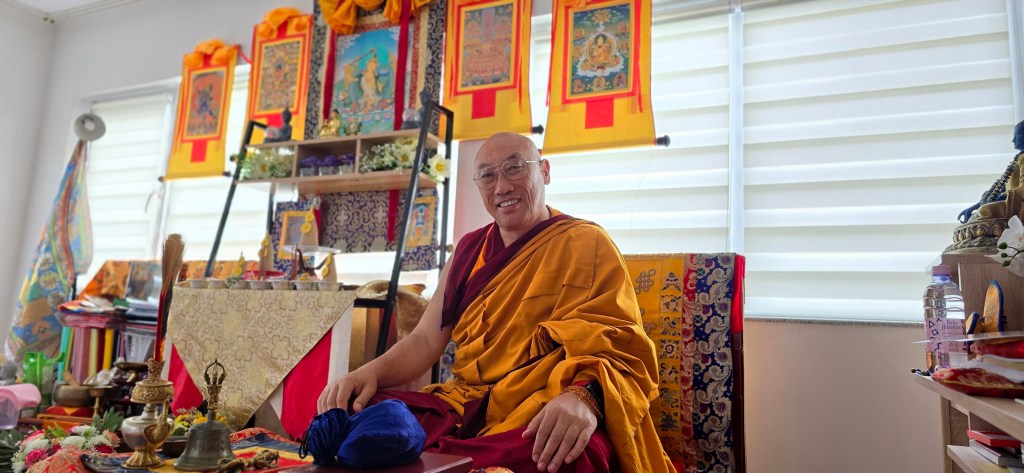


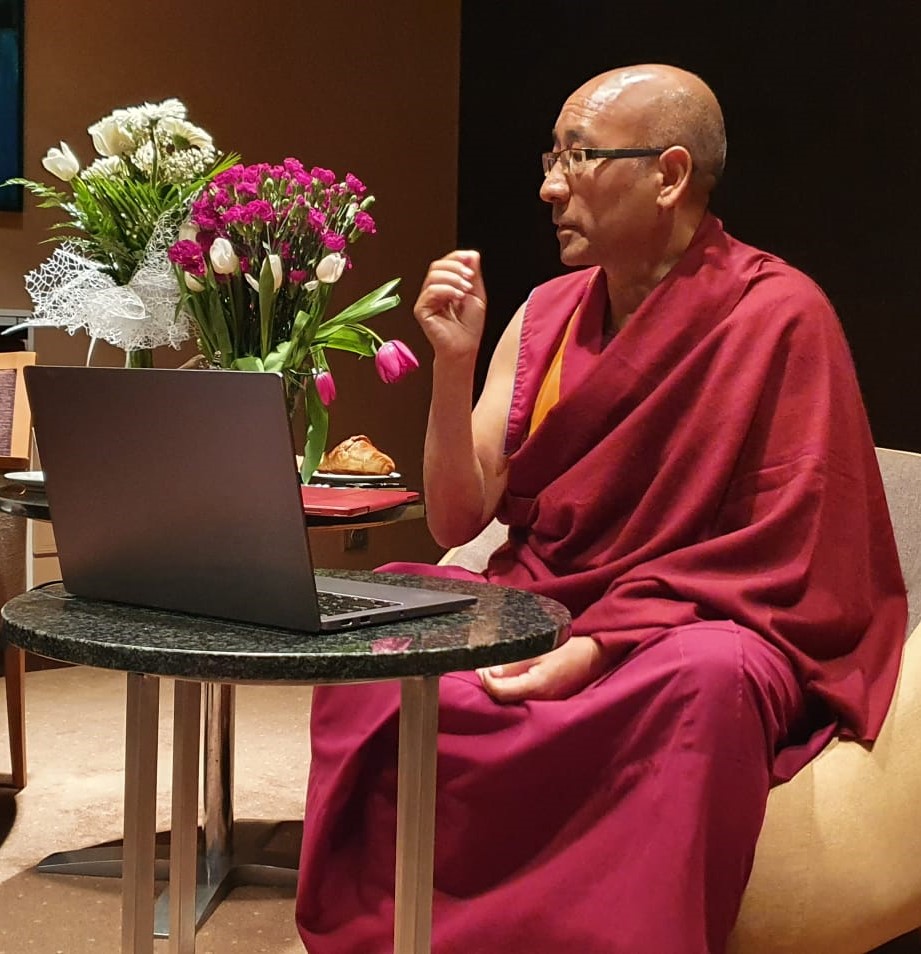

 The Garden of Maitreya