When I reflect on Guru devotion, I often begin by reminding myself that relying on a master takes two complementary forms: dependence through thought and dependence through action. Over the years, as I moved through different traditions and cultural settings, this distinction helped me understand why Guru devotion appears so differently across Buddhist cultures. In Tibetan communities, for instance, devotion becomes tangible – students serve their masters physically, sometimes even helping with basic tasks like bathing during the harsh winters. At first, this can surprise us, but later we come to see that such service is not mere sentiment; it can be a profound expression of liberation, an offering born from seeing the teacher as the direct doorway to awakening.
Still, according to the Lamrim, such forms of devotion are appropriate only for those whose faith is already well-rooted. I often emphasize that it cannot be forced. Devotion must resonate with one’s own inner disposition. My own path required time, confidence and discernment, until I found the form of relationship that nourished rather than obscured my understanding.
Devotion does not mean blind obedience. When someone once asked me whether a disciple must follow every instruction of a guru, I remembered the Lamrim’s very balanced view: if a teaching contradicts the Dharma, it should be questioned respectfully. The disciple protects the relationship and the Dharma through honest inquiry.
I often think of Asanga’s three promises to his master, Shakyamuni Buddha, as an example of devotion rooted in humility rather than dependence. Asanga pledged never to take advantage of the privilege of being around great masters and never to use their leftover food or clothing for his own benefit. While these details come from a specific cultural context, the underlying message remains timeless: devotion should be clean, without self-serving motives.
Reflecting more deeply on the subject, I’m struck by how intricate the master–disciple relationship can be. Gyaltsab Je’s commentary to the Abhisamayālankāra, drawing from Buddha Maitreya, describes situations where obstacles arise because of the master, the disciple, or circumstances between them. This teaching broadened my compassion: devotion is not merely an ideal; it is a living relationship that must be examined with honesty and care.
One especially detailed list describes fourteen ways in which the master can become an obstacle to the disciple’s growth. This has always stayed with me. These points are:
The disciple is diligent and hardworking, but the lama is lazy.
The disciple wants to receive Dharma in a certain place, while the lama insists on teaching somewhere else.
The disciple’s desires are modest, while the lama harbors strong personal desires.
The disciple has the necessary qualities for training, but the lama lacks them.
The disciple possesses faith and other virtuous traits, while the lama does not.
The disciple gives away all their possessions generously, but the lama is stingy.
The disciple offers gifts or monetary support, but the lama refuses to accept them.
The disciple understands teachings with just a hint, while the lama only teaches through long, elaborate explanations.
The disciple knows many teachings, but the lama does not possess such knowledge.
The disciple has cultivated the six perfections, while the lama has not.
The disciple is skilled in methods that lead toward enlightenment, but the lama lacks such skill.
The disciple has attained the power of retention (dhāraṇī), whereas the teacher has not.
The disciple wishes to engage diligently in the effort of writing, but the teacher does not support this.
The disciple is free from the five obscurations, while the teacher is still affected by them.
These fourteen points are not meant as criticisms but as guidance – reminders that the teacher must embody the qualities that uplift the disciple’s path. When this balance is lost, devotion becomes strained, and confusion can replace clarity. These contradictions can undermine the relationship unless understood and addressed with honesty.
Ultimately, the Lamrim teaches that Guru devotion is one of the most profound practices because it cuts directly through the five obscurations – craving, aversion, dullness, restlessness, and doubt. Training myself to rely on a master with both devotion and discernment becomes a way of working with these obscurations in real time. Devotion, when grounded in wisdom, becomes a transformative force; it restructures our mind, stabilizes our practice, and anchors us in the lineage of awakening.
Through the merit of practicing generosity and the other accumulations,
May I attain Buddhahood for the sake of all beings.
Opening Reflections
Good morning and good afternoon to everyone. I am speaking to you from Italy, and the purpose of our meeting is to support one another by reflecting together on the Dharma.
As I mentioned, in our last session I may have created some confusion, which is only natural, since all of us living in samsara are prone to confusion. I hope it was not too unsettling for you. Today, I will try to clarify the points that may have been left unclear last time.
As you know, the essential reason we gather is to ensure that our lives become meaningful, today, tomorrow, and in the months to come. We study and practice the Dharma in order to cultivate happiness and reduce stress, not to increase it. I especially encourage you to maintain a relaxed mind, free from tension. In this way, our thoughts change, and we transform ourselves for the better.
So, traditionally, the great lamas and Geshes spend a long time simply setting the right motivation. For example, Lama Zopa Rinpoche, whom I deeply admire, could spend nearly an hour speaking only about motivation. His dedication made a profound impression on me. Such teachings are not merely conveyed through words but also through gestures, presence, and behavior. Often, simply seeing or hearing a lama briefly is enough to recognize the depth of their practice.
Now, when I think of this, I especially remember Lama Yeshe and Lama Zopa. Lama Yeshe, although not formally a Geshe, benefited countless people through his wisdom and compassion. The flourishing of Dharma centres and institutes today is inseparable from the prayers and aspirations of these great masters. Without their dedication, we would not be enjoying the Dharma as we do now.
Let us recall, the power of prayer and good wishes is immense. While it may seem that individuals achieve everything through their own effort, in truth conditions must come together. The prayers of realized masters create the conditions that allow our efforts to bear fruit. This is why I value prayer so highly: it is a way of serving and benefiting others at the deepest level.
When I reflect on the origins of the Institute of Lama Tsongkhapa, I am struck by the way in which conditions come together through heartfelt connection. One story illustrates this beautifully. Many of you know Massimo Corona, who is still living today. His father once attended a teaching by Lama Yeshe in Milan. After listening, he was so deeply moved that he asked Lama Yeshe what he could do to help. Lama Yeshe replied that there was a need for a place to establish a Dharma center. Out of gratitude and faith, Massimo’s father offered land for this purpose.
As it is said, at first, Massimo’s mother was hesitant. She worried that such generosity would be misunderstood as the lama merely seeking financial gain. Yet, after meeting Lama Yeshe and Lama Zopa herself, she also felt their sincerity and transformed her perspective. In the end, she supported her husband’s decision wholeheartedly.
Indeed, this offering, made in the mid-1970s, became the foundation for the Institute of Lama Tsongkhapa. It arose not from planning or strategy, but from the power of heartfelt communication. When words and presence touch the heart, people are willing to dedicate themselves entirely.
Again and again, this story reminds us of the importance of motivation. If someone has a genuine motivation, everything becomes possible. Isn’t it? Our focus in these sessions is the Lam Rim Chen Mo, the Great Treatise on the Stages of the Path to Enlightenment. It is one of the most profound and comprehensive teachings, encompassing both Sutra and Tantra. Last time, when I attempted to explain the framework of the Buddhist teachings, I may have presented some points in a confusing order. Today, I wish to clarify them carefully.
I have prepared a list of the Twelve Deeds of the Buddha, which outline the essential events of his life. Although I know them by heart in Tibetan, it is more difficult for me to express them accurately in English. Therefore, I have written them down in advance so that I may present them clearly.
Surely, before appearing in this world, the Bodhisattva resided in Tushita heaven, the realm of joyful contentment. Seeing that the time had ripened for him to manifest as a teacher, he made the decision to descend into the human realm. Out of great compassion, he chose to be born where his presence would benefit beings most effectively.
You might recall, the Bodhisattva took birth in the royal family of King Śuddhodana and Queen Māyādevī. In a dream, Queen Māyā saw a radiant white elephant descending from the heavens and entering her right side, signifying the noble being who would be born. This moment marked the union of celestial intention and earthly manifestation.
The Twelve Deeds of the Buddha
In Lumbini Grove, beneath blossoming trees, Queen Māyā gave birth while standing and holding the branch of a tree. The child immediately took seven steps, and with each step a lotus appeared beneath his feet. He declared: “I am supreme in this world, and this is my final birth.” This wondrous event foretold the greatness of his future life.
As I mentioned, as a young prince, Siddhartha mastered all the royal arts and sciences. Whether in learning, skill in arms, or intellectual debate, he excelled with ease. Yet, though surrounded by comfort and honor, he remained inwardly unsatisfied, sensing that worldly accomplishments could not resolve the deeper questions of existence.
His family sought to protect him from suffering by surrounding him with beauty and pleasure. Three palaces were built for him, one for each season, filled with music, gardens, and attendants. Yet even in this environment of abundance, Siddhartha’s mind turned toward contemplation. He recognized that pleasure was fleeting, unable to shield him from aging, sickness, and death.
So, one day, while leaving the palace grounds, Prince Siddhartha encountered four sights: an old man, a sick man, a corpse, and finally, a wandering ascetic. These encounters pierced the illusion of worldly permanence. He realized that no power or wealth could prevent suffering, and that only the path of spiritual practice could lead to liberation. Moved by this insight, he resolved to abandon the palace life. Quietly, in the stillness of night, he left behind his wife, his infant son, and all the trappings of royalty. Mounting his horse, he departed the palace to begin his search for truth, a gesture of ultimate renunciation.
Now, for six years Siddhartha practiced severe asceticism, training with renowned teachers and subjecting his body to hardship. He meditated for long periods, fasted until he became emaciated, and endured extremes of deprivation. His discipline and determination were unmatched, but eventually he understood that self-mortification was not the path to awakening. A body weakened by suffering could not serve as a clear vessel for insight.
Let us recall, recognizing the futility of extremes, he chose the Middle Way, avoiding both indulgence and excessive austerity. Accepting a simple meal of milk-rice offered by Sujata, he regained his strength. Then, seated beneath the Bodhi tree at Bodhgaya, he vowed not to rise until he attained complete awakening. Mara, the embodiment of delusion, appeared with armies of fear and desire to disturb him. Yet Siddhartha remained unmoved, touching the earth as witness to his resolve.
Trough deep meditation, he realized the true nature of reality: dependent origination and emptiness. He transcended all obscurations and attained perfect Buddhahood. In that moment, Siddhartha became the Awakened One, the Buddha, endowed with boundless compassion and wisdom. The victory over ignorance was complete; the light of his realization began to illuminate the world.
At first, the Buddha hesitated to teach, reflecting that the truth he had realized was profound and difficult to grasp. Yet, moved by compassion for beings, he resolved to share it. Traveling to Sarnath, he gave his first sermon to the five ascetics who had once been his companions. There he expounded the Four Noble Truths and set in motion the Wheel of Dharma. This teaching opened the path for countless beings to begin their own journey toward liberation.
As it is said, throughout his teaching life, the Buddha displayed miraculous powers, not as a display of pride, but as a skillful means to inspire faith and open minds to the Dharma. He subdued those who were arrogant, healed the sick, and manifested countless forms in accordance with the needs of disciples. These miracles demonstrated not only his mastery over appearances, but also his deep compassion for beings whose hearts required tangible signs in order to turn toward truth.
Indeed, at the age of eighty, in the town of Kushinagar, the Buddha knew that his time in the world was drawing to an end. Lying between two trees, he gave final teachings of encouragement, urging his disciples to rely on the Dharma and on their own diligent effort. As the trees bloomed unseasonably, showering flowers upon him, he entered meditation and passed peacefully into parinirvana. His body was cremated, and relics were distributed across the land, becoming objects of veneration for generations to come.
Again and again, the Buddha’s passing was not an end, but the completion of a life lived entirely for the benefit of others. Through the Twelve Deeds, he provided a perfect model, from renunciation to awakening, from compassionate teaching to the final dissolution of form. His life remains an unbroken source of inspiration for all who seek liberation.
Having recalled the life of the Buddha through the Twelve Deeds, we now turn to the path he revealed. The Lam Rim, or Stages of the Path to Enlightenment, presents this journey in a clear and gradual sequence, guiding us from the very beginning of spiritual practice to its highest realization. It is a map of the Dharma, designed for ordinary beings like ourselves.
The Three Scopes of the Lam Rim
Let us keep in mind, in this system, all of the Buddha’s vast teachings are organized into three levels of motivation. The first level concerns those who wish to secure a favourable rebirth and avoid the lower realms. The second level is for those who seek complete liberation from the cycle of existence, samsara. The third level is for those who, moved by great compassion, aspire to attain enlightenment for the sake of all beings.
Surely, these three levels correspond to the three scopes: the initial, the intermediate, and the great. Together, they form a comprehensive training that encompasses the entirety of the Buddhist path.
You might recall, just as a large building requires a stable foundation, so too does the spiritual path. If we rush into advanced practices without grounding ourselves in the initial and intermediate stages, our understanding remains fragile. By beginning with the contemplation of precious human life, impermanence, and the reality of karma, we establish the firm base upon which higher realizations can be built. This is why the Lam Rim is so precious: it teaches us not only what to practice, but how and when to practice it. Each step is carefully placed, ensuring that the mind develops in a stable and harmonious way.
Reliance on the Teacher
As I mentioned, the Buddha taught both Sutra and Tantra, each with its own methods and emphasis. Sutra provides the essential foundation, the understanding of impermanence, suffering, and emptiness. Tantra builds upon this, offering swifter means through profound meditative techniques. Without Sutra, Tantra becomes unstable; without Tantra, Sutra remains slow. Practiced together, they form a complete path.
As you know, thus, the Lam Rim includes both. It begins with reflections accessible to anyone and culminates in the profound view and meditation that lead directly to enlightenment. So, for this reason, the setting of our motivation becomes crucial. Without proper motivation, even virtuous actions may lack true depth. The great lamas, such as Lama Zopa Rinpoche, would devote a great deal of time simply to establishing the right motivation before beginning any teaching or practice. This was not mere formality, but a profound reminder that our actions acquire their true meaning from the intention that underlies them.
Now, in the Lam Rim, the very first subject presented is reliance on the spiritual teacher. It is by relying upon a qualified guide that we can traverse the path with confidence. Without guidance, it is easy to lose direction, for our own wisdom is limited and clouded by habitual confusion. The teacher, embodying the lineage of realized masters, serves as a bridge between our present state and the awakening we seek.
To rely properly means more than merely receiving teachings; it means cultivating deep trust and respect. We recognize the teacher as a source of wisdom, compassion, and blessing, and we allow this recognition to transform our own mind. It is said that the blessings of the Buddhas flow through the teacher, like sunlight channelled through a magnifying glass, igniting the flame of realization within the student.
This reliance is not blind devotion. It is founded on examination. We must carefully consider whether a teacher possesses the qualities described in the scriptures: discipline, knowledge, compassion, and the ability to guide others. Once we have examined well and chosen a teacher, we place our confidence in them, committing ourselves to follow their instructions sincerely.
When we approach the teacher with humility and respect, our own receptivity increases. Even a few words spoken casually can strike deeply in the heart and open the door to transformation. This is why the Lam Rim begins with guru devotion: it is the fertile soil from which every realization grows.
As it is said, the relationship with the teacher is not like an ordinary friendship or a casual connection. It is a bond rooted in spiritual purpose. To rely upon a teacher means to cultivate gratitude and trust, even when their instructions challenge our habitual ways of thinking. A genuine teacher does not seek personal gain; their sole intention is to guide us toward liberation. When we hold this understanding in our heart, every encounter with them becomes a moment of blessing.
Indeed, the scriptures speak of two aspects of reliance: reliance through thought and reliance through action. Reliance through thought means viewing the teacher as inseparable from the Buddha, seeing their qualities with appreciation rather than dwelling on their human imperfections. Reliance through action means serving them respectfully, following their instructions, and embodying their teachings in daily life. When these two aspects are present, the connection with the teacher becomes a powerful source of transformation.
Again and again, it is important to remember that devotion is not about idealizing the personality of the teacher. Rather, it is about recognizing the function of the teacher as the living representation of the Dharma. Even a simple gesture, a glance, or a single phrase can awaken us when our mind is open. For this reason, devotion is often said to be the swiftest path to realization.
The benefits of reliance on a spiritual teacher are vast. Through devotion, we draw close to the blessings of the Buddhas and quickly accumulate merit. Obstacles that would otherwise block our practice begin to dissolve. Our mind becomes pliant, joyful, and receptive. Without such reliance, even diligent study and meditation may remain dry, lacking the warmth of inspiration.
Let us keep in mind, conversely, to abandon respect for the teacher or to give way to doubt and criticism closes the door to progress. Just as a seed cannot grow without fertile soil, spiritual realizations cannot flourish in a mind that lacks devotion. Therefore, cultivating reliance on the spiritual teacher is not optional; it is indispensable. It is the gateway to all other stages of the path.
Surely, once we have established reliance on the teacher, we are prepared to reflect on the rarity and preciousness of human life. This contemplation shifts our perspective from ordinary concerns to spiritual priorities. It awakens in us a sense of urgency, reminding us that life is brief and filled with opportunities that must not be wasted.
Our human life is endowed with freedoms and opportunities: freedom from the most obstructive states of existence, and the opportunity to practice the Dharma with access to teachers, teachings, and supportive conditions. Such a combination is exceedingly rare, like a jewel found in the vast ocean. To recognize its value is to feel immense gratitude and responsibility.
Impermanence, Karma, and Suffering
When we understand the rarity of this opportunity, we cannot help but feel inspired to use it wisely. If we waste this life on distractions or harmful actions, we will deeply regret it later. But if we dedicate ourselves to study, reflection, and meditation, then even ordinary days become meaningful.
As I mentioned, this recognition naturally leads to the contemplation of impermanence. Everything we see and experience is subject to change. Youth fades into old age, health into sickness, life into death. Nothing in samsara remains stable. Reflecting on this is not meant to make us fearful, but to awaken clarity. It reminds us not to postpone practice, for death can come at any time.
As you know, many people live as if they were immortal, endlessly making plans for tomorrow, next year, or the distant future. Yet none of us knows how long we will remain in this body. By remembering impermanence, our priorities become sharper. We recognize what truly matters, and we let go of endless attachment to trivial concerns.
So, in the Lam Rim, meditating on impermanence is not considered pessimistic; it is considered realistic. By facing the truth directly, we develop courage. When we acknowledge that our time is short, we stop wasting it. We devote ourselves wholeheartedly to the path, valuing every breath, every moment, as a chance to move closer to liberation.
Now, when impermanence is seen clearly, the next reflection arises naturally: the certainty of karma. Every action leaves an imprint, like seeds planted in fertile soil. Actions of body, speech, and mind shape our future experiences. If we act with kindness, honesty, and generosity, happiness follows. If we act with anger, greed, or deceit, suffering follows. No one else creates our destiny; we create it ourselves through our choices.
The Buddha explained karma with great precision. Small actions, repeated over time, accumulate into powerful results. Even the smallest gesture of kindness can bear vast fruit if supported by the right conditions. Likewise, a moment of anger or cruelty can lead to suffering if left unchecked. Understanding this, we become more attentive to how we live.
We can say, karma is not a system of punishment or reward, but a natural law. Just as fire burns when touched, negative actions bring suffering. Just as water quenches thirst, positive actions bring happiness. By aligning our behaviour with this truth, we can gradually transform our experience of the world.
When we reflect on karma, we see how important it is to avoid negative actions. The ten non-virtuous deeds, killing, stealing, sexual misconduct, lying, divisive speech, harsh words, idle gossip, covetousness, ill will, and wrong views, are the main causes of suffering. By restraining ourselves from these, we prevent future pain and create the space for virtue to grow.
As it is said, cultivating the ten virtues, respect for life, generosity, pure conduct, truthful speech, harmonious words, gentle communication, meaningful conversation, contentment, goodwill, and right understanding, plants the seeds of happiness. The more we practice them, the more peace we experience in our present life, and the more we secure happiness in future lives.
Indeed, by combining reflection on impermanence with an understanding of karma, we see the urgency of living meaningfully. Every day, every hour, offers us a chance to accumulate merit and purify negative tendencies. If we neglect this, we risk wasting the very conditions that make spiritual growth possible.
Lam Rim texts remind us that death is certain, but the time of death is uncertain. At the moment of death, nothing can accompany us, not wealth, not status, not possessions. Only the imprints of our actions follow us into the next life. This truth compels us to practice with sincerity and steadiness.
Isn’t it? when we take these reflections to heart, we begin to live differently. Gratitude for our human life deepens. Awareness of impermanence sharpens our focus. Understanding karma makes us more responsible. In this way, contemplation does not remain an intellectual exercise; it reshapes our daily conduct.
Let us keep in mind, another crucial reflection is the nature of suffering itself. The Buddha taught the Four Noble Truths, beginning with the truth of suffering. To recognize suffering does not mean to wallow in despair, but to understand the reality we inhabit. Only by seeing the problem clearly can we seek its solution.
Surely, the sufferings of samsara can be classified in three ways: the suffering of suffering, the suffering of change, and the all-pervasive suffering of conditioned existence. The first includes obvious pain, sickness, aging, loss, and disappointment. The second includes pleasures that turn into pain, the sweetness of youth giving way to age, or the delight of food turning into discomfort when overindulged. The third, most subtle, is the very condition of being bound in samsara, subject to birth and death again and again.
You might recall, these reflections are not meant to make us sad. They are meant to make us free. When we understand that samsara cannot give lasting satisfaction, we stop clinging to it as our refuge. Instead, we begin to search for liberation, the true peace that lies beyond this cycle.
Refuge, Renunciation, and Liberation
You see, when we truly recognize the pervasive nature of suffering, the mind naturally turns toward seeking freedom. This is what we call renunciation, not a rejection of life, but a deep wish to be liberated from the endless cycle of dissatisfaction.
As I mentioned, renunciation does not mean we abandon our responsibilities or withdraw from society. It means that inwardly, we no longer cling to samsara as a source of ultimate happiness. We understand its limitations and resolve to find the peace that comes from liberation.
As you know, this is where the practice of refuge becomes central. We take refuge in the Buddha as the teacher who has shown the path, in the Dharma as the path itself, and in the Sangha as the community of practitioners who support and inspire us. Refuge is like entering a safe harbor from the stormy seas of samsara.
When we take refuge, we acknowledge our need for guidance. Alone, we are easily misled by confusion. With refuge, we align ourselves with wisdom, compassion, and clarity. From that point on, every step we take has a direction, a purpose, and a goal.
Now, the experience of refuge deepens when it is accompanied by ethical discipline. Without discipline, our refuge remains fragile. By guarding our body, speech, and mind against harmful actions, we create the conditions for our practice to flourish. Discipline is like the walls of the harbour, protecting the ship of our mind from crashing against the rocks of delusion.
Let us recall, there are three levels of discipline: the discipline of refraining from harmful actions, the discipline of accumulating virtuous deeds, and the discipline of benefiting sentient beings. Each of these supports the others, creating a life that is both wholesome and meaningful.
We can say, when renunciation and refuge take root, the path of liberation truly begins. At this stage, the practitioner’s focus is not merely on securing a better rebirth, but on escaping samsara altogether. Liberation, or nirvana, is the complete cessation of suffering and its causes.
To reach liberation, the Buddha taught the three higher trainings: ethics, concentration, and wisdom. Ethics provides the foundation, concentration stabilizes the mind, and wisdom cuts through ignorance, the root of all suffering. Together, these three trainings form the essence of the path. As it is said, among these, wisdom is supreme. Without wisdom, even great discipline and concentration cannot bring final liberation. Wisdom is the direct realization of emptiness, the understanding that all phenomena lack inherent existence and arise only through dependent origination.
Indeed, this view is subtle and difficult to grasp, but it is the key to freedom. By meditating on emptiness, we dissolve the illusions that keep us bound to samsara. Ignorance creates the chains, wisdom breaks them.
Again and again, the texts urge us not to be satisfied with temporary peace or partial freedom. Until ignorance itself is eliminated, suffering will return in new forms. Therefore, we must persist in developing wisdom, supported by concentration and discipline, until liberation is complete.
When we reflect on this, we see how precious the opportunity of practice truly is. To have a human life, to meet the Dharma, to encounter teachers who can explain the path, these are rare and fragile conditions. To waste them would be the greatest loss.
Let us keep in mind, for those with even greater compassion, liberation alone is not enough. They see that countless beings remain trapped in samsara. Out of this awareness arises the great aspiration of the bodhisattva: to attain enlightenment, not merely for oneself, but for the benefit of all. Surely, this is the transition from the intermediate scope to the great scope of the Lam Rim. Here, the path expands beyond personal liberation to universal awakening.
The bodhisattva’s motivation is rooted in bodhicitta, the mind of enlightenment. Bodhicitta is both compassion for all beings and the determination to achieve Buddhahood in order to help them most effectively. It is said that even a single moment of genuine bodhicitta surpasses countless lifetimes of ordinary virtue.
Bodhicitta and the Six Perfections
You see, bodhicitta is like a jewel that transforms every action into something vast and limitless. Even the simplest deed, when motivated by bodhicitta, becomes a cause for enlightenment. Without it, even great accomplishments remain confined to samsara.
As I mentioned, to cultivate bodhicitta, we must first develop equanimity, seeing all beings as equal in our wish for happiness and our wish to be free from suffering. From equanimity arises love, compassion, and the altruistic intention to benefit others. Gradually, this matures into the great resolve to achieve Buddhahood for their sake.
As you know, there are two main methods to develop bodhicitta: the sevenfold cause-and-effect instruction and the practice of exchanging self with others. The first begins by recognizing all beings as our mothers in past lives, remembering their kindness, and generating gratitude and compassion. The second involves placing ourselves in the position of others, exchanging our self-centred perspective for concern for them. Both methods converge in the awakening of bodhicitta.
So, when bodhicitta arises, our path takes on a vast scope. We no longer practice only for ourselves, but for all sentient beings. This gives us inexhaustible courage and patience, because the goal is no longer limited to personal peace but embraces the liberation of countless beings.
Once bodhicitta has arisen, it must be expressed through the six perfections, or pāramitās. These are generosity, ethics, patience, joyous effort, concentration, and wisdom. They are called perfections because they are practiced with the motivation of bodhicitta, which makes them boundless.
Let us recall, generosity is the wish to give freely, not only material aid, but also protection from fear and the gift of the Dharma. Ethics is the perfection of moral conduct, restraining harmful actions and cultivating virtue for the sake of others. Patience is the ability to remain undisturbed in the face of harm or hardship, meeting difficulties with a calm and compassionate heart.
We can say, joyous effort is the antidote to laziness. It is the delight in virtue, the willingness to engage in wholesome deeds without hesitation. Concentration is the ability to rest the mind in single-pointed stability, free from distraction. And wisdom, again, is the clear realization of emptiness, the understanding that all phenomena arise dependently, without inherent existence.
When these six perfections are practiced together, supported by bodhicitta, they form the path of the bodhisattva. Each perfection strengthens the others. Generosity without ethics is incomplete; concentration without wisdom does not free; patience without joyous effort cannot endure. Together, they create a path vast enough to lead to enlightenment. The six perfections are like the sails of a great ship, carrying beings across the ocean of samsara to the shore of Buddhahood. Without them, the journey cannot be completed.
Indeed, the practice of the perfections spans lifetimes. Bodhisattvas dedicate themselves not only in one life, but across countless eons, cultivating virtue and compassion without exhaustion. Their strength comes from the vastness of their motivation. Because they practice for others, their courage never wanes.
Again and again, the scriptures praise bodhicitta as the supreme mind. It is like the dawn that dispels the darkness of self-centeredness, like a fertile field where every virtue can grow, like the philosopher’s stone that transforms ordinary deeds into treasure. Without bodhicitta, the path is narrow; with bodhicitta, the path becomes limitless.
When we reflect on this, we see that bodhicitta is not distant or abstract. It begins with small gestures, a kind word, a willingness to forgive, a thought of compassion for someone who is suffering. Each moment of kindness expands our heart and moves us closer to the vast mind of a bodhisattva.
Let us keep in mind, the great scope of the Lam Rim culminates in the union of compassion and wisdom. Compassion draws us to work for others, while wisdom frees us from delusion. Together, they are the essence of the bodhisattva’s path.
Surely, this is why the Lam Rim is considered a complete path. It begins with reflections that anyone can understand and ends with the practices that lead to full enlightenment. Every stage is included, from the first steps of ethical living to the highest realization of a Buddha.
Lama Tsongkhapa emphasized that study, reflection, and meditation must go hand in hand. To study without reflection is dry; to reflect without meditation is unstable; to meditate without study may lack direction. By combining all three, we gradually transform our mind from confusion to clarity, from self-centeredness to compassion, from ignorance to wisdom.
Tantra and the Completion of the Path
You see, having traversed the stages of the Sutra path, the Lam Rim also points toward Tantra. Tantra, or Vajrayana, is not separate from Sutra but builds upon it. It takes the same foundations, refuge, bodhicitta, and the view of emptiness, and employs profound methods to accelerate the path.
As I mentioned, Tantra is often described as a swift vehicle. It uses the energies of body and mind in a direct way, transforming ordinary perception into the perception of purity. Through visualization, mantra, and meditation, the practitioner learns to see the world and oneself as divine, dissolving the grasping at ordinary appearances. As you know, this requires special preparation. Without the foundation of Sutra, Tantra becomes empty ritual. But when supported by ethical discipline, compassion, and wisdom, it becomes a powerful method. The same mind that clings to samsara is transformed into the mind of awakening, using skillful means.
So, the Lam Rim is not limited to beginners. It includes the essence of both Sutra and Tantra, guiding practitioners at every stage. From the first reflection on precious human life to the highest yogas of Vajrayana, all is contained within its sequence.
Now, Tsongkhapa himself demonstrated this integration. He was renowned for his scholarship, his meditation, and his mastery of Tantra. Yet he always emphasized that without the Lam Rim, the gradual cultivation of renunciation, bodhicitta, and the view of emptiness, even the most advanced practices could not bear fruit.
Let us recall, the ultimate goal of the path is full enlightenment: Buddhahood. Enlightenment is the complete unfolding of wisdom and compassion, the perfection of all virtues, the end of all obscurations. A Buddha perceives reality directly, without distortion, and acts effortlessly for the benefit of others We can say, this is why the life and teachings of the Buddha remain so inspiring. His Twelve Deeds are not only a record of history but a demonstration of the path itself. From renunciation to enlightenment, from teaching to final nirvana, he showed the way by example.
When we study the Lam Rim, we are retracing the same journey. We begin where we are, with our ordinary mind, and we follow the steps laid down by countless masters. Gradually, with effort and dedication, we too can walk the path to awakening.
As it is said, the Dharma is like a lamp in darkness. It dispels confusion and reveals the way forward. The Lam Rim, in particular, is like a map, precise, detailed, and complete. Without it, we may wander without direction. With it, every step becomes meaningful.
Indeed, the opportunity to study and practice these teachings is rare and precious. Countless beings long for freedom, yet lack the conditions to find it. We, having encountered the Dharma, must not take it lightly. To hear, reflect, and meditate on the teachings is both our privilege and our responsibility. Again and again, the masters remind us: do not postpone practice. Life is short, impermanence is certain, and the moment of death is unknown. If we wait for the perfect conditions, we may never begin. The perfect condition is now, this very moment, supported by the human life we already possess.
When we dedicate ourselves sincerely, even small efforts accumulate into vast results. A single moment of mindfulness, a single act of kindness, a single thought of bodhicitta plants seeds that will bear fruit in the future. Nothing is wasted when it is directed toward the path.Let us keep in mind, the path is not only for great saints and scholars. It is for ordinary beings like us, with our flaws and confusions. The Lam Rim was designed for people of every capacity, offering guidance suited to each level. Wherever we begin, we can make progress if we are steady and sincere.
Surely, this is why we turn again and again to the teachings of Lama Tsongkhapa, of the great lamas of our tradition, and of our own teachers today. Their words, their example, and their prayers sustain us. Through their kindness, the light of the Dharma continues to shine in the world.
You might recall, our task is simply to keep that light alive within ourselves. By studying, reflecting, and meditating, by cultivating compassion and wisdom, by serving others with kindness, we honor the lineage and continue the work of the Buddhas.
Conclusion
Having reflected together on the stages of the path, let us dedicate whatever understanding and merit we have gathered. May it become a cause for our own awakening, and above all, for the liberation of all beings. As I mentioned, even a small effort, when offered with sincerity, connects us to the vast stream of wisdom and compassion passed down through the lineage. May this light never fade, but continue to grow in our hearts and in the world.
Among the various forms of unwholesome speech, meaningless and idle gossip is often regarded as the least harmful. Unlike harsh words that wound, divisive speech that sows discord, or falsehoods that deceive, idle chatter appears, on the surface, to be benign. And yet, despite its seemingly harmless nature, it is one of the most pervasive habits of speech, one that we engage in almost daily, often without a second thought.
We may not frequently lie or deliberately cause harm through our words, but gossip flows effortlessly into our conversations, filling the spaces between moments. And in this very act of idle speech, we unknowingly cultivate the conditions for delusion to take root. Without mindfulness, such speech becomes a fertile ground for attachment, craving, jealousy, pride, and aversion, poisons that cloud the mind and disturb our inner peace.
Consider how often our words revolve around objects of attachment, speaking about things we desire, experiences we long for, or people we admire. When we do so, we may not only strengthen our own craving but also awaken the seeds of attachment in the hearts of others. A seemingly casual remark about someone’s wealth, success, or beauty can stir jealousy in the listener, just as a boastful recounting of our own experiences can inflate pride within ourselves.
Likewise, when we discuss the faults or perceived wrongdoings of others, even in what we believe to be an innocent way, we plant the seeds of anger and resentment. We may feel justified in our speech, thinking that we are merely sharing observations, but in reality, we are feeding a cycle of aversion, both within ourselves and within those who listen. Over time, such habitual speech conditions the mind to take pleasure in negativity, reinforcing patterns of dissatisfaction and disharmony.
This is why the Buddha, as well as the great masters of the Kadampa tradition, advised us to cultivate mindfulness in speech. When we are in the presence of others, we should be vigilant, ensuring that our words are spoken with care, wisdom, and purpose. But mindfulness does not end when we are alone. Even in solitude, the mind continues its dialogue, engaging in unspoken conversations that can be just as unwholesome as spoken words. We may replay past events, rehearse arguments, or dwell on imagined scenarios, all of which reinforce attachment, aversion, and suffering.
True mindfulness, therefore, requires an awareness not only of our outward speech but also of the silent conversations within. When we recognize the nature of idle gossip, its tendency to give rise to afflictive emotions and perpetuate unwholesome habits of mind, we naturally develop a greater inclination toward meaningful, skillful, and beneficial speech.
Instead of speaking idly, we can cultivate words that uplift, heal, and bring clarity. Instead of reinforcing delusion, we can use speech as a tool for wisdom, compassion, and understanding. By doing so, we transform our words from sources of distraction and disharmony into instruments of peace, both for ourselves and for all beings.
Through mindfulness, restraint, and a sincere commitment to wholesome speech, we gradually purify the mind, allowing it to rest in the tranquility of awareness. And in this silence… this space free of idle chatter, we come to know the profound beauty of stillness, the wisdom that arises when words are no longer wasted, and the boundless freedom that lies beyond the realm of needless speech.
“I take refuge in the Buddha, Dharma, and the supreme Sangha until I reach enlightenment. Through the merit I gain from practicing generosity and other virtues, may I attain enlightenment for the benefit of all sentient beings!”
In Buddhism, taking refuge in the Three Jewels (Buddha, Dharma, and Sangha) is the first step that anyone embarking on the path of Buddhism must take. This act of taking refuge is crucial as it serves as the entry point to the Buddhist path.
Each religion has its own approach to taking refuge, but Buddhism stands out in its understanding of the object and method of refuge. In Buddhism, the object of refuge is seen as inseparable from oneself, and it emphasizes the importance of personal effort rather than blind faith or devotion. It is believed that relying solely on external objects of refuge will not lead to salvation.
A genuine understanding and internalization of the concept of refuge are essential for one to be considered a Buddhist. Fear and belief are said to be the driving forces behind seeking refuge, as one must first recognize their own limitations and seek help from external sources. Fear in this context refers to the fear of suffering in lower realms and the fear of suffering in Samsara. If one has already overcome all fears, there is no need to seek help.
Even if one intends to take refuge in the Three Jewels, without conviction and faith that the objects of refuge can provide protection, taking refuge is not possible. According to the Seventy Verses on Taking Refuge, “the Buddha, Dharma, and Sangha are the refuge for seeking liberation”.
The object of refuge in Buddhism is the Three Jewels – the Buddha, the Dharma, and the Sangha. These three entities are seen as essential for attaining liberation, as they provide guidance, teachings, and companionship on the spiritual path. Just as a sick person needs medicine, a doctor, and a caregiver, a Buddhist practitioner relies on the Three Jewels for support and guidance.
The reason he is considered a Buddha is because he is free from all fears, skilled in liberating others from fear, and has great compassion for all without bias. While the Buddha may be adept at liberating others from fear, without unbiased compassion for all living beings, there is a risk of only being able to protect some and not all.
In essence, we take Refuge in the Three Jewels with a strong belief in their qualities. Once we have taken Refuge, we should refrain from harming other beings, show reverence towards Buddha’s images and scriptures, and avoid disrespecting the Sangha.
Taking Refuge is the basis for all other precepts, purification of negative deeds, accumulation of merits, avoiding lower realms, protection from harm by non-human spirits, fulfillment of wishes, and swift attainment of Buddhahood.
The Buddha
In Buddhism, taking refuge in the Three Jewels – Buddha, Dharma, and Sangha – is the gateway to the Buddhist path. Buddha is the one who shows the way of life, Dharma is the way of understanding that leads to Buddhahood, and Sangha is the community that lives in harmony and awareness. As Buddhists, we seek refuge in these Three Jewels until we attain the state of enlightenment. Taking refuge in the Three Jewels is not about relying on them to save us from the lower realms, but rather about following the teachings of the Buddha, practicing the Dharma, and seeking guidance from the Sangha.
The Buddha serves as our Teacher, and we must follow his teachings. The Dharma provides us with the path to enlightenment, which we must practice diligently. The Sangha, our spiritual friends, support and guide us along the path to enlightenment. By practicing techniques and wisdom, such as the eighty-four thousand heaps of Dharma taught by the Buddha, we can save ourselves.
I can guide you on the path to liberation, but ultimately, it is up to you to achieve it.
The Historical Buddha
The historical Buddha Sakya Muni, also known as Siddhartha Gautama, was born 2568 years ago to a royal family in Kapilavasthu. His birth is celebrated as a day of enlightenment and spiritual awakening for millions of people around the world. It is through the power of his omniscience and knowledge that the Buddha reached the state of enlightenment.
Buddha’s teachings of compassion, mindfulness, and inner peace have inspired countless individuals to lead more meaningful and fulfilling lives. His message of love and understanding transcends time and continues to resonate with people of all backgrounds and beliefs.
The Buddha taught that all living beings are fundamentally the same – ordinary beings continuously wandering in the cycle of existence. He discovered the truth about life after sacrificing many lifetimes, ultimately becoming the awakened one, the Buddha. His teachings are rooted in wisdom and compassion, aiming to help us understand the true nature of the mind and achieve liberation. By developing wisdom and compassion, we can follow the path to enlightenment.
In Buddhism, it is believed that the Buddha imparted a vast array of teachings, with the concept of TRUTH being the most significant. The entirety of the Buddha’s teachings can be categorized under the umbrella of TRUTH. Following his enlightenment under the Bodhi tree in Bodhgaya, the Buddha, at the behest of Brahma and Indra, delivered the sermon, The Four Noble Truths, to five disciples at Sarnath.
Within Buddhist literature, the teachings on the Four Noble Truths, the Eightfold Noble Path, and Karma – the universal law of cause and effect – are considered essential principles that every individual embarking on the Buddhist path must grasp. The Buddha offered eighty-four thousand sets of teachings as methods to cultivate mindfulness and discipline the mind. His teachings serve as a foundational tool for transforming negative emotions and mental afflictions into wisdom through various skillful means and methods.
The Gautama Buddha did not establish a religion called Buddhism; instead, he proclaimed that he had discovered a path that leads to the cessation of human suffering, known as the Noble Eightfold Path. The path the Buddha found was not taught by anyone; rather, it was discovered as a result of his own deeper understanding of things.
What the Buddha discovered 2568 years ago, known as enlightenment, was not transmitted to him by any divine being or someone with a higher realization. It was achieved through understanding the inherent nature of things. Siddhartha attained the perfect state of enlightenment as a result of gaining a direct experience of the true nature of things. For this reason, his teaching transcends the idea of religion, views, dogma, and philosophy, which are concepts that arose from discursive thoughts.
Buddha’s teaching is not a religion; it is a way of life and a method to develop a direct experience of the true nature of things, referred to as REALITY. The Buddha denied the idea of rituals and prayers because liberation is only possible through understanding phenomena as they are, by breaking the prison wall of IGNORANCE. The entire universe evolved as a result of dependent co-arising; nothing came into existence on its own. All things are impermanent, and there is no separate SELF-existing independently.
All living beings possess the Buddha nature, which is the capacity to awaken ignorance and become a Buddha if practiced as instructed. “The Buddha nature is present in all living beings” (Uttaratantra). To understand the true nature of things, we must look at them deeply. This deeper understanding of things gives rise to the development of AWARENESS, and through this, we can reach the other shore called liberation. It is important to be mindful of what we are doing, as this will help us do everything with awareness. Simply put, liberation is an understanding. As we understand, we become liberated.
The Four Noble Truths
Buddhism’s Four Noble Truths are considered noble because they lead to liberation from suffering. This fundamental teaching of the Buddha encompasses the entire Buddhist path. The Buddha delivered his first sermon to his five foremost disciples at Deer Park, Sarnath, 49 days after attaining enlightenment. The teachings of the Buddha, known as Dharma, were shared with all beings in the human and celestial realms.
The Truth of Suffering
Suffering is an inherent part of life, manifesting in various forms. Even in times of apparent well-being, feelings of insecurity and anxiety persist. This suffering is rooted in Samsara itself.
The Cause of Suffering
Ignorance and the craving mind are identified as the root causes of suffering. Everything arises due to specific causes and conditions, and the misconception of an independent and concrete self leads to ongoing suffering within the cycle of Samsara.
The Cessation of Suffering
Despite the constant suffering resulting from our misconceptions, the negative emotions and obscurations that cloud our understanding can be purified. Just as the sun is obscured by passing clouds, our true nature can be revealed through the removal of temporary afflictions, leading to the cessation of suffering.
The Path to the Cessation of Suffering
The Eightfold Noble Path is the path that leads to the end of suffering. By cultivating mindfulness, ethical living, and wisdom, one can follow this path towards liberation from suffering and the attainment of enlightenment. We often blame external circumstances and others for our suffering, failing to recognize that the root of our suffering lies within our own afflicted minds. True inner peace arises from within, not from external sources.
The Eightfold Noble Path
The Eightfold Noble Path is the path that the Buddha traversed to reach the perfect state of enlightenment. It is the middle path, free from extremes, that every individual seeking enlightenment must practice. It is on this path that the Buddha attained enlightenment, allowing one to live in the present moment with awareness.
Thich Nhat Hanh, in his book “Old Path White Clouds,” describes the Noble Eightfold Path as the path of living in awareness, with mindfulness as its foundation. By practicing mindfulness, one can develop concentration, leading to understanding. This understanding, in turn, can liberate individuals from suffering and bring true peace and joy.
Right Understanding:
Through the right understanding, one develops a clear vision and wisdom, penetrating the true nature of things. This involves understanding the Four Noble Truths, the law of Cause and Effect, and seeing reality without delusions or distortions.
Right Thoughts:
Developing the right thoughts means resolving not to hold attachments, greed, anger, or ill will. It involves refraining from causing harm to others and cultivating pure intentions.
Right Speech:
Right speech involves speaking the truth and avoiding slander, harsh words, and idle gossip. It is about speaking with honesty and kindness, without causing harm.
Right Action:
Right action entails respecting all life, refraining from harming others and engaging in wholesome actions. It involves refraining from taking life, stealing, engaging in sexual misconduct, and harming living beings.
Right Livelihood:
Right livelihood means abstaining from trades that harm oneself or others, such as slavery, prostitution, animal breeding for slaughter, and trading in intoxicants or weapons.
Right Effort:
One should make efforts to avoid unwholesome thoughts, overcome existing unwholesome thoughts, and develop wholesome thoughts. This involves striving to let go of grasping thoughts and limited views.
Right Mindfulness:
Maintaining mindfulness of the body, feelings, mind, and phenomena allows for the development of concentration and awareness, enabling one to live in the present moment.
Right Concentration:
Through the right concentration, one can cultivate a calm and tranquil mind, seeking to realize the true essence of the mind and transform negative emotions. By following the Eightfold Noble Path, individuals can cultivate wisdom, compassion, and inner peace on their journey towards enlightenment.
Karma (The Law of Cause and Effect)
Karma, the law of cause and effect, is a fundamental concept in the philosophical schools of Buddhism. It is part of a set of beliefs that form the basis of Buddhist philosophy. Karma plays a crucial role in the evolution of the universe and individual beings, determining the outcome of our actions and shaping our existence for better or worse.
The concept of karma is closely related to the idea of action and freedom of will in sentient beings. It forms the basis of Buddhist ethics, asserting that the entire universe is governed by a similar law. This law connects us to both our inner selves and the external world, influencing our existence in profound ways.
Every action we take has consequences, both in the physical world and within ourselves. Our present circumstances are believed to be the result of past karma, and our future is shaped by our present actions. The law of cause and effect is undeniable, impacting our existence in significant ways.
The theory of karma is based on the doctrine of causality, where all actions, whether positive or negative, lead to corresponding results. Different types of karma, such as good and evil, right and wrong, are determined by the intent and motivation behind our actions. Each individual is responsible for the consequences of their karma, as actions cannot be transferred to others and the results cannot be avoided.
While karma has no beginning, it can be brought to an end. The Buddha taught that the chain of karma can be broken through the practice of the eightfold path. This path offers a means to overcome the cycle of cause and effect and attain liberation from the consequences of past actions.
Cause and effect should be in complete harmony with one another. If we accept such a dictum, then we have reached a point where our behavior is bound to become morally sound. That is one of the reasons why Buddha‘s sermons during his first turning of the wheel of dharma are closely associated with moral conduct. There is no beginning to our intelligence and souls. So, our birth is not a beginning, and our soul is primordially veiled by ignorance. And therefore the antidote to overcoming this ignorance should also be beginning-less.
Conclusion
It is through self-realization and understanding that we can transcend the illusions and find true meaning and fulfillment. We find ourselves lost in a world where truth is elusive and the fabric of reality seems distorted. Words and the external world can deceive us, appearing as mere illusions created by our own minds.
In our quest for purpose and significance, we navigate through a vast ocean of falsehoods. Paradoxically, the more we search, the more our vitality dwindles. We relentlessly pursue wealth and material possessions, believing they hold the key to our happiness. Yet, in the end, we are left with a profound sense of emptiness and despair.
Love and a sense of belonging are essential to our well-being. However, we find ourselves trapped in a never-ending cycle of suffering and longing, unable to escape its grasp. In this samsaric existence, we are prisoners of our own creation. Our desires and egos bind us, compelling us to constantly strive and take. But amidst this entanglement, there exists a way out—a path towards liberation, truth, and self-discovery.
Let us break free from the chains of illusion and delusion that confine us. In doing so, we can uncover a profound sense of peace and freedom that transcends the confusion of the samsaric realm. Ultimately, it is our own awakening that holds the power to liberate us from the ceaseless cycle of birth, death, and the anguish of the Samsaric world.
Through self-reflection and introspection, we can unveil the eternal and unchanging essence that lies within us. Beyond the transient nature of the external world, there exists a deeper reality that transcends time and space. By connecting with this inner truth, we can cultivate a lasting sense of serenity and liberation.
Let us embark on this transformative journey of self-discovery and liberation. By shedding the illusions that bind us, we can break free from the relentless cycle of birth and death, and attain a state of enduring peace and fulfillment in our lives.
Note:
Through this article, I would like to bring out the outline of the Buddha’s teaching in a precise way by subsuming the core concepts of Buddhist ideas under a few selective topics. I have made every possible attempt to include and refer to available references carefully to make this article worth reading in a specific way. This article attempts to encourage the readers in preparing to embark on an introduction to Buddhist studies.
Nima Gyelpo
A short note about the author
My name is Nima Gyelpo and I am a Buddhist monk belonging to the Kagyu lineage. I have completed my graduation from one of the Kagyu monastic institutions in Sikkim and an MA degree in Buddhist studies, philosophy, and comparative religion from Nalanda University in India. I am passionate about sharing my knowledge and experiences with others, especially beginners who are interested in Buddhism. I hope that this article will be helpful to those seeking to learn more about this ancient and profound spiritual tradition.
On this earth, there are people who do not accept religion, and those who do. But at the end of the day, what all people on this earth want – is happiness.
I want to say that we, as human beings, are very special compared to other creatures, other living beings. We are exceptional because we have human intelligence. And with this intelligence that we have as human beings, we can do so much. We can learn so much. And also, we can understand so much. And this is only possible with human understanding, with the human consciousness. This means our human mind has great capacity.
Then another aspect that I want to present is that we have happiness, and we have suffering. When we talk about happiness or suffering, we have to know that these exist at two levels. One is at the level of body consciousness, physical consciousness. Then, another level of happiness and suffering is at the mental level. So, the mental sensation and body sensation are those two things. For many living beings, such as the animals and so forth, they experience a lot of suffering that is related to their body consciousness, the physical consciousness. As for human beings, we don’t experience only that. We experience something more. On top of the body consciousness, we also experience the sensations of mental consciousness.
So this means we, as human beings, go through more complicated, more complex sensations, more complex happiness, more complex sufferings also. The animals have only limited capacity, and that is enough for them. So we, as human beings, have more mental capacity, but also more happiness and more suffering.
Human beings produce many material objects, many technological objects. And then… regardless to all these developments, we always want extra, always more and more stuff, more and more happiness. So the developments of material objects do not really change our sensation.
So this means that, for human beings, it’s something to do with the mind. No matter how rich you are, no matter how rich or poor people are, it doesn’t really matter so much; the mental level of suffering, mental level of happiness does not change a lot. It’s very subtle, you know.
Human beings have so many thoughts, conceptual thoughts; our mind is constantly thinking this and that, which creates extra suffering on top of the natural sufferings. You know, this is why many times, we as human beings, due to not knowing or because of not knowing how to take care of our mind, then we have more suffering and, unfortunately, more unhappiness.
Then, you know, people often ask the question: why are we born? What is the purpose of our life? That question is in our mind, you know? So, at the end of the day, we ask the question, what is the purpose of being born?
This is a very important question. So the answer is that – if we are born as human beings, the purpose of our life is to establish the cause of happiness. This is the purpose of our human life, the one that differentiates between human life and animal life. Otherwise, if we don’t do anything, if we don’t reduce suffering, if we don’t search and establish the cause of happiness, then at the end, it’s like we become like the animals. This is why, as human beings, we have this purpose, we have this responsibility to make something better. So this means we have to know what the mind means. To establish the cause of happiness, we have to also understand how the mind works, and what is the nature of the mind. So we have to learn these subtle things so that we develop, we improve the quality of our mind.
So now I will share with you a little bit of my own experience as a Buddhist monk. I’ve gone to monastery to learn about mental functions, about how our mind works, the different aspects of minds, the minds and mental factors. So I’ve learned this subject for about 40 years. I’ve been quite fortunate, I managed to have less tension, to have less stress – not only through learning about the mental nature, but also through teaching this subject to people, to the Westerners and to my students in India and Nepal.
So, from my point of view, when we learn what the mind is, how the mind works, and so on, it really is helpful.
In the Buddhist texts, we talk about two categories of phenomena, or two classes of phenomena. First, we have phenomena that are compounded: what does it mean? Compounded phenomena represent any object or any phenomenon that is produced through different compositions of different causes and different conditions. So, anything that is produced from many conditions and causes is called a compounded phenomenon. Our consciousness, our mind belongs to this category.
Then there’s a second category of phenomena: uncompounded phenomena: a phenomenon which has arisen, which has come into existence, without depending on causes and conditions; the mind or the consciousness does not belong to this category.
So having said this now, on the flip side of the compounded phenomena, we have three categories: one division is called the form, the other division is called the consciousness, and on top of this, again, there is a third division called the non-associated phenomena – objects which are neither consciousness, nor form. So within these three, we can say that even ourselves, as a phenomenon, we belong to one of them.
What is mind? What is consciousness? Consciousness is not a physical object. It is completely free from being a form. It is just that which experiences. It is a mere experience. It is a mere perception. When we first start learning a philosophical topic, we ask ourselves, what is the mind? Then we are explained that within the mind, there is clarity and there are perceptions. So it is something clear and it’s just the mere effect of knowing. This is the mind; we cannot show the mind. It is something non-physical, yet it has the power to recognize. It has the power to know something. It has the power to feel something. So this is the mind. And this mind is the mind that we all have.
Our human mind is much more developed, compared to the mind of those animals. This is why our human minds create many more sufferings than the sufferings of the animals. Animals don’t have this complex mind. So they live at a very simple level. So what I’m saying is the mind needs also more care. We need to take care of it more. If we don’t take care of it, then the mind always goes on and on with so many complex sufferings and unhappiness. This is why, as a human being, we have the task of improving, making this mind better.
When they talk about form, scientists know much more than, a Buddhist philosopher. They’ve developed, they’ve learned what the world is, they’ve studied everything that is to be known in the world. But then when they come to talk about the mind, then they really don’t really know so much. They don’t even know what the mind is. So this is why we, as followers of spirituality, have this burden or task to learn more about this, and to take care of the mind.
OK, now, the main point here is, you know, OK, to say, oh, there’s mind, of course, it’s easier. But then now to prove how the mind exists and in what way, this is the main question now here. So in Buddhism we say like this:
The mind exists. Why? The mind exists because our present life exists. Our present life exists because we have come from a past life. That past life came to us, or we came from the past life to here, through one state called the intermediate state. Intermediate state means a state that is between the past life and the present life. And this in Tibetan Buddhism we call the Bardo state.
The Bardo state is a state where our consciousness is moving here-and-there, up and down, traveling throughout the whole universe to find a place to be born; after a long, long time, the mind suddenly finds a specific union where a female and a male person make love. In the union, there is the unification of the eggs, the woman ovule, and the man’s sperm. So, at that time, if there is no consciousness, nobody can take a rebirth at that time, because the rebirth comes only from the entering of the part of consciousness at that moment.
In this way, we are born, we grow, we become adults; we have an ordinary mind, and then this mind then has its own quality, its own characteristic. So, the quality of a mind is that it gains certain knowledge once one has familiarized or acquainted oneself with the past objects – which means, if the mind has familiarized itself with something in the past, then the mind is able to remember things, to know things without any limit, because the mind has no physical limit; the more we familiarize ourselves with things, the more we learn. Because if we have familiarized ourselves, then the mind remembers and knows without any future effort. This is the quality of mind.
So what I’m saying is the mind really has its own special quality, its own spontaneous quality, that once the mind has known something in the past, it has a very spontaneous acquisition of quality without further effort. The more we learn, the more the mind can learn more. It’s not like physical exercise. At level of physical exercise, what happens? We all know, at the Olympic games, when people do the long jump, they always need future effort. For example, someone, man, or woman, in the Olympic game, they make the long jump. Maybe in the beginning, they make five meters jump, you know. Maybe then again, next time, next year, they will make six-meter jumps. But at certain point, somebody’s reach is maybe 10 meters, let’s say, after that, it’s impossible because that is the maximum limit. So this is the quality of physical, the physical level is limited. After we reach some kind of limit, we cannot do more. This is the point.
The mind, once it has learned, it doesn’t need effort. Also, I can take one more example. When we do, when we boil water, you know, you all know how it works. The temperature, the maximum temperature is at 100, 100, 100 degrees. When that level is reached, what happens? The water disappears. Or the water boils. More than that, there’s no other, you know, there’s no other miraculous result. That is the limit and that’s finished. So either the water disappears or the water boils and there are no other stages to go through. Whereas with the mind, we learn, we learn and learn. After a hundred years we learn, and the mind still has more and more ability. This is the special power of the mind. So, as a human being, we can always learn, and there’s no limit. This is the point.
So at the end of the day, what I’m saying is: once the mind learns and knows all, then everything becomes easy, you know. You know, people usually say, oh, this is difficult, oh, this is easy, you know. So, all this, at the end, all this is a question of, question of acquaintance, question of familiarity. If we have the familiarity with some subject – like mathematics, maybe singing, maybe dancing, if we familiarize ourselves, everything is learned, everything is possible, you know? So all this difficulty or easiness is a question of how long, how much familiarity we have. So if the mind learns, the mind is able to just go on and on. So even the great Shantideva in the Buddhist texts would say like this: there is nothing that doesn’t become easy if we familiarize ourselves with this.
We always find excuses saying: oh, this is difficult, I cannot learn, but this actually is just a question of getting used to it. If we get used to it, everything is possible. So it’s a question of just training and familiarity.
Another particularity of the mind is that – when our sense consciousness manifests, only one sense consciousness is active. When one sense consciousness is active, the other sense consciousness cannot arise simultaneously. This is not possible; while one of them is active, the other becomes dormant. Dormant means like sleeping. So the other sensory consciousnesses are a little bit in a dormant position. So that is the way our mind works you know from day to day or from moment to moment. One moment one sensory consciousness is active, it’s manifesting. The coming moment another kind of sensory consciousness is active, and the past one maybe remains dormant. So this is also another point of view about the mind, how it works. So this means, oh, we cannot say all sensory consciousness are active simultaneously. This is not possible.
Why do we have suffering? The suffering does not stop. And now the question: why do we have stress? Why do we have worries? Why do we have a mental lack of serenity? Why do these things happen? And the answer is, as a human nature, unfortunately, I should say, unfortunately, our minds keep producing more and more thoughts, like, or extra thoughts.
So when these things happen now, what is the solution? Otherwise we say this and that, but then we always need a remedy. So what is the remedy to calm down, to reduce these sufferings, or these worries, these like stress we have? What should we do?
One technique, from Buddhist point of view, is to do a meditation on the breath. The breathing meditation. It’s a simple technique. It doesn’t need so much knowledge. During that time, during the breathing meditation, you don’t think of anything. In that way, your stress and your preoccupations, they subsidize, they become very inactive. So if these mental creations become inactive, that means also our stress and our mental tensions and stress also become inactive. So if they become inactive, this means we have less suffering, less problems at that time. At least, not for the whole life, but at least for that moment, for that day, it is reduced. So this is the one solution that I would propose, you know, from my experience.
Breathe in – breathe out. Why do we do this? What is the purpose? The purpose is, when we calm our mind, when we try to reduce the busy-ness – (usually our mind is always busy: this and that, this house, and my works, and the woman, and the man, and all this relationship) – when we focus our mind on the breathing, at least during that time, the mind becomes what we call neutral, the mind takes neutral position – neither unhappiness, nor happiness. The mind rests in a neutral state. So, when the mind is neutral, then somehow our mind is ready to do a prudent meditation.
If we say, oh, I want to do fast, fast meditation doesn’t work. We must start from a neutral position, like driving a car. When we drive a car, we have to put the gear in a neutral position. Also, we put the mind in a neutral position. In that way, we control our mind.
And then, when the mind is ready, then we can go or we can do another level of meditation, a higher level of meditation,
But then also, when doing the breathing meditation, if you are not calm, if you are not peaceful, it’s difficult to do the breathing meditation. So to do the breathing meditation, the body has to be kept in a certain position. And for this, in Tibetan Buddhism, we have one particular topic called the seven-point body posture of Buddha-Vairochana. Because when we do the meditation, if the body is put in certain position or posture like that of the Buddha-Vairochana, then it is a very positive condition. It’s very favorable for meditation to be better. If the body is not in the right position, if you work, if you move, this is just impossible. This is why a certain position is necessary.
When we maintain these seven-pointed body posture, why is this so important? The answer is, it is important because when the body is correctly positioned, it helps the body channels also to be in the correct position. If the body channels are correctly positioned, it is important for the mind-flow. The mind flows very easily when the channels are correctly positioned. We have different kinds of channels. The growth channels, the subtle channels and so on. And within the body we also have gross consciousness, and subtle consciousness. So the point is, when the body is correctly positioned, it helps the channels to be to be in a good position.
The first posture is called the full vajra position, or half vajra position so this means: crossing the legs out to each other and then sitting down, this is a full vajra position. And half vajra position is the usual way that we sit down with one leg a little bit open. So, in sutra we have this posture with the full or half vajra position. And what is the purpose? What will we get? What will we obtain as a result of this? And the answer is, if we keep this position, it helps us attain the four levels of results in Tantra. Tantra is another complex subject. So to have that as a result, we already make some kind of connection, some kind of you know a cause. So when we take this full vajra position or half vajra position we create the cause to have those Tantra results in the future.
Then, the second position or posture is the two palms joined at the level of the navel in a mudra. Mudra is a Sanskrit term. When we join our two palms at the level of the navel, with the two thumbs join up, then this helps us to have a single-pointed concentration in the future. To gain concentration is great, but then, you know, even at a physical level we need to create some kind of condition, you know, some kind of small cause. So by doing this, it helps us gain equal placement realization in the future. So, the point that we join the two thumbs, you know, at the level of navel, is also to create the condition to have the realization of tummo.
Tummo means inner fire, inner heat; we don’t have tummo right now, but we create the cause and condition to have tummo realization in the future. This is the point.
Then, the next position is to keep the back spine straight. The spine has to be straight, like a bamboo; what is the purpose? And the purpose is, we in the Tibetan Buddhism, we say that we have the so-called central channel. So the central channel also becomes straight by keeping the spine very straight. So if that central channel is straight up, like a bamboo then that means that allows our wind to flow easier.
And then, the next position is to or leave our lips in a natural position. That means that our lips, upper lips and the lower lips, the mouth, shouldn’t be mortified, no? Or to leave our mouth as it is. At the same time, also it is suggested that our tip of the tongue slightly touches the palate. The tip of the tongue touching the palate. In that way, the mouth is kept in a very natural position so that it is favorable to have a long meditation without becoming thirsty time. But if we keep this position in this way, the swallowing of the saliva also becomes less.
Next, have the head slightly bent forward. By keeping this position, we create the cause to have a particular result in Tantra – the realization of verbal isolation in Tantra. This is one kind of realization in the future in the tantra. So to have this, we then try to make this position. So this is just making a favorable condition. This is all.
Then the next position is the position of keeping the eye view, towards the tip of our nose in a natural way, so that our eyes are not open wide. Because if our eyes are totally open, then of course we have so many distractions, seeing movements, objects, people moving around, maybe cars, and so on. So the meditation wouldn’t be good. At the same time, the purpose of keeping the eyes slightly open is to avoid falling asleep. Because sometimes people think they meditate, but maybe they are sleeping. So this is also another thing that we should be careful of. So the eyes shouldn’t be completely closed. Also in this way, the recommendation is that we look at the tip of the nose, and in that way, the meditation is kept under our control. In this way, we also avoid the obstacles called excitement and drowsiness: mental excitement means mental sleeping and. So these obstacles would be removed when we have this position. The two shoulders must be equally positioned. In that way, somehow, keeping the shoulders in the same position and also trying to have some kind of small space under our armpit. Our armpit, you know, if there is some space then maybe it makes the body always fresh without again any energy to fall asleep. So this is the purpose of this last body position.
When we maintain this body-position, somehow it also creates some kind of positive energy for other people. If other people see you, they at least maybe feel positive, or maybe thinking, this person is doing meditation, we don’t disturb, we let them do it. If somebody really does things in a proper, good way, sitting, doing meditation in a proper way, somehow it creates serenity. It creates peace and serenity even for other people.
While doing the breathing meditation, it is also possible to add another practice called the practice of Tonglen: this literally means giving and taking. What are we giving? While we exhale, or breathe out, we imagine that we share, that we give our happiness, our good energy, our positivity to the others who are in need. And when we inhale or breathe in, then we take. What do we take? There are people who really have big pain, lots of suffering, obstacles, and so forth. So then we try to reduce those, to help them, at least in the imagination, you know, to take their sufferings to ourselves, by means of our breath.
OK, then now when we do this practice called Tonglen, of course we are not really doing, you know, at realistic level, we are not really doing things. No, we are not really giving. And we are also not really taking. But then what is the purpose? The purpose of this is to mentally improve ourselves. Everything is a question of training. Everything is a question of learning.
When we practice Tonglen, mental giving, giving, giving, giving, or taking, taking sufferings, somehow it intensifies or it helps psychologically, it prepares us to be able to also physically do it one day in the future. So, when somebody does this kind of Tonglen meditation, especially people who do social service, people who do nurse job, people who do doctors job, people who do anything that is social, it makes their mind much better. Maybe somebody is doing social service but not happily. They only do this to do their job, earn their living, but they don’t really do it with happiness. But if one does this Tonglen meditation, it makes the mind very happy to help more, to do the nurse’s job with a very happy mind. So this is like some kind of a way to prepare ourselves, to make our mind better and improve it and so on.
There are many ways to practice. The first way is to practice meditation.
In meditation, we have two kinds or two types. One is analyzing meditation, and one is stabilizing meditation. So concentrating or stabilizing meditation means that we try to focus our mind on one single object, on one single-point object without any other focus. This is the second type and it is called Shamatha.
Within the first type, we meditate but at the same time our mind moves, our mind investigates, our mind analyzes. This is called Vipassana. And then some people say: oh, no, the analyzing meditation cannot be meditation, this is not good, this analyzing means it’s not meditation, this cannot be meditation. Some people say it. Some people think or say, they say only the second time is the good one, because it focuses only on one single object, this is meditation. Some people say, but at the end of the day, it doesn’t really make any difference because we just said that there are two types, but then we don’t have to follow all those different kinds of statements. We follow certain scholars, certain philosophers who are competent. For example, among all the Tibetan yogis, there’s one yogi called Lama Tsongkhapa. So, he said that there are two types of meditation.
What does meditation mean? What is it? What is the meditation? What is the meaning? The question, you know? And the answer is meditation means to become familiar, to familiarize, to become familiar, the mind, our mind become becoming familiar with something. This is the meaning of meditation. So meditation is not different from familiarizing yourself with something.
Shamatha is stabilizing meditation. One tries to put the mind on one object, and then not thinking of anything. This is the Shamatha. Or we also can say this, we can call this the calm abiding. Calm abiding is the literal translation of the Tibetan word shi ne. Shi ne is a Tibetan word, shamatha is a Sanskrit word. So calm abiding means that one abides calmly with stability, stabilizing. So this means, in the end, what we need most of the time is the calm abiding. If we have the calm abiding first, then we can do the analyzing meditation quite easily. And this is why we have the Vipassana. Vipassana is the fact of analyzing subtly, the subtle things, like this and that, what is this, what is that, mentally checking. So, if we are given the option, what we should realize first, or what should we do first? The answer is, first we should gain the shamatha. Because without the shamatha, we cannot have a proper vipassana. Somehow the mind is running here and there; the mind is distracted. So if the mind is distracted, it’s just impossible to start analyzing meditation or Vipassana. This is why it is recommended to realize first the calm abiding or Shamatha, and once you find that is quite strong, once made it like stable and firm enough, then we can, you know, go to the Vipassana side.
Now, to help ourselves, how do these two things work together? To help us, we can take one example, very practical.
Imagine a large aquarium with fish. If the water is moving, then it’s not so easy for the fish to move. But if the water in the aquarium itself is very stable, not moving, then it’s also very easy for the small fish to move inside in the water. So this means we need to make sure that there is no wind, that there is no movement of the water pushed by the wind or moved by somebody. So is the mind. We have to make sure that a state of calmness has been acquired, that the stabilizing meditation has been done. When the water is calm, without turbulence, then all the small fish inside can really swim without any difficulties.
In our society, in the West, in the East, everywhere, people are attracted by Shamatha meditation. Why? The reason is very simple. Because all people enjoy the lack of agitation. All people are looking for some kind of peace. Peace is found through the Shamatha meditation by blocking all the different kinds of excitement, agitations. So then, somehow, when people find that peace, at least during that time, people find some kind of happiness. People find the equilibrium in themselves by blocking all the different kinds of colliding thoughts, the mental moving. Many of the problems in our life, as we said before, come mainly from the mind. The mind is not calm, the mind is out of our control, the mind has some kind of tension, the mind has some kind of preoccupation due to work, due to relationships, due to this and that. So whenever the mind is out of control, then unfortunately, peace is not there. But when people find themselves in a program of Shamatha meditation, they all go. So to find peace for some days is also good enough for them. So this is why stabilizing meditation is important in this sense. When people have gained some level of mental peace and mental stability, then there is space to gain some kind of more wisdom, to gain insight into the possibilities to make the wisdom sharper, by analyzing the nature of phenomena. How does the mind function? How does the mind work? So, this kind of analyzing, analyzing this kind of movement, this kind of sharpening of wisdom, this comes easily if the stability of the mind is accomplished. If the mind itself is never stable, if the mind itself is agitated, then analyzing is out of question. It’s just very difficult. So to be able to make that part, the wisdom of sharper, we have to push, try to put effort to have to gain this mental calmness, the calm abiding.
Having said this, the next level of understanding about the mind is to ponder over the conceptual thought, the mental consciousness, the gross consciousness. Gross consciousness refers to the sensory consciousness: our eye consciousness, our body consciousness. So, we say in Tibetan, the consciousness of the five doors. Five doors of what? Not the doors of our house, but the door of our sensory door. Sensory door means the door of our eyes, the door of our nose, the door of our ears, and tongue and so forth. So, there are five sensory doors, and each of these has its own respective consciousnesses. And these five sensory consciousnesses are gross consciousnesses, gross or coarse consciousnesses. Why? Because these only perceive something physical. And on top of that, the forms of the physical objects are only present time. This is what is realized by the gross consciousness or the sensory consciousness.
The next level of consciousness, what we call the subtle consciousness, is referring to mental consciousness. Mental consciousness means something subtle, something that we cannot see, yet it is there in ourselves. So this mental consciousness doesn’t only capture the present, but also the future objects. It deals with the past objects, you know, conceptual thought or memory, remembering past objects, past times, yesterday and so forth. So this is the function of the mental consciousness. The mental consciousness has a much deeper level of work and function to do. Whereas the sensory consciousness only deals with the present, right now. We see now, we hear now, or we sense now with the nose, only with the present time. Whereas the mental consciousness has a much vaster movement: present, past, future. So this means the more we deal with consciousness, the more subtle realization we gain about the subtle of the subtle mind.
What does it mean? It means our thinking, our thoughts, are consciousness, and not something related to our senses. The subtle mental consciousness, the subtle conceptual thoughts, they are related to our brain. So when the brains are clogged, these conceptual thoughts, some of them do not function. So this subtle consciousness can function as long as the brain is healthy. But if some of them are damaged, then there’s some difficulty.
When we meditate on the mind, more and more, the subtle mind becomes subtler. When we die, during the three days after the last moment of death, the last three days, the extremities of consciousness manifest and that is what we call the death’s clear light. So that is the most subtle consciousness, or the most extremely subtle consciousness, that continues from one life to the next, and next life to the next life, and so on.
When people die… unfortunately, we all have to die, okay? So don’t worry about this. So so when we die, all our gross consciousness stops, okay? Gross, subtle, everything stops. Only the extremely subtle consciousness remains. So for an ordinary person, the extreme levels of consciousness only appear at that time, at the last moment of death. But for somebody who has practiced yoga, who is doing good meditation or deep meditation of tantra and so on, then these people, they reach some kind of level of realization called isolation. Mental isolation, the clear light of mental isolation. So when a yogi reaches that level without dying, he can make his extremely subtle mind manifest. This is also possible. So there is no need to die to have extremely subtle mind to manifest. So if somebody becomes a yogi and somebody has reached a level, it is also possible for this external sort of mind to manifest. But usually, for ordinary people, it’s only possible when they die.
So according to my knowledge, from what I’ve learned, the study of mind is very, very vast. It’s not something you study for two days, two, three days, two, three years. It’s really deep. So the science of mind is very profound. Different levels of mind, different levels even within the subtle, different levels of subtle consciousnesses. And when the mind becomes subtle, they realize different levels of objects. When the mind grows, they realize different levels of objects. So each level of mind, depending on which level they are, subtle or gross and so on, realize their own So, this means, you know, in the Buddhist study of the mind, there is a complex way of learning, you know. Usually we call this just simply the mind and its functions. This is the topic, this is the name of the topic, you know, mind and its functions. So this means, mind itself is one and the function is one thing. So the function and mind, and between these two, there are many divisions. Subtle mind, gross mind, and divisions of that mind. And the mind becomes these mental factors. So each of these has its own objects and functions and so on. So it’s really a subject of a long time.
So the mind is so subtle, so hidden, that we cannot really judge. If we talk about body and speech, something more gross, more visible, then we can give our opinion. Oh, that woman is terrible. Oh, that man is fantastic. So we can judge just by seeing the actions of the person’s body and speech. Because we see, we see, and we hear. So the body and speech are, something very simple, something very noticeable. But the mind, no. The mind, we cannot judge anything. We cannot infer someone’s state of mind. We cannot say he’s good or bad on the basis of mind, because we just don’t see. Because it’s too subtle, it’s too complicated.
This is the difference between the functions of the body and speech and mind. So this all means, to have a good heart or to have a bad mind or negative mind – all this depends on the person’s behavior. So, for that reason, we say it is important to know how to behave mentally, inside. In that way, people will learn it slowly, not immediately. We cannot judge immediately, but in the long term, it is possible to know something also from the mind.
So, as I said before, you know, with the mind we don’t have an immediate judgement, but with time, slowly, we realize how the person is. With a person, by living together, day by day, week by week, we realize how the person is. Because we don’t see his mind right away, we “see” the mind after a long time. After a long time, we see that person, how he is, how she is. When somebody has a good mind, when somebody has a good heart, slowly we realize. We don’t see right away, but after some time we see how the person is, then we say, oh, she’s a fantastic woman, a very good-hearted woman, because she shows the compassion. So then this is the mental quality, the mental quality of mind.
When we talk about love and compassion, we also have some confusion. Oh, this love and compassion. What does love mean? What does compassion mean? But in fact, if we think carefully, it’s very simple. Love means that we wish other people happiness. This is the meaning of love, you know. And then compassion means that we wish the other people not to have suffering. So, love and compassion… are very tricky, no? Depending on how we see it, both are always regarding other people, but one is related to suffering, one is related to happiness, no? When you want other people to have happiness, that is love. When you want other people not to suffer, this is compassion. So this is, of course, a quality of mind, the mental qualities are shown by living the life together with the people. Then we can say, oh, she is good, he is bad, or this and this and that. So this is possible only by experiencing the life together with the person. For example, when we talk about love and compassion, it is actually based on some kind of logic. It’s not just, I develop compassion, I develop love, just like this in this space. We generate love and compassion on the basis of some kind of reason, you know. We generate love because we somehow, we all, doesn’t matter, you know, if it is animal, if it is human being, we all want happiness.
So me, observing people around the world, news and so on, I see that people who have too much egoism, too much selfishness, they ignore the people around, they ignore the environment, they destroy the environment for themselves, they even destroy people. So this is, of course, unfortunately, the consequence of strong selfishness. But at the same time, we have worked on themselves. We have, let’s say, developed compassion. We have developed good heart, love. So then they share, they take care of other people. They take care of sick people. They take care of all the old people. So then they really have concern for other people. On top of this, these people so think of environment because they know that if they do something for the environment, this creates happiness for the people. So depending on how we move, if we have too much selfishness, then the result is always negative. But if we have the positive side, you know, loving and good heart, then the outcome is always quite positive. This is my observation.
Now I want to tell a short story now. I have one student coming from Tibet. He’s my good student, who was a monk, who came from Tibet. We have lived together. We have shared our life. I helped him. And then he has been a monk. And slowly, slowly, he has moved away from India, from the monastery. This means he is not a monk anymore. He is a layman now.
So, okay, then what happened now? He met someone, a Thai woman, and got married. So then they had children, of course. Then in America, you know, things are not free. People must work with sweat, you know. So he had their children. So then the mother from Thailand, she was quite busy with the children. She couldn’t go to work. And himself was the only man or only person, you know. So then one day, days two, the woman, my student, the Thailand woman, one time, one day, one time in one year, they went to Thailand for vacation to see the family of the Thai woman. So there, you know, the Thai woman, you know, they arrived there, and they saw the family, you know, the sisters married to rich men, hotel managers, hotel owner, I don’t know, real estate business and so on. So then, oh, my student, ex-monk, realized, you know, there’s such a big difference. And he even told the wife, saying, oh, my darling, all your sisters are very rich, you know, all these big men, they’re like businessmen, you made a mistake to marry me. I am poor.
Then, his Thai wife gave him a very, very touching answer. She said: “Oh, my darling, I am very, very happy with you. So I’m happy because you give me love. For me, this is what I need.” Such a, like, beautiful answer, you know. So this made my friend very happy. This is the real meaning of life. So this is something I think is true. If there is love, the rest is… okay, more or less, not perfect, but psychologically and mentally there’s so much peace, so much harmony. So I think this is really, I think, very good and important for life, you know, in terms of peace and happiness.
I tell you this, because since we live in a society, we all need human warmth, human respect, and human love. So this means, in order to receive this human love and warmth, we have to make the calls. We have to give our love to them. We have to share our life with them. We have to give our trust to them. So if we open our heart, if we share this with them, then, you know, automatically also the other people will also care for us. So wherever we live, we need to have this human warmth and human care, human love, And for this, we have to provide the cause.
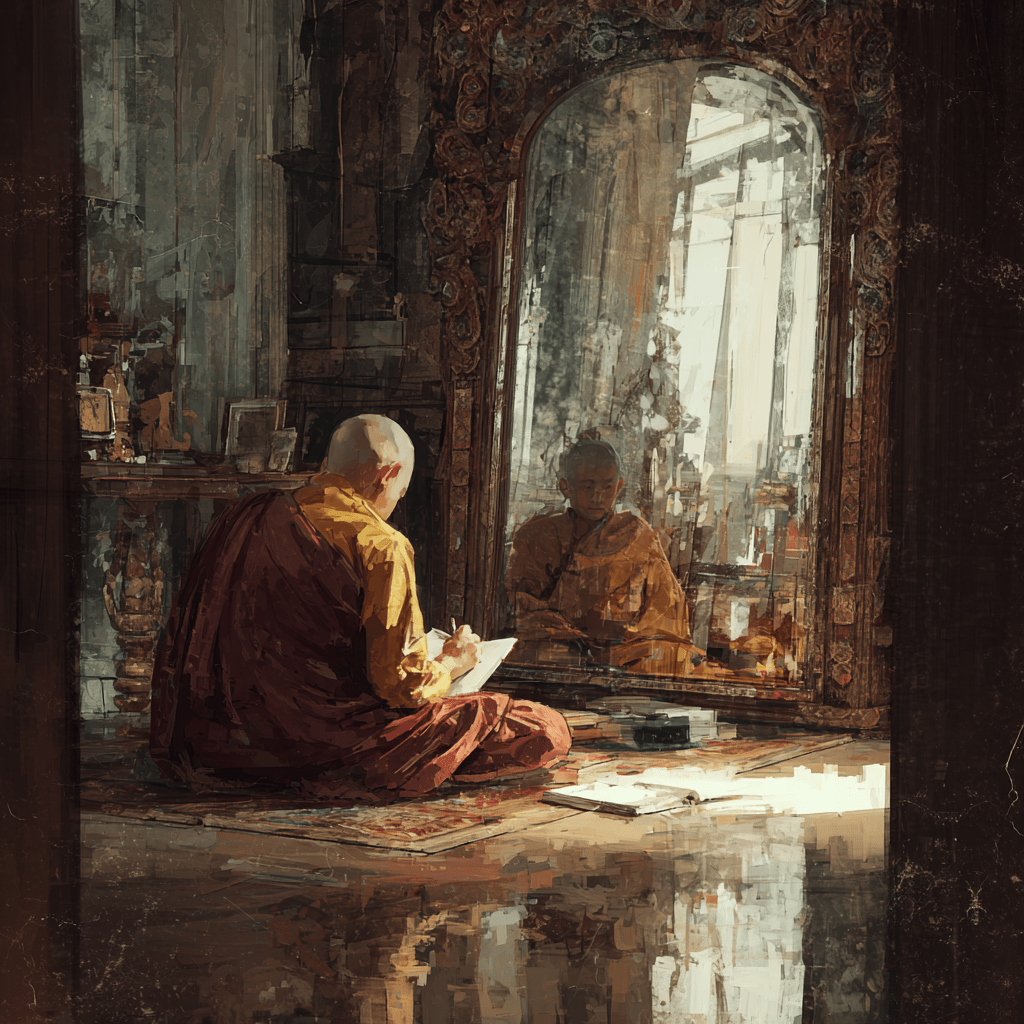


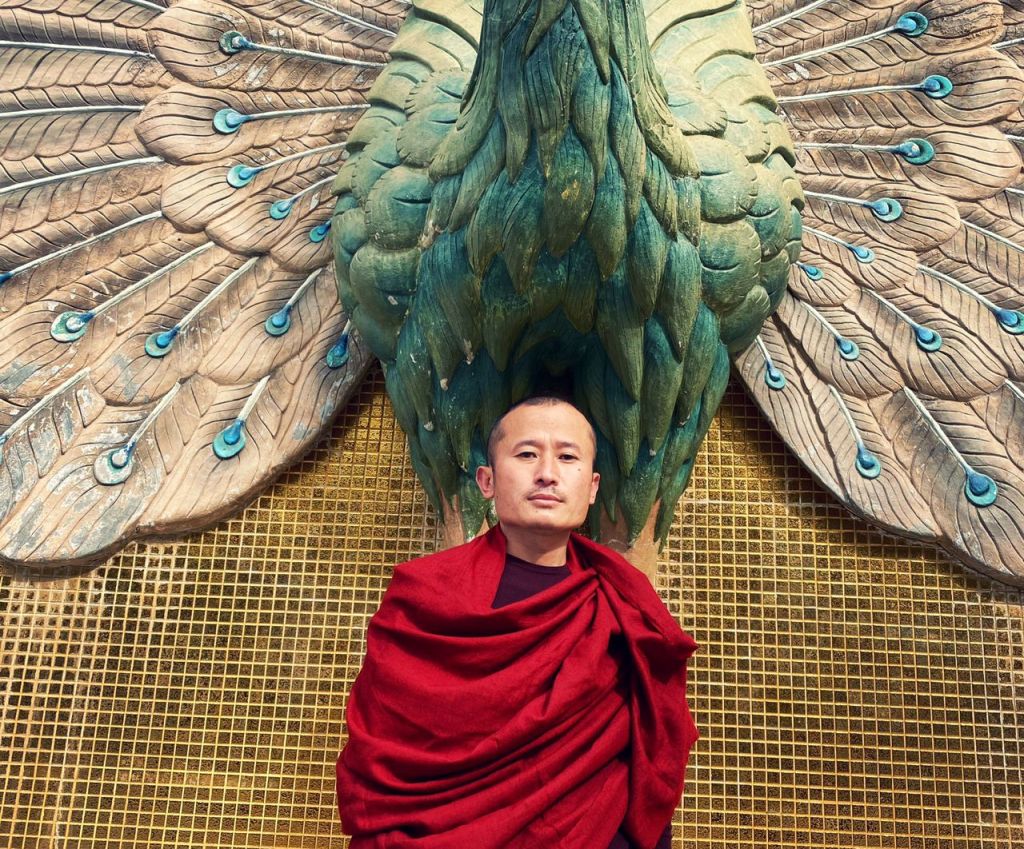

 The Garden of Maitreya