To start off this theme, I should first underline what effort actually means from both Buddhist and non-Buddhist points of view. Effort, from a Buddhist perspective, is a mental event where one takes pleasure in performing a wholesome activity, whereas an ordinary person might define it as energy exerted for a short-term or long-term benefit in this life. However, this exerted energy can be complex in nature, being either virtuous or non-virtuous, which I leave as an open topic to explore further.
From a Buddhist point of view, effort falls within the category of virtue because Buddhist literature defines it as an intention that takes pleasure in virtue.
In this conventional world, different people live in different ways—some with effort and some without—according to the karmic background of each individual. Those with good karma may apply effort in their mundane lives, but not as much as those without good karma from their past lives. In this context, I use the word “effort” to mean hardship, as hardship necessarily involves effort—not just a little but a lot.
Nobody in this materialistic world, including those of the highest social rank, has become great without putting in a certain level of effort. Everybody wants to be rich, to be heard, to be loved, including ourselves. People desire and need things in specific ways according to their tastes. They wish to be beautiful and nice so that others pay attention. Particularly, those in public spaces—academic settings, religious institutions, temples, cinemas, or political arenas—seek attention, whether they are rich or poor, beautiful or ugly. They often hope for miracles to make them famous, believing that fame brings happiness, without considering that they must create the causes for all this through effort.
Nowadays, we want things too quickly—through our cell phones, through Amazon, through DHL delivery—thinking that people should do everything for us without question. We expect quick responses and immediate results, exerting as little effort as possible. This reflects the current state of our society. Everyone desires money, power, relationships, dharma, realizations, service, love, food, and drink—instantly—without putting in the required amount of effort or time necessary for the mechanical process.
We now know that almost anything we need can be obtained through Google’s “magical box.” This belief spans all levels of society, from children to working-class individuals to those of high social rank. Since the advent of cell phones and their multitude of apps, we have unfortunately grown lazier. Even the minimal human effort we once exerted has diminished.
This shift has rendered the lives of the new generation surreal, detached from reality. People buy and pay for everything using their phones. We’ve reached a point where we believe everything can be done for us—except eating and going to the toilet.
At the end of the day, it is evident that while much is possible in the 21st century, two things remain impossible: death and karma, no matter who you are or where you are. Death is unavoidable, and we cannot deceive ourselves about the karma we’ve created when we look inward.
Regardless of belief or disbelief in karma, it operates as a universal law that no one can govern, whether you live in a rich or poor country, in the East or the West, at the North Pole or South Pole. The topics of karma, death, and effort are intricate. A minimum effort, like a small motor, is always necessary for anything we desire in this world. People erroneously believe that all phenomena—relationships, food, drinks, clothing, homes, etc.—are easily achievable. However, this is not true. Without undergoing the processes of karma and effort, things would not materialize. Perhaps your own life experience has taught you this point.
For example, one day you may feel hungry due to circumstances (e.g., a long walk with good company or a quarrel with a partner) and search for a good restaurant on a particular day and place. You may find one restaurant closed, then another, leaving you frustrated and without a meal, even with a wallet full of cash. This demonstrates that money alone does not guarantee success. Even if you find a restaurant, waiting for the cook to prepare a quality meal requires effort and patience. The only alternative might be fast food, where minimal effort is exerted to serve food quickly, but the quality is often inferior to that of food prepared with time and care.
Buddhism identifies three kinds of effort:
The effort of armor.
The effort of collecting virtues.
The effort of working for the welfare of living beings.
The effort of armor, or armor-like effort, refers to the mental resilience needed to persevere. In a physical battle, armor protects one from harm, allowing the fight to continue. Similarly, in our inner lives, mental resilience—such as patience and non-physical strength—is essential to persist without succumbing to minor setbacks. A person with strong mental endurance can be considered to possess armor-like effort. Ultimately, mental effort is more valuable than physical effort, as the body follows the mind.
We often tire quickly after hours, days, or weeks of effort. According to Buddhist theory, this happens because we lack sufficient training and courage, as well as inspiration and aspiration toward a goal. With a strong wish and willingness, anything can be achieved with minimal effort. Time and energy cease to matter until the goal is realized. The great Tibetan master Panchen Lozang Choe Kyi Gyaltshen (16th century) exemplifies this mindset:
“Even if I must remain for an ocean of eons even in the fiery hells of Avici for the sake of even just one sentient being, I seek your blessing to complete the perfection of joyous effort, That out of compassion untiringly strives for supreme enlightenment.”
This verse illustrates the immense mental strength required for the perfection of effort.
The effort of collecting virtues
This second effort might resonate with non-religious individuals, who might view it as collecting materials. Regardless of whether one collects virtue or material goods, interest generated by the perceived benefit of the goal is the fundamental driving force. A religious person aspires to a paradise or higher realization, such as nirvāṇa, where sorrow ceases. Achieving this requires accumulating merit or virtue as the cause.
But what is virtue? Buddhist scriptures define it as “that which brings an appealing maturation or fruit.” In theory, everyone should be diligent in practicing dharma or pursuing their livelihood, as we all desire appealing outcomes. However, laziness—the antithesis of effort—often prevails. This laziness can lead to neglected responsibilities, forgotten obligations, and ultimately chaos in one’s life. Lama Yeshe, a co-founder of the FPMT, often reminded us: “A lazy person would not even find water for his mouth.”
Even lazy people eventually face reality, such as when unpaid gas bills lead to service disconnections, prompting extra costs and valuable lessons. This highlights the necessity of effort.
The effort of working for the welfare of living beings
This effort is monumental. Fulfilling the wishes of infinite sentient beings seems insurmountable, but manageable if approached step by step. Start by helping one or two beings close to you—perhaps a family member or neighbor. Gradually, as you feel ready, extend your efforts to a broader circle. This incremental approach simplifies what initially seems impossible.
To summarize this discussion on effort:
For those without dharma knowledge: Reflect on your human potential. Avoid idleness and indulgence and aim to contribute meaningfully to your family and community.
His Holiness advises: “If you think, ‘I have my house, food, and salary, so I don’t need to think of others,’ that is wrong. Millions of people are in need of help.”
For those with dharma knowledge: Lama Zopa Rinpoche often emphasized that life is as fragile as the interruption of a single breath. Recognizing the certainty of death and the uncertainty of its timing, prioritize effort in all aspects of life, especially dharma practice.
Integrating the Four Noble Truths into Our Busy Daily Lives
A Brief History of Buddha
There lived a prince named Siddhartha, born to King Suddhodana, who ruled the kingdom of Kapilavasthu in the 6th century BC. As the prince grew up, he questioned his luxurious lifestyle within the royal palace. Despite his status and princely lifestyle, Siddhartha was not impressed by the materialistic culture of the royal family. During one of his excursions outside the palace, he encountered three significant experiences- a woman giving birth, a corpse on a deathbed, a disease-stricken person, and an old man using a walking stick. These encounters profoundly influenced the young prince’s mind. The prince discovered the reality of suffering outside the place, forcing him to go on a spiritual quest.
The king noticed Siddhartha’s discontent with palace life and reluctance to assume responsibility for the royal legacy, which worried the king. This unusual behavior of the prince distressed King Suddhodana, who hoped to convince his son to embrace his future role. The king ordered all his ministers and royal attendants to organize a grand feast at the palace to encourage him. A day-long celebration ensued and was completed with a royal orchestra, dancers, musicians, and beautiful companions. However, despite his father’s efforts, Siddhartha remained uninfluenced by the material world’s pleasures and the transient beauty of the material world.
After the ceremonial festivities, in the middle of the night, while everyone was exhausted and asleep, Siddhartha decided to leave the palace. Accompanied by his charioteer, the prince sneaked through his private compartment and left the palace. Upon reaching the desired destination, he sent the charioteer back and continued his spiritual journey alone. This marked the beginning of the Buddha’s spiritual quest away from his home amidst wilderness. Siddhartha did not leave the palace and his family out of strong resentment toward his parents or the royal lifestyle; rather, he wanted to seek answers to profound questions about birth, old age, sickness, and death.
In his spiritual quest, Siddhartha consulted many don-Buddhist teachers from the Brahmanical tradition and other precursing schools, hoping to find the answers he sought. The prince traveled extensively, participating in traditional rituals and rites performed by esteemed sages of the Brahmanical culture and other non-Buddhist practitioners living in the locality then. However, after several years of self-denial and severe physical austerities, the questions remained unanswered, and his pursuit of the ultimate truth was unfulfilled. Ultimately, Siddhartha decided to forsake these extreme practices and began to explore different spiritual approaches.
He then journeyed to the banks of the Neranjana River, near present-day Bodhgaya, where he meditated for six consecutive years until he could break through the hardest shell of negative emotions and discover the inherent nature of himself. After this period of rigorous and strenuous meditation practice, he traveled to Bodhgaya and sat under the Bodhi tree in a meditation posture. On the night he began his meditation under the Bodhi tree, Siddhartha made a solemn promise not to rise from meditation until he gained insight into the true nature of the mind and all things. It is believed that throughout the night, Mara(evil spirits), the embodiment of temptation and distraction, attempted to interrupt Siddhartha’s meditation progress by attacking him with sharp spears and weapons. However, his deep sense of compassion and the power of strong meditative concentration transformed these intimidating weapons into a shower of flowers around him.
At dawn, Siddhartha gained profound insight penetrating the true nature of all things, and achieved enlightenment, becoming the historical Buddha Sakyamuni. He understood and saw the nature of his past, present, and future lives. Some historical accounts even suggest that the Buddha entered the 22nd dimension, after his enlightenment, calling upon the earth and the heavens as witnesses to his enlightenment. According to Buddhist scripture, all future Buddhas must achieve this same realization under the Bodhi tree in Bodhgaya, India. After attaining enlightenment under the Bodhi tree in Bodhgaya the Buddha remained silent in the grove for forty-nine days, contemplating whether anyone would comprehend the profound truths he had discovered through years of practice.
The Buddha expressed, “Profound and serene, unadorned by complexity, and pure luminosity. I have found a nectar-like Dharma. However, if I were to propagate it, no one would understand it. Therefore, I will choose to remain silent in the grove,” as recorded in the Lalitavistara Sutra. Eventually, as requested by the celestial King Indra and Brahma, the Buddha agreed to share the Dharma with others. He delivered his first sermon called, ‘The Four Noble Truths,’ in Sarnath, Varanasi, India. It is believed that the sound of a conch blown by these divine beings resonated throughout the universe as they requested the Buddha to preach the Dharma.
The Four Noble Truths
In general, all religions share a common goal of achieving happiness and avoiding suffering. However, the Buddhist approach differs in that Buddhists believe the origin of misery or dissatisfaction lies in the illusory nature of the mind. This confusing state of mind can only be dispelled through understanding its true nature, which is innately clear and untainted by negative emotions. The Buddha’s message is clear that one cannot overcome suffering without understanding the true nature of the mind through genuine Dharma practice.
Nirvana (Buddha-hood) and Samsara (cyclic existence) are not separate from the mind, they are rather states of our mind. The entire teachings of the Buddha are summarized in the idea of the Four Noble Truths. To attain liberation, we must understand these truths with the help of a qualified and experienced Dharma teacher. The nature of Samsara is suffering, and there is no place in it where people do not experience misery. We are continuously tormented by suffering from birth until death, though some degree of suffering often goes unnoticed. The Buddha highlighted various forms of suffering: giving birth is suffering, falling sick is suffering, growing old is suffering, dying is suffering, not being able to attain what we desire is suffering, and separating from loved ones is suffering.
The Buddha compared the truth of suffering to illness, emphasizing the importance of recognizing it. Having a clear idea or understanding of the illness you are experiencing is crucial. If you are unaware of any illness, you cannot seek to be free from it. Once the problem is diagnosed and you know you are unwell, you need to identify the cause of your sickness. Understanding this cause allows for the possibility of appropriate treatment and recovery. When you heal, you can live in peace and a healthy life. This is called ‘The Second Noble Truth,’ the truth of the origin of suffering.
If a sick person is to recover and live healthily, they should consult a reliable doctor and follow medical advice and treatment. This represents the third noble truth of the path to liberation. If an individual considers their lifestyle, such as the activities they engage in, the food they consume, and the medicine they take. Then they will likely find relief from ailments and any kind of diseases. Practicing this combination of mindful living and a disciplined life is essential for achieving good health and well-being.
Similarly, when encountering life’s challenges and difficulties, it is vital first to identify the nature of the problem and its cause before attempting to resolve it. Identifying and addressing the problem is crucial; we cannot overlook the difficulties we face but we can find ways to deal with them effectively. We suffer because we fail to recognize the nature of suffering and its causes. A being continues to wander through cyclic existence due to karma and will continue to suffer unless we break this Karmic chain. In Buddhist scriptures, it is mentioned that cause and effect should be perfectly aligned with one another and if we embrace this principle and understand it well, we can ensure that our ethical conduct will become morally sound. Therefore, this is one of the reasons why the Buddha’s teachings during his first turning of the wheel of dharma, the four noble truths, are closely connected to moral conduct.
The suffering and displeasure we constantly undergo in this human world is not something that comes without a cause. It comes as a result of coming together of certain causes and conditions. According to Buddhist teachings, nothing comes into existence independently without depending on certain causes and conditions. Whatever exists, arises from causes and conditions, one is dependent on the other, and one supports the other. Both the mind and the physical world arise as a result of conditions and dissolve instantly when the causes and conditions are insufficient to exist. Once the causes and conditions are exhausted, things stop manifesting and we no longer experience the same thing this idea is called change from a Buddhist standpoint. Similarly, suffering is temporary and it fades away as it has no inherent or substantial nature, allowing the mind to experience pleasure. Thus, the Buddha taught the theory of dependent origination or the fundamental Buddhist principle of the twelve links of dependent origination(Pratityasamupada).
Through understanding these realities we will gain insight into- what we truly are, what we experience around us, how and why we react to what is within and around us, and what we should aspire to live a peaceful life. As we grow older, it’s clear that our physical bodies become weaker, and we often fall ill. However, the Buddha, with his all-knowing mind, recognized that suffering goes beyond just the physical state. Human beings also go through mental suffering, where our minds endure more pain than our bodies do, often afflicted by adventitious negative emotions. The Buddha sought to help individuals understand this truth, so they could avoid falling from one unsatisfactory situation to another and instead comprehend the root causes of their suffering.
The first teaching the Buddha shared after attaining the perfect state of enlightenment addressed the three root causes of suffering: anger, greed, and delusion. Because our minds remain clouded by negative emotions, we become trapped in a lower realm known as Samsara for countless eons and this will continue until we remove negative emotions and Karma. We often crave material possessions and feel anger or disappointment when we don’t get what we want or when our expectations are not met. These reactions stem from the delusional perception that happiness can be found in material things. We will never achieve lasting happiness as long as we remain bound by our attachments to external things or sensual pleasures of the external world. Thus, the vicious cycle of Samsara will continue. However, the Buddha’s teachings can only help us end suffering if we genuinely practice them and apply the methods he provided to work towards achieving liberation.
The Buddha’s third noble truth, “The End of Suffering,” outlines the method to overcome our attachment to material things and the cravings that bind us to this cyclic existence. He taught that it is essential to let go of our reliance on external possessions and to adopt skillful means to free ourselves from desires. By doing so, our minds can be liberated from bondage, enabling us to achieve enlightenment, a state free from all forms of suffering. In the noble language of Sanskrit, the term Nirvana means “extinction.” It represents a state that can be attained by permanently removing the three root causes of suffering: desire, anger, and delusion. According to Buddhist scriptures, when a person’s mind reaches Nirvana through diligent training and disintegrates from the physical body, it is liberated from the fetters of Samsara. This means the individual no longer needs to undergo cycles of existence or experience suffering. However, letting go of these negative attachments is not easy and it requires a lot of effort, which is why the Buddha identified a path to reach awakening, known as the fourth noble truth, ‘The Noble Truth of Path’.
The Buddha’s first sermon is known as ‘The Four Noble Truths’ because these truths can only be realized by noble beings, or Arhats, who have attained a certain level of spiritual understanding. Ordinary people, like us, do not have an opportunity to grasp these truths as our minds are clouded by mental afflictions, preventing us from penetrating this deeper realization. It’s similar to how we cannot feel a single hair on our palms, but when that hair gets into our eyes, we become instantly aware of it. In the same way, noble beings can realize these profound truths.
Conclusion
The Buddha did not mean that we should abandon our homes, children, spouses, or material possessions to isolate ourselves and practice Dharma at a temple. Instead, the Buddha encouraged us to change our perspective on these material things. It’s important not to become overly attached to temporary things. We should rather strive to understand and realize the true nature of things as they are, without getting distracted by their outward appearances. By doing this, life becomes easier and we can lead a happier and more peaceful existence.
Buddhism is rooted in compassion, wisdom, and ethical conduct, which sets Buddha’s teachings apart from those of other religions. A true Buddhist is someone who disciplines themselves ethically, trains their mind for positive growth, and asserts certain truths based on logic and intelligence. These three moral principles are the fundamental precepts in Buddhist teaching and are crucial in our daily lives. The Buddha identified three essential parts of training that uphold his entire teaching. Unlike many other religious beliefs, Buddhism encourages all living beings to make individual efforts to achieve liberation. Buddhism teaches that Buddha nature(a seed for becoming a Buddha) pervades every living being. All we need to do is recognize it through genuine practice to activate or awaken this Buddha nature and attain enlightenment. Without sincere practice and proper guidance, we will not be able to recognize our true nature or free ourselves from this suffering world. Therefore, the Buddha, known as the awakened one, taught us the best methods for eliminating suffering and its causes. To avoid suffering, the Buddha emphasized the importance of understanding its root causes and addressing them. To convey this, he introduced the first wheel of Dharma, known as the Four Noble Truths.
In our daily lives, when we feel stressed, burdened by our activities, disappointed, or incomplete, it’s important to analyze the situation before surrendering to feelings of hopelessness and helplessness. There is a solution to every problem we encounter, and the stress we experience is temporary. These negative feelings often cloud our minds, but once we understand their origins and apply effective strategies to address them, we can free ourselves from various entanglements. The Buddha, who was once an ordinary human being like us, practiced for many years and ultimately discovered the true nature of reality. He unearthed a fundamental truth: nothing can deny the insights he gained. When we are liberated from our temporary mental afflictions, which obscure our true nature, our minds can break free from the grip of negative emotions. This liberation allows us to rise to a higher state of consciousness and can ultimately lead to enlightenment. The Buddha emphasized that what he discovered was neither a religion nor a philosophy, it was rather the result of his own direct experience. He encouraged others to make individual efforts toward achieving their liberation.
Khenpo Karma Wangyel returns in October to Romania. In continuation of the presentation from May of this year, he will hold a session of teachings between October 18-20, 2024 in Bucharest with the subject of practical preliminaries (ngondro), compassion and meditation. You can read more about Khenpo’s first visit to Romania here:
Ngondro means “that which goes forward”. In other words, it is the very first step. Also called foundational practice, it is a structured practice manual designed to generate the mind of renunciation, purify negative karma, and accumulate merit so that we cannot actualize our potential or realize our true Buddha nature. Ngondro practice is divided into two parts. The outer part consists of reflecting on the four thoughts that take your mind away from samsara, while the inner part in the Vajrayana Dzogchen tradition presents the request itself, the Refuge project, followed successively by Bodhicitta, Vajrasattava, Mandala and Guru Yoga practices.
Khenpo Karma Wangyel is an exponent of Bhutanese Buddhism and his teachings are from the perspective of the Pema Lingpa lineage, the keeper of the teachings of the Nyingma lineage in Bhutan. In Tibetan, the word for compassion is nying-je (Tib. snying rje), which literally means noble heart. Compassion is the most dignified, noble, and profound love of our hearts, the ultimate intention that makes possible enlightenment and liberation for the good of all sentient beings.
Bhutan is an isolated Himalayan kingdom where the people have still kept their purity and faith due to little contact with Western civilization. Also called the Kingdom of Happiness, Bhutan is considered the country with the happiest people. The teachings will be presented in Tibetan and English translation will be provided. If there are people who want the translation into Romanian, it can be provided upon request.
Participants can make a small voluntary donation to the teacher.
Registration can be done by email at citizenk2014@gmail.com or by phone at no. 0727673376 or 0727848430 within the limit of available seats offered by the space dedicated to the event.
“I take refuge in the Buddha, Dharma, and the supreme Sangha until I reach enlightenment. Through the merit I gain from practicing generosity and other virtues, may I attain enlightenment for the benefit of all sentient beings!”
In Buddhism, taking refuge in the Three Jewels (Buddha, Dharma, and Sangha) is the first step that anyone embarking on the path of Buddhism must take. This act of taking refuge is crucial as it serves as the entry point to the Buddhist path.
Each religion has its own approach to taking refuge, but Buddhism stands out in its understanding of the object and method of refuge. In Buddhism, the object of refuge is seen as inseparable from oneself, and it emphasizes the importance of personal effort rather than blind faith or devotion. It is believed that relying solely on external objects of refuge will not lead to salvation.
A genuine understanding and internalization of the concept of refuge are essential for one to be considered a Buddhist. Fear and belief are said to be the driving forces behind seeking refuge, as one must first recognize their own limitations and seek help from external sources. Fear in this context refers to the fear of suffering in lower realms and the fear of suffering in Samsara. If one has already overcome all fears, there is no need to seek help.
Even if one intends to take refuge in the Three Jewels, without conviction and faith that the objects of refuge can provide protection, taking refuge is not possible. According to the Seventy Verses on Taking Refuge, “the Buddha, Dharma, and Sangha are the refuge for seeking liberation”.
The object of refuge in Buddhism is the Three Jewels – the Buddha, the Dharma, and the Sangha. These three entities are seen as essential for attaining liberation, as they provide guidance, teachings, and companionship on the spiritual path. Just as a sick person needs medicine, a doctor, and a caregiver, a Buddhist practitioner relies on the Three Jewels for support and guidance.
The reason he is considered a Buddha is because he is free from all fears, skilled in liberating others from fear, and has great compassion for all without bias. While the Buddha may be adept at liberating others from fear, without unbiased compassion for all living beings, there is a risk of only being able to protect some and not all.
In essence, we take Refuge in the Three Jewels with a strong belief in their qualities. Once we have taken Refuge, we should refrain from harming other beings, show reverence towards Buddha’s images and scriptures, and avoid disrespecting the Sangha.
Taking Refuge is the basis for all other precepts, purification of negative deeds, accumulation of merits, avoiding lower realms, protection from harm by non-human spirits, fulfillment of wishes, and swift attainment of Buddhahood.
The Buddha
In Buddhism, taking refuge in the Three Jewels – Buddha, Dharma, and Sangha – is the gateway to the Buddhist path. Buddha is the one who shows the way of life, Dharma is the way of understanding that leads to Buddhahood, and Sangha is the community that lives in harmony and awareness. As Buddhists, we seek refuge in these Three Jewels until we attain the state of enlightenment. Taking refuge in the Three Jewels is not about relying on them to save us from the lower realms, but rather about following the teachings of the Buddha, practicing the Dharma, and seeking guidance from the Sangha.
The Buddha serves as our Teacher, and we must follow his teachings. The Dharma provides us with the path to enlightenment, which we must practice diligently. The Sangha, our spiritual friends, support and guide us along the path to enlightenment. By practicing techniques and wisdom, such as the eighty-four thousand heaps of Dharma taught by the Buddha, we can save ourselves.
I can guide you on the path to liberation, but ultimately, it is up to you to achieve it.
The Historical Buddha
The historical Buddha Sakya Muni, also known as Siddhartha Gautama, was born 2568 years ago to a royal family in Kapilavasthu. His birth is celebrated as a day of enlightenment and spiritual awakening for millions of people around the world. It is through the power of his omniscience and knowledge that the Buddha reached the state of enlightenment.
Buddha’s teachings of compassion, mindfulness, and inner peace have inspired countless individuals to lead more meaningful and fulfilling lives. His message of love and understanding transcends time and continues to resonate with people of all backgrounds and beliefs.
The Buddha taught that all living beings are fundamentally the same – ordinary beings continuously wandering in the cycle of existence. He discovered the truth about life after sacrificing many lifetimes, ultimately becoming the awakened one, the Buddha. His teachings are rooted in wisdom and compassion, aiming to help us understand the true nature of the mind and achieve liberation. By developing wisdom and compassion, we can follow the path to enlightenment.
In Buddhism, it is believed that the Buddha imparted a vast array of teachings, with the concept of TRUTH being the most significant. The entirety of the Buddha’s teachings can be categorized under the umbrella of TRUTH. Following his enlightenment under the Bodhi tree in Bodhgaya, the Buddha, at the behest of Brahma and Indra, delivered the sermon, The Four Noble Truths, to five disciples at Sarnath.
Within Buddhist literature, the teachings on the Four Noble Truths, the Eightfold Noble Path, and Karma – the universal law of cause and effect – are considered essential principles that every individual embarking on the Buddhist path must grasp. The Buddha offered eighty-four thousand sets of teachings as methods to cultivate mindfulness and discipline the mind. His teachings serve as a foundational tool for transforming negative emotions and mental afflictions into wisdom through various skillful means and methods.
The Gautama Buddha did not establish a religion called Buddhism; instead, he proclaimed that he had discovered a path that leads to the cessation of human suffering, known as the Noble Eightfold Path. The path the Buddha found was not taught by anyone; rather, it was discovered as a result of his own deeper understanding of things.
What the Buddha discovered 2568 years ago, known as enlightenment, was not transmitted to him by any divine being or someone with a higher realization. It was achieved through understanding the inherent nature of things. Siddhartha attained the perfect state of enlightenment as a result of gaining a direct experience of the true nature of things. For this reason, his teaching transcends the idea of religion, views, dogma, and philosophy, which are concepts that arose from discursive thoughts.
Buddha’s teaching is not a religion; it is a way of life and a method to develop a direct experience of the true nature of things, referred to as REALITY. The Buddha denied the idea of rituals and prayers because liberation is only possible through understanding phenomena as they are, by breaking the prison wall of IGNORANCE. The entire universe evolved as a result of dependent co-arising; nothing came into existence on its own. All things are impermanent, and there is no separate SELF-existing independently.
All living beings possess the Buddha nature, which is the capacity to awaken ignorance and become a Buddha if practiced as instructed. “The Buddha nature is present in all living beings” (Uttaratantra). To understand the true nature of things, we must look at them deeply. This deeper understanding of things gives rise to the development of AWARENESS, and through this, we can reach the other shore called liberation. It is important to be mindful of what we are doing, as this will help us do everything with awareness. Simply put, liberation is an understanding. As we understand, we become liberated.
The Four Noble Truths
Buddhism’s Four Noble Truths are considered noble because they lead to liberation from suffering. This fundamental teaching of the Buddha encompasses the entire Buddhist path. The Buddha delivered his first sermon to his five foremost disciples at Deer Park, Sarnath, 49 days after attaining enlightenment. The teachings of the Buddha, known as Dharma, were shared with all beings in the human and celestial realms.
The Truth of Suffering
Suffering is an inherent part of life, manifesting in various forms. Even in times of apparent well-being, feelings of insecurity and anxiety persist. This suffering is rooted in Samsara itself.
The Cause of Suffering
Ignorance and the craving mind are identified as the root causes of suffering. Everything arises due to specific causes and conditions, and the misconception of an independent and concrete self leads to ongoing suffering within the cycle of Samsara.
The Cessation of Suffering
Despite the constant suffering resulting from our misconceptions, the negative emotions and obscurations that cloud our understanding can be purified. Just as the sun is obscured by passing clouds, our true nature can be revealed through the removal of temporary afflictions, leading to the cessation of suffering.
The Path to the Cessation of Suffering
The Eightfold Noble Path is the path that leads to the end of suffering. By cultivating mindfulness, ethical living, and wisdom, one can follow this path towards liberation from suffering and the attainment of enlightenment. We often blame external circumstances and others for our suffering, failing to recognize that the root of our suffering lies within our own afflicted minds. True inner peace arises from within, not from external sources.
The Eightfold Noble Path
The Eightfold Noble Path is the path that the Buddha traversed to reach the perfect state of enlightenment. It is the middle path, free from extremes, that every individual seeking enlightenment must practice. It is on this path that the Buddha attained enlightenment, allowing one to live in the present moment with awareness.
Thich Nhat Hanh, in his book “Old Path White Clouds,” describes the Noble Eightfold Path as the path of living in awareness, with mindfulness as its foundation. By practicing mindfulness, one can develop concentration, leading to understanding. This understanding, in turn, can liberate individuals from suffering and bring true peace and joy.
Right Understanding:
Through the right understanding, one develops a clear vision and wisdom, penetrating the true nature of things. This involves understanding the Four Noble Truths, the law of Cause and Effect, and seeing reality without delusions or distortions.
Right Thoughts:
Developing the right thoughts means resolving not to hold attachments, greed, anger, or ill will. It involves refraining from causing harm to others and cultivating pure intentions.
Right Speech:
Right speech involves speaking the truth and avoiding slander, harsh words, and idle gossip. It is about speaking with honesty and kindness, without causing harm.
Right Action:
Right action entails respecting all life, refraining from harming others and engaging in wholesome actions. It involves refraining from taking life, stealing, engaging in sexual misconduct, and harming living beings.
Right Livelihood:
Right livelihood means abstaining from trades that harm oneself or others, such as slavery, prostitution, animal breeding for slaughter, and trading in intoxicants or weapons.
Right Effort:
One should make efforts to avoid unwholesome thoughts, overcome existing unwholesome thoughts, and develop wholesome thoughts. This involves striving to let go of grasping thoughts and limited views.
Right Mindfulness:
Maintaining mindfulness of the body, feelings, mind, and phenomena allows for the development of concentration and awareness, enabling one to live in the present moment.
Right Concentration:
Through the right concentration, one can cultivate a calm and tranquil mind, seeking to realize the true essence of the mind and transform negative emotions. By following the Eightfold Noble Path, individuals can cultivate wisdom, compassion, and inner peace on their journey towards enlightenment.
Karma (The Law of Cause and Effect)
Karma, the law of cause and effect, is a fundamental concept in the philosophical schools of Buddhism. It is part of a set of beliefs that form the basis of Buddhist philosophy. Karma plays a crucial role in the evolution of the universe and individual beings, determining the outcome of our actions and shaping our existence for better or worse.
The concept of karma is closely related to the idea of action and freedom of will in sentient beings. It forms the basis of Buddhist ethics, asserting that the entire universe is governed by a similar law. This law connects us to both our inner selves and the external world, influencing our existence in profound ways.
Every action we take has consequences, both in the physical world and within ourselves. Our present circumstances are believed to be the result of past karma, and our future is shaped by our present actions. The law of cause and effect is undeniable, impacting our existence in significant ways.
The theory of karma is based on the doctrine of causality, where all actions, whether positive or negative, lead to corresponding results. Different types of karma, such as good and evil, right and wrong, are determined by the intent and motivation behind our actions. Each individual is responsible for the consequences of their karma, as actions cannot be transferred to others and the results cannot be avoided.
While karma has no beginning, it can be brought to an end. The Buddha taught that the chain of karma can be broken through the practice of the eightfold path. This path offers a means to overcome the cycle of cause and effect and attain liberation from the consequences of past actions.
Cause and effect should be in complete harmony with one another. If we accept such a dictum, then we have reached a point where our behavior is bound to become morally sound. That is one of the reasons why Buddha‘s sermons during his first turning of the wheel of dharma are closely associated with moral conduct. There is no beginning to our intelligence and souls. So, our birth is not a beginning, and our soul is primordially veiled by ignorance. And therefore the antidote to overcoming this ignorance should also be beginning-less.
Conclusion
It is through self-realization and understanding that we can transcend the illusions and find true meaning and fulfillment. We find ourselves lost in a world where truth is elusive and the fabric of reality seems distorted. Words and the external world can deceive us, appearing as mere illusions created by our own minds.
In our quest for purpose and significance, we navigate through a vast ocean of falsehoods. Paradoxically, the more we search, the more our vitality dwindles. We relentlessly pursue wealth and material possessions, believing they hold the key to our happiness. Yet, in the end, we are left with a profound sense of emptiness and despair.
Love and a sense of belonging are essential to our well-being. However, we find ourselves trapped in a never-ending cycle of suffering and longing, unable to escape its grasp. In this samsaric existence, we are prisoners of our own creation. Our desires and egos bind us, compelling us to constantly strive and take. But amidst this entanglement, there exists a way out—a path towards liberation, truth, and self-discovery.
Let us break free from the chains of illusion and delusion that confine us. In doing so, we can uncover a profound sense of peace and freedom that transcends the confusion of the samsaric realm. Ultimately, it is our own awakening that holds the power to liberate us from the ceaseless cycle of birth, death, and the anguish of the Samsaric world.
Through self-reflection and introspection, we can unveil the eternal and unchanging essence that lies within us. Beyond the transient nature of the external world, there exists a deeper reality that transcends time and space. By connecting with this inner truth, we can cultivate a lasting sense of serenity and liberation.
Let us embark on this transformative journey of self-discovery and liberation. By shedding the illusions that bind us, we can break free from the relentless cycle of birth and death, and attain a state of enduring peace and fulfillment in our lives.
Note:
Through this article, I would like to bring out the outline of the Buddha’s teaching in a precise way by subsuming the core concepts of Buddhist ideas under a few selective topics. I have made every possible attempt to include and refer to available references carefully to make this article worth reading in a specific way. This article attempts to encourage the readers in preparing to embark on an introduction to Buddhist studies.
Nima Gyelpo
A short note about the author
My name is Nima Gyelpo and I am a Buddhist monk belonging to the Kagyu lineage. I have completed my graduation from one of the Kagyu monastic institutions in Sikkim and an MA degree in Buddhist studies, philosophy, and comparative religion from Nalanda University in India. I am passionate about sharing my knowledge and experiences with others, especially beginners who are interested in Buddhism. I hope that this article will be helpful to those seeking to learn more about this ancient and profound spiritual tradition.
Transcript and Postprocessing by Veronica Anghelescu
Moderator: Alexandra Grigorescu
White Tara Study Group & The Garden of Maitreya
Geshe Jampa Gelek is the resident teacher of Buddhist studies at the Lama Tsongkhapa Institute in Pomaia, Italy. He earned his Geshe degree from Sera Je University in South India, becoming the first to graduate in 1999. Currently, Geshe Jampa Gelek is concentrating on tantric studies and teaching in the Institute’s Master Program, which is part of the Foundation for the Preservation of the Mahayana Tradition which follows the Gelug tradition of Buddhism.
His colleague, Thubten Sherab Sherpa Yangzin, is from Nepal and was formerly a monk at Kopan Monastery in Kathmandu. He is now engaged in translating sacred Buddhist texts and teaching the Tibetan language at the University of Napoli, in Italy.
Alexandra Grigorescu, our moderator, is the coordinator of the White Tara Buddhist Study Group in Pitesti, Romania, and she is one of the organizers of this event. She holds a Master’s degree in the Management of Social and Health Services and, through personal efforts, she has built a meditation and practice space at Pitesti, where many venerable teachers have come to offer teachings and empowerments.
Veronica Anghelescu, the sponsor of the event, holds a doctorate in musicology, and is a student of Venerable Geshe Jampa Gelek in the Master’s program at the Lama Tsongkhapa Institute. She is the coordinator of the Garden of Maitreya Dharma publication. She will co-participate in today’s translation.
Geshe Jampa Gelek: First of all, I just want to express my happiness to see you all here. I welcome you and sincerely thank you for coming.
To begin, I want to outline some of the main principles of Buddhism. The first principle revolves around the interdependent connection or relation, and the second principle concerns conduct and behavior.
Regarding the first principle, interdependent relation, we must understand two key concepts: samsara and nirvana, or liberation. What is samsara? It refers to the cycle of rebirth that we are compelled to undergo due to our karma and delusions. As long as we are bound by this cycle, known as samsara, we are essentially trapped. However, when we manage to cut off these delusions and karma, we gain the freedom to choose our life and reincarnation. This state of freedom is nirvana, or liberation.
These principles underscore the interdependence of all things and emphasize the importance of our own behavior.
When we talk about interdependence, we don’t necessarily have to refer specifically to samsara and nirvana. However, when we discuss samsara, we need to understand it as the cycle of our successive births, which is primarily driven by our actions, whether good or bad. The moment we manage to break free from this cycle, we attain freedom and the ability to choose our future births. This brings us to the actual answer to the question about karma.
We focus on karma because it is the key factor that compels us to undergo life and reincarnation within samsara. Karma, as the cause of our rebirth in samsara, has different aspects. If the karma is negative or bad, it results in a bad rebirth or incarnation. Conversely, if the karma is positive or good, it leads to a good rebirth. This is how karma directly influences our lives and the cycle of our reincarnations.
Our actions, which coordinate and condition the development of the soul, can be virtuous or non-virtuous. Virtuous actions lead to a good rebirth in the future, while non-virtuous actions result in a less favorable rebirth. To create karma, we need a motivation, which is often driven by the conception of grasping at self-identity. This grasping is the fundamental cause that motivates us to create karma.
With this understanding, any rebirth taken under the power of external forces is marked by suffering. Conversely, any rebirth chosen freely is characterized by happiness. Unfortunately, when we undergo rebirth due to karma and delusion, we are influenced by external conditions and lack true choice. This is what we mean by being empowered by other conditions. As long as we are conditioned in this way, suffering is inevitable. However, when we have the freedom to choose our rebirth, we experience true liberation and happiness.
Let’s try to understand how the mechanism of samsara begins. In this context, we discuss the 12 links that facilitate the cycle of samsara. These 12 links consist of six causal links and six resultant links. The causal links explain how the cycle starts, with ignorance as the starting point. Ignorance refers to the mind or thought that does not understand the reality of phenomena. This is the first causal link.
The second link is known as karma formation. Due to ignorance, we produce karma. Once karma is created, it needs a basis to be stored, which brings us to the third link: consciousness.
To illustrate this, we can use the analogy of a farmer. Imagine a farmer who has a field to work in. The farmer represents ignorance. When the farmer plants seeds in the field, his actions—moving back and forth and spreading seeds—represent karma, the second link. The field itself represents consciousness, the third link. These are the first three of the six causal links.
Therefore, the first link is ignorance. From a Buddhist perspective, ignorance is the thought or mind that refuses to understand or recognize the reality of phenomena. Karma, which drives the cycle of samsara and the birth of beings, arises because of ignorance. Karma cannot exist without ignorance. Once karma is created, it requires a foundation to be established.
Continuing with the farmer analogy: after the farmer plants the seed in the field, he must perform additional work, such as providing water and manure, for the seed to grow. This process illustrates that the seed needs to mature gradually. The farmer’s efforts to nurture the seed symbolize the ongoing actions necessary for karma to develop and manifest.
Therefore, ignorance is the first link, leading to the formation of karma. Karma, in turn, needs a basis, which is consciousness. The farmer analogy helps us understand how these links interact and develop over time.
Craving is like manure: the desire for this or that fuels craving, which provides the conditions for the seed to grow. When craving becomes very strong, it intensifies the seed. This leads us to the next stage: grasping. Once grasping becomes very strong, it further strengthens the seed. At this point, the seed reaches what we call the third link: becoming, or existence.
To put it simply, the karma that makes us take birth in samsara is a type of contaminated karma. This contaminated karma is what causes us to be born in samsara. When discussing karma purely on an intellectual level, it may seem subtle and abstract. However, using the analogy of a seed makes it easier to understand.
The seed of karma ensures that we are bound to be born in samsara, but if conditions like craving and grasping are absent, there is no guarantee of being reborn in samsara. Therefore, craving and grasping are crucial conditions for the continuation of samsara.
For example, in Buddhism, there is a type of being called an arhat. An arhat is someone who has destroyed their inner enemies—the afflictions and delusions. When an arhat was a normal person, they overcame their inner afflictions and delusions, eliminating these inner negative conditions. Consequently, the “water” and “manure” necessary for the growth of bad karma are absent.
This means that although an arhat may still have residual bad karma, without the conditions of craving and grasping (symbolized by water and manure), this bad karma cannot produce results in samsara. Just as a seed needs water and care to grow, karma requires specific conditions to manifest.
Therefore, if all the conditions (such as craving and grasping) are present, karma is generated, and we are reborn in samsara, potentially in better or worse circumstances. However, when these conditions are absent, as in the case of an arhat, karma cannot bring about rebirth in samsara.
Indeed, not all arhats experience rebirth in the conventional sense. Arhats, having attained realization, have overcome desires, temptations, and the inner enemies such as ignorance. They are no longer ordinary beings subject to rebirth in better or worse realms. Their karma is different because they have eradicated the conditions that would nurture seeds for future births. Without these nurturing conditions, like water and nourishment for seeds, the potential for new growth is absent.
As mentioned earlier, Buddhism emphasizes the principle of interdependent origination or dependent arising. According to this principle, everything within samsara, including ourselves, the environment, and all phenomena, arises from specific causes and conditions. Without a cause, there can be no effect. This interconnectedness highlights the mutual dependence of cause and effect, illustrating how they are intricately linked.
Understanding this fundamental concept of interdependent origination is crucial in Buddhism. It underscores the interconnected nature of all phenomena and provides insight into the workings of karma and rebirth within the cycle of samsara.
The philosophical concept of interdependence, as understood in Buddhism, emphasizes that everything, including ourselves and our environment, arises from causes and conditions. Nothing exists independently; everything has a preceding cause. Without a cause, there can be no effect. This principle is central to understanding the interdependent origination of phenomena.
When we create positive karma, it leads to happiness and positive outcomes. Conversely, negative karma results in suffering and negative consequences. Thus, karma is deeply influenced by our motivations. Positive motivations lead to beneficial consequences, while negative motivations lead to harmful outcomes.
For example, consider a doctor who, with a genuine motivation to help patients, treats them with kindness and care. Despite the doctor’s best efforts, there might be unforeseen mistakes or accidents that result in a patient’s death. In such a scenario, the crucial question arises: what is the outcome? From a Buddhist perspective, even if an unfortunate event like a patient’s death occurs due to accidents or mistakes, the karmic implications are based on the doctor’s underlying motivation and intentions.
This illustrates how karma is not solely determined by the outcome of actions but by the motivations driving those actions. Positive motivations mitigate negative consequences, even in challenging situations where outcomes are not what was intended.
In Buddhism, the intention behind actions is crucial in determining the karmic consequences, regardless of the outcome. If a doctor acts with genuine, positive motivation to save lives and yet, due to unforeseen circumstances or mistakes, a patient doesn’t survive, the karmic weight of this outcome would be lighter because the motivation was pure and compassionate. In this case, the doctor’s intention was not to harm but to heal, and this positive intention influences the karmic result.
Buddhism teaches that when the motivation or intention behind an action is positive, the action itself becomes positive, regardless of external factors or outcomes. Conversely, if the motivation is negative, even actions that appear outwardly good may result in negative consequences.
Understanding this principle of interdependence and karma guides Buddhists in how they should conduct themselves. Knowing that positive intentions lead to positive outcomes encourages individuals to cultivate compassion, kindness, and altruism in their thoughts and actions. This awareness helps practitioners navigate moral dilemmas and challenges with mindfulness and ethical conduct.
The second aspect, conduct, emphasizes the importance of behaving ethically in terms of body, speech, and mind. This entails acting in a way that avoids harm and promotes well-being for oneself and others. Practitioners are encouraged to refrain from any form of violence and to actively engage in actions that benefit others whenever possible. If direct assistance is not feasible, the minimum requirement is to avoid causing harm.
Maintaining positive behavior across body, speech, and mind helps individuals cultivate virtuous qualities and contributes to personal and collective well-being. Buddha himself emphasized the principle that every action has consequences, just as every seed sown results in sprouts or stems in due course. This underscores the fundamental law of karma in Buddhism, where causes and conditions shape our experiences and outcomes.
By adhering to these principles of conduct—avoiding violence, promoting kindness, and understanding the interconnectedness of actions and consequences—Buddhists strive to create a harmonious and compassionate society. These teachings encourage mindfulness in how one interacts with oneself and others, fostering a path toward personal growth and spiritual fulfillment.
Certainly, just as a seed alone cannot produce fruit without the right conditions such as water, seasons, and timely rains, karma also requires a complex interplay of factors to manifest its results. In Buddhism, karma is not just a simplistic cause-and-effect relationship; it involves a series of interdependent causal links.
To bring about its fruition, karma relies on all twelve links of dependent origination. Each link—from ignorance (the first link) to craving, grasping, and so on—is integral in the process of generating karma and leading to its eventual result. Ignorance initiates the cycle by clouding our understanding of reality. Karma formation (the second link) occurs due to this ignorance, followed by consciousness (the third link) providing the basis for karma to be stored.
As the analogy goes, just as a seed needs water, seasons, and proper nurturing to grow into a plant, karma seeds require time, conducive conditions, and the appropriate sequence of causal links to ripen into their outcomes. This comprehensive understanding highlights the intricate nature of karma and the profound impact of our actions and intentions across the continuum of existence.
By recognizing and understanding these causal links, practitioners gain insight into how their thoughts, words, and deeds shape their present experiences and future outcomes. This knowledge serves as a guiding principle in cultivating wisdom, ethical conduct, and compassionate living in accordance with Buddhist teachings.
In Buddhism, our understanding is grounded in two primary sources: spiritual authority or scriptures, and reasoning. Certain aspects of doctrine and practice are validated through scriptural authority, relying on teachings and texts considered authoritative within Buddhist traditions. This spiritual authority provides foundational principles and guidelines for practitioners.
Additionally, reasoning plays a crucial role in Buddhist inquiry. It involves examining external objects and phenomena through direct sensory perception and logical analysis. Through reasoned inquiry, practitioners seek to understand the nature of reality, including both visible and invisible aspects.
In the process of learning, discussions, and debates within Buddhist education, emphasis is placed on both scriptural authority and logical reasoning. Different aspects of Buddhist philosophy and practice may require validation from either scripture or logic, depending on the nature of the subject being studied. This dual approach fosters a comprehensive understanding that integrates spiritual insights with rational inquiry, guiding practitioners towards deeper wisdom and insight into the nature of existence.
Through logic and reasoning in Buddhist philosophy, we explore how everything around us exists and the processes by which objects manifest through our sensory perceptions. This includes understanding the causal processes that underlie the continuity of events, as described by scholars like Dharmakirti. This continuity spans from simple seeds germinating into plants, which then multiply into larger groups, illustrating the interconnectedness and causal nature of phenomena.
What does it mean to be a good person in Buddhism? It means cultivating a good heart towards our neighbors and all sentient beings. At its core, Buddhism emphasizes the transformation of oneself to embody compassion and kindness towards others. The essence of this practice lies in developing a genuine concern for the well-being and happiness of all beings.
The Buddha taught that all sentient beings, whether humans, ants, or animals, share a common desire for happiness and aversion to suffering. This fundamental similarity underscores the interconnectedness and equality of all beings in their pursuit of well-being.
By recognizing and nurturing this universal aspiration for happiness, Buddhists strive to cultivate virtues such as loving-kindness, compassion, and empathy. These qualities form the foundation for ethical conduct and spiritual growth, fostering harmony and peace both within oneself and in relation to others. Thus, being a good person in Buddhism entails embodying these virtues and extending them universally to all sentient beings.
When we focus solely on ourselves, using terms like “self,” “oneself,” or “I,” it reflects a narrow perspective limited to our individual existence. However, when we shift our focus to altruism and concern for others, we recognize a broader scope encompassing numerous beings beyond just ourselves. This shift in perspective is fundamental in Buddhist teachings.
Buddha emphasized that benefiting others ultimately benefits ourselves indirectly. This principle highlights the interconnectedness of all beings and the interplay of karma.
What does it mean practically when we perform small acts of kindness or benefit others? It means that immediately, in this present life, our actions bring happiness to others. This immediate benefit is tangible and fosters happiness in the present moment. Additionally, due to the positive karma generated by our actions, we also create conditions for future happiness and positive outcomes. This represents the long-term result of our actions, which may manifest in future lives.
Conversely, when we harm others, whether directly or indirectly, it causes immediate suffering and unhappiness. This harmful action creates negative karma, which in turn leads to negative consequences or suffering in our future lives. The effects of our actions, whether positive or negative, extend beyond our current existence and can influence our future experiences, sometimes even in subsequent lifetimes.
Buddhism encourages practitioners to consider the long-term consequences of their actions, emphasizing the importance of cultivating positive intentions and behaviors. By fostering altruism and kindness towards others, we not only benefit them in the present but also create positive conditions for our own future well-being. This understanding underscores the interconnected nature of karma and the ethical imperative to act with compassion and mindfulness towards all sentient beings.
When we engage in actions that benefit others, the effects can be seen both immediately and in the long term. Immediately, the person we help experiences happiness and positive outcomes. This immediate impact reflects the direct result of our compassionate actions in bringing joy to others’ lives. Moreover, in the long term, these positive actions generate good karma, leading to future happiness and favorable circumstances for both ourselves and the person we assisted.
Conversely, if our actions cause harm to others, the negative consequences are felt immediately by the person affected, leading to unhappiness and suffering. This immediate harm highlights the direct impact of negative actions on individuals’ well-being.
In addition to the immediate effects, both positive and negative actions create karma that influences future outcomes. Positive actions build a foundation for continued happiness and well-being in future lives, whereas negative actions generate negative karma, resulting in future suffering and adversity for both the doer and the recipient of harm.
Therefore, in Buddhism, it’s crucial to consider the short-term and long-term implications of our actions. By cultivating mindfulness and compassion in our interactions with others, we not only promote immediate happiness but also sow seeds of positive karma that will bear fruit in the future. Conversely, by avoiding harmful actions and cultivating virtuous conduct, we mitigate the potential for future suffering and contribute to a more harmonious and compassionate world. This understanding encourages practitioners to act ethically and responsibly, mindful of the profound impact their actions have on themselves and others across different timeframes.
Going forward and referring to one of the questions issued by the moderator, to overcome selfishness in Buddhism and purify negative karma, practitioners rely on specific methods and principles.
Cultivating Altruism and Compassion: Selfishness is countered by cultivating altruistic attitudes and compassion towards others. This shift in focus from self-concern to concern for the well-being of others helps in reducing selfish tendencies. Practices such as loving-kindness meditation and the cultivation of bodhicitta (the altruistic intention to attain enlightenment for the benefit of all beings) are central to this process.
Purification of Negative Karma: Negative karma, which results from harmful actions driven by selfish motivations, can be purified through specific practices known as the “four antidotes of purification.” These antidotes include:
Regret: Acknowledging and sincerely regretting the negative actions committed.
Restoration: Making a commitment not to repeat the harmful actions.
Remedy: Engaging in virtuous actions to counteract the negative karma.
Refraining: Taking precautions to avoid similar negative actions in the future.
By applying these antidotes with genuine intent and sincerity, practitioners can gradually purify and mitigate the effects of negative karma.
Supporting Factors for Purification: Purification practices are supported by two key factors:
Holy Beings (Buddha, Dharma, Sangha): Seeking refuge in the Triple Gem and invoking the blessings of enlightened beings.
Sentient Beings: Engaging in practices that benefit others and seeking forgiveness from those whom one has harmed. This includes making amends and practicing generosity and kindness towards all beings.
Whether purifying negative karma in relation to enlightened beings or sentient beings, the process involves sincere repentance, taking responsibility for one’s actions, and actively cultivating positive virtues.
By integrating these practices into daily life, practitioners not only work towards overcoming selfishness but also contribute to their spiritual growth and the well-being of others. This process aligns with Buddhist principles of ethical conduct, compassion, and the interdependent nature of karma and its purification.
In Buddhism, the process of purifying negative karma involves engaging with specific antidotes tailored to address the causes and effects of harmful actions. One essential antidote focuses on the support factors, which includes seeking refuge in the Buddha, Dharma, and Sangha, as well as cultivating compassionate intentions towards sentient beings. By taking refuge in the Three Jewels, practitioners draw upon the wisdom and guidance of enlightened beings and the teachings of the Dharma to cleanse negative karma associated with harmful actions. Concurrently, developing altruism, compassion, and ultimately bodhicitta—the aspiration for enlightenment for the benefit of all beings—serves to purify negative karma rooted in harmful interactions with others.
Another critical antidote is the cultivation of regret for past negative actions, acknowledging their consequences and fostering a commitment to avoid similar mistakes in the future. Through these practices, practitioners not only seek personal purification but also contribute to the well-being and harmony of all sentient beings, aligning their actions with the path towards spiritual awakening and enlightenment.
In Buddhism, the process of purifying negative karma involves engaging with specific antidotes tailored to address the causes and effects of harmful actions.
One crucial antidote is Determination or Resolution. This entails making a solemn commitment within oneself to abstain from repeating negative actions. By firmly resolving not to engage in harmful behavior again, practitioners initiate a process of inner transformation and purification.
Another significant antidote is Constant Application of Virtue. This involves consistently engaging in virtuous actions to counteract past negative karma. For instance, if one has committed the negative action of killing, they may undertake acts of kindness, generosity, or participate in activities that save lives, such as animal rescue or supporting charitable causes. By dedicating these virtuous deeds towards reducing the negative effects of past actions, practitioners actively purify their karma.
The Antidote of Remedial Action is also essential. This involves performing specific practices or rituals aimed at directly addressing the consequences of negative karma. For example, engaging in confession practices, making offerings, or participating in ceremonies that symbolize purification can help alleviate the karmic burden associated with harmful deeds.
Additionally, Meditation and Contemplation serve as potent antidotes. Practices such as meditation on emptiness, compassion, or the nature of reality can profoundly transform the mind and weaken the grip of negative karma. By cultivating wisdom and insight, practitioners develop a clearer understanding of the causes and conditions that lead to suffering, thereby facilitating the purification process.
Ultimately, the process of purifying negative karma in Buddhism emphasizes a holistic approach that combines inner resolve, virtuous conduct, remedial actions, and profound contemplation. Through these antidotes, practitioners actively strive towards personal growth, ethical refinement, and spiritual liberation.
In Buddhism, when someone has committed a serious negative action like killing, there are specific approaches to purify the resulting negative karma. One effective method is through the continuous application of virtuous actions. This involves consistently engaging in positive deeds such as acts of kindness, generosity, and helping others. After performing each virtuous action, one dedicates the merits accrued from that action towards mitigating the effects of the negative karma associated with killing.
Another direct antidote is to actively engage in saving lives. For instance, one can rescue animals destined for slaughter or fish from markets where they are sold for consumption. By directly intervening to prevent harm and preserve life, practitioners counteract the negative karma of taking life and promote compassion and altruism.
Meditative practices also play a crucial role in purifying negative karma. Meditation on emptiness, for example, helps practitioners understand the lack of inherent existence of the self and phenomena, thereby loosening the grip of self-cherishing attitudes. By cultivating awareness of the interconnected nature of existence and reducing the fixation on a solid, independent self, individuals can diminish the causes of negative actions rooted in selfishness and egoism.
We can therefore see that the process of purifying negative karma involves a multifaceted approach that includes moral conduct, direct remedial actions, and transformative contemplative practices. By consistently applying these methods, individuals can actively work towards mitigating the harmful effects of past negative actions and fostering spiritual growth and ethical development.
Shantideva also asserts that all suffering in the world originates from egoism — the self-centered attitude that places undue importance on one’s own desires, needs, and existence. When we are driven by egoism, we tend to disregard the well-being of others, leading to actions that can harm them and create discord, ultimately resulting in suffering for ourselves as well.
These teachings underscore the transformative power of altruism in cultivating inner peace and contributing to a harmonious society. By shifting our focus from self-centered concerns to the welfare of others, we not only alleviate suffering but also create the conditions for genuine happiness and fulfillment to flourish. The message from Shantideva encourages introspection and a shift in perspective towards altruism as a foundational principle for personal well-being and societal harmony. It reminds us of the interconnectedness of all beings and the profound impact our attitudes and actions can have on shaping our own happiness and the happiness of others.
The concept of bodhisattva in Buddhism represents an ideal of altruism and compassion that stands in stark contrast to the negative consequences often wrought by selfishness and egoism. A bodhisattva is someone who is dedicated to the welfare and liberation of all sentient beings. This dedication arises from a deep-seated motivation and intention to alleviate the suffering of others, regardless of personal gain or benefit.
The term “bodhisattva” literally means “enlightenment-being” or “awakening-being.” Bodhisattvas are seen as individuals who have generated bodhicitta, which is the altruistic intention to attain enlightenment for the benefit of all beings. Unlike arhats, who strive for personal liberation from the cycle of samsara (the cycle of birth, death, and rebirth), bodhisattvas postpone their own enlightenment until all beings can be liberated from suffering.
The magnetism or attraction associated with bodhisattvas stems from their genuine altruistic motivation. Their willingness to help and their selfless commitment to others create a powerful influence that draws people towards them. This is because bodhisattvas embody qualities such as compassion, wisdom, patience, and generosity, which inspire and uplift others.
In contrast, the suffering and negative consequences observed in the world are often attributed to selfishness and egoism. When individuals prioritize their own desires, needs, and interests without consideration for others, conflicts can arise. Ego-driven actions can lead to greed, aggression, exploitation, and even wars, perpetuating cycles of suffering and discord. The concept of bodhisattva serves as a beacon of hope and inspiration in Buddhism, illustrating the transformative potential of altruism and compassion. By cultivating bodhicitta and following the path of a bodhisattva, individuals strive not only for their own spiritual growth but also for the benefit and well-being of all beings, fostering harmony, peace, and genuine happiness in the world.
The teachings of Buddha emphasize the importance of overcoming the self-cherishing mind and cultivating compassion and care for others. The self-cherishing mind is characterized by prioritizing one’s own interests, desires, and well-being over those of others. This mindset often leads to conflicts, suffering, and disharmony in society, especially when leaders and individuals in influential positions exhibit such attitudes.
Buddha’s teachings encourage individuals to reflect on their own body and mind as examples of how they naturally care for themselves. We instinctively protect and nurture our own bodies, seeking their well-being and avoiding harm. Similarly, Buddha advises that we extend this same care and consideration to others. Just as we value our own physical and mental well-being, we should strive to ensure the happiness, welfare, and mental peace of others.
When individuals are driven by a self-cherishing attitude, they tend to disregard or neglect the needs and concerns of others. This can manifest in various forms of injustice, inequality, and conflict, as people compete for resources, power, and recognition at the expense of others’ welfare. The strong attachment to one’s self-identity, whether personal or political, can exacerbate divisions and hinder collective progress towards harmony and mutual respect.
Therefore, Buddha’s teachings advocate for a shift from self-centeredness to altruism and compassion. By recognizing the interconnectedness of all beings and valuing the happiness and well-being of others as much as our own, individuals can contribute positively to creating a more harmonious and compassionate society. This transformation begins with cultivating empathy, understanding, and a genuine concern for the welfare of others, thus reducing the harmful impacts of self-cherishing attitudes on both personal and societal levels.
In Buddhist philosophy, the principle of critical inquiry and discernment is highly valued. Buddha himself encouraged his followers to approach teachings with a sense of rationality and discernment, advising them to accept teachings only if they make sense and are logically coherent. This approach highlights the importance of personal understanding and wisdom rather than blind acceptance.
According to Buddha’s guidance, individuals are encouraged to scrutinize teachings and concepts using their own faculties of reasoning and intelligence. If a teaching aligns with one’s own logic and understanding, and if it is perceived as beneficial and logical, then it can be adopted and integrated into one’s practice. Conversely, if a teaching does not withstand critical examination or if it does not seem beneficial, it should not be accepted or practiced.
Buddhist texts delve deeply into the understanding of valid cognition and logical reasoning, providing frameworks for how to analyze phenomena and discern truth from falsehood. This analytical approach is integral to Buddhist practice, where practitioners are encouraged to engage actively with teachings, to question, to investigate, and to apply their findings in a practical manner.
Philosophically, Buddhism emphasizes the middle way (madhyamaka), which is a central tenet. The middle way view avoids extremes and acknowledges the interdependent nature of reality. It encourages understanding phenomena as they are, without falling into the extremes. Thus, the middle way view teaches practitioners to see reality as it is, acknowledging its conventional existence while understanding its ultimate nature. This philosophical standpoint guides Buddhists in their quest for understanding, compassion, and the alleviation of suffering, encouraging a balanced and nuanced approach to both spiritual practice and everyday life.
Determining whether our actions lead to positive or negative results in Buddhism involves a deep consideration of intention, discernment, and the observed outcomes.
Firstly, Intention: Before taking action, it’s essential to understand our motivation. If we act with genuine compassion and a desire to alleviate suffering or help others, our action is likely to be positive. Respectively, if our intention is selfish or harmful, the action may lead to negative consequences.
Secondly, Discernment: It’s important to carefully assess the situation before acting. This involves considering whether our assistance is truly needed and whether it will genuinely benefit the person in question. By investigating and discerning the best course of action, we align our deeds with ethical principles.
Thirdly, Observing Outcomes: After acting, we should observe the results of our actions. If our help brings relief and positively impacts the recipient, the action can be considered beneficial. Conversely, if our assistance is misused or doesn’t alleviate suffering, the outcomes may not align with our initial intention.
Fourthly, Karmic Implications: Buddhism teaches that every action has consequences, known as karma. Positive actions performed with pure intentions create positive karma, which leads to favorable outcomes not only for the recipient but also for ourselves, fostering conditions for happiness and spiritual growth.
Finally, Reflection and Learning: Reflecting on our actions allows us to deepen our understanding of ourselves and our impact on others. By cultivating mindfulness and wisdom, we can refine our intentions and actions, striving to contribute positively to the well-being of all beings.
Approaching another topic suggested by the discussion’s moderator, let us ponder over the idea of intention behind our every deed.
A personal story.
In my experience traveling to New Delhi from Italy, I encountered a situation that taught me a lot about karma and ethical decision-making. Upon arrival, two elderly men approached me urgently, claiming they had been robbed and needed money to travel to northern India. Their pleas were frantic, emphasizing the need for immediate help. However, my companions warned me that these men seemed suspicious, possibly involved with drug consumption.
Taking their advice seriously, I decided to inquire further. Other locals confirmed that these men were known for repeating their story to newcomers as a way to solicit money. This revelation made me pause and reconsider my initial impulse to help. While my intention was to alleviate their apparent distress, I realized that giving money hastily could potentially enable harmful behavior.
Reflecting on the situation, I understood the importance of intention and discernment in karma in a very… practical and direct way. Though my initial motivation was compassionate, I had to consider the broader implications of my actions. By choosing not to give money, I aimed to prevent possible negative consequences, both for the men themselves and for the community affected by their actions.
This experience reinforced Buddhist teachings about karma—how our intentions behind actions matter deeply. Despite my desire to help, the need to discern wisely and act ethically prevailed. It taught me that ethical decisions are not just about immediate relief but also about considering long-term effects and the well-being of all involved.
In conclusion, while my intention to help was sincere, I learned that true compassion requires careful consideration and discernment. It’s about balancing compassion with wisdom to ensure that our actions contribute positively to the welfare of others and ourselves.
It’s entirely possible that we don’t always know how others will utilize the help we offer; responsibility also lies with them. In the context of karma, there are several important principles to consider. First, the idea that we cannot experience a karmic result without having created the cause. This underscores the necessity of actions leading to consequences. Second, once karma is generated, it doesn’t simply disappear; it persists until its effects are experienced.
Reflecting on the wisdom of Shantideva, he advises that when faced with difficulties or challenges, it’s crucial to assess whether a solution is possible. If a solution exists, there’s no need to worry. If a situation lacks a solution, becoming upset or unhappy serves no purpose. This practical advice encourages us to approach problems with a clear mind and to avoid unnecessary emotional turmoil.
Integrating Shantideva’s teachings into our actions helps us navigate life’s challenges with wisdom and equanimity. It reminds us to focus on solutions where possible and to accept situations beyond our control with grace and resilience. Applying these insights can lead to greater peace of mind and a more skillful approach to handling life’s ups and downs. We should indeed be grateful for this capability.
Human minds are also complex, often causing the majority of our problems. In Buddhism, the approach to resolving these issues emphasizes working directly with the mind itself, rather than seeking external solutions like material possessions.
Buddhism offers profound insights into the study of the mind, including its mental factors, functions, and psychology. There is extensive literature on training the mind, which can be immensely beneficial for anyone seeking deeper understanding and personal development. Exploring these teachings can provide practical methods for managing mental challenges and cultivating inner peace.
By focusing on understanding and training our minds, we can address the root causes of our difficulties and lead more fulfilling lives. This approach aligns with the Buddhist perspective that true happiness and well-being arise from transforming our minds and attitudes toward life.
It’s evident that events occurring in specific places are karmic results of collective actions. Conversely, individual karma is intricate and can lead to varying experiences even in similar circumstances. Some individuals may endure more intense outcomes due to accumulated past influences, as understood in Tibetan culture.
There’s a saying in Tibetan: peacocks can ingest poison without harm, enhancing their vibrant plumage. In contrast, even a small amount of poison can fatally affect humans. This illustrates the concept of individual karma. For instance, a dog can consume grass without harm, while humans may face adverse effects.
As humans, we naturally aspire to be the most attractive and successful. However, reality dictates that achieving these ideals is not always possible. This paradox underscores the complexity of karma and its implications on individual lives.
In the context of karma in Buddhism, the circumstances of one’s birth, whether into a prosperous family or with health challenges, are seen as outcomes of individual karma. This means that the conditions one is born into, including family status, wealth, and health, are a result of past actions and intentions.
For those born into favorable conditions—such as good health, wealth, and supportive family—it’s understood that they are experiencing the positive results of their past virtuous actions. Conversely, individuals born with sickness or into difficult circumstances are believed to be experiencing the repercussions of past negative actions or unskillful behaviors.
The question then arises: Did these individuals consciously choose these conditions before birth? According to Buddhist philosophy, it’s not about conscious choice in a conventional sense, but rather about the imprints of one’s past actions ripening into circumstances in this life. The workings of karma are complex and are influenced by myriad factors, including past actions, intentions, and the interplay of causes and conditions.
In Buddhism, the explanation for the circumstances in which people are born, whether favorable or challenging, is rooted in the concept of karma rather than a divine creator. According to Buddhist teachings, individuals experience the results of their past actions and intentions, known as karma. This means that the conditions of one’s birth, including family status, health, and wealth, are a direct consequence of their previous actions and intentions in past lives.
When questioned about why some children are born into difficult situations, Buddhists would explain that these conditions are a result of specific karmic causes created by those individuals in their previous lives. It’s not a matter of conscious choice before birth but rather the natural unfolding of cause and effect governed by the law of karma.
Hypothetically, if someone were to attribute these circumstances to the will of a creator God, it raises further questions. For example, if God is responsible for the conditions of birth, why would a benevolent God allow some to be born into suffering while others enjoy privilege? This leads to philosophical inquiries about the nature of God’s impartiality, omnipotence, and the distribution of justice.
Anecdotes, like the one involving the Dalai Lama and the Indian philosophical master, illustrate differing perspectives on these matters. The Dalai Lama’s response humorously suggests that if God created both heaven and hell, then some people must inevitably embody negative qualities, as someone also needs to populate hell as well 😊
In conclusion, while Buddhism emphasizes karma as the primary determinant of one’s circumstances, discussions comparing this view with concepts from other philosophies, such as divine creation, often delve into deeper inquiries about morality, justice, and the nature of existence.
A question from the public: How may we help others see the necessity of following a spiritual path?
Helping others discover the necessity of a spiritual path, especially through a Buddhist lens involves engaging in meaningful – but very careful conversations and reflections. Here’s how we might approach it:
Firstly, discussing the concept of interdependence should come first. We can explain how every action, thought, and event is interconnected with others, shaping collective experiences and outcomes. By illustrating examples from daily life, such as environmental impacts, societal dynamics, and personal relationships, we can demonstrate the pervasive nature of interdependence.
Moreover, highlighting the consequences of actions is crucial. Using real-world examples like conflicts and wars, we can illustrate how individual decisions can escalate into widespread suffering for all parties involved. Emphasizing that even perceived victories in conflicts often lead to enduring losses and ongoing cycles of suffering can underscore the importance of ethical conduct and compassionate action.
It’s also valuable to discuss the cycle of suffering and its roots in ignorance and attachment, core teachings in Buddhism. By exploring how spiritual practices aim to break this cycle through wisdom, compassion, and ethical living, we can invite others to contemplate their own experiences of suffering and happiness and consider how their actions contribute to these states.
Approaching these discussions with a rational and empathetic mindset allows us to connect with others on a deeper level. By sharing personal insights and experiences, we can make these teachings more relatable and applicable to everyday life. Encouraging self-reflection and offering practical guidance on integrating spiritual principles into daily routines can empower others to explore the spiritual path authentically.
Ultimately, the goal is not to impose beliefs, but to inspire curiosity and introspection. By fostering open dialogue and providing supportive guidance, we can help individuals recognize the interconnectedness of their actions and cultivate a deeper understanding of the benefits of walking a spiritual path. Focusing on the immediate and tangible aspects of interdependence can be a powerful way to help others understand the value of spiritual principles without overwhelming them with complex metaphysical concepts like karma or past lives.
When we emphasize how our actions affect not only others but also ourselves, we tap into a universal truth that everyone can relate to: the pursuit of happiness and the avoidance of suffering. By illustrating how harming others ultimately harms oneself and how helping others brings benefit to oneself, we highlight the practical implications of ethical behavior and compassion.
These insights resonate deeply because they reflect our everyday experiences and interactions. They invite people to reflect on their own actions and choices, encouraging them to consider the broader impact of their behavior on their own well-being and the well-being of others.
By focusing on these realistic and undeniable truths, we create a foundation for discussions about deeper spiritual concepts. Gradually, as individuals become more open and receptive, they may naturally develop an interest in exploring teachings on karma, rebirth, and the spiritual path.
I just want to close the session by saying that thank you so much for your being here, you’ve listened with interest; we are very happy and we thank you so much.
During the beautiful month of May, Romania experienced an extraordinary spiritual event with the honored visit of Khenpo Karma Wangyel. His Excellence Khenpo-la serves as the resident Khenpo for Europe within the revered Yeshe Khorlo Nyingma Tradition. Appointed by the esteemed Gangteng Rinpoche, Khenpo-la has been living in France since 2011. This visit marked his inaugural journey to Romania, bringing along a wave of enlightenment and profound teachings that touched our hearts.
Khenpo-la conducted an extensive and enriching four-day teaching series, meticulously focusing on the nine Jhanas. These teachings were comprehensive and well-structured, as they illuminated numerous Buddhist concepts, providing a wealth of knowledge to practitioners at all levels. Among the many topics discussed were the Turnings of the Wheels of Dharma, the Four Noble Truths, and the 16 aspects of the Four Noble Truths—areas that are often less familiar to Western practitioners but are fundamental to a deep understanding of Buddhist philosophy.
One of the highlights of Khenpo-la’s teachings was his exploration of the vehicles of the hearers, solitary realizers, and bodhisattvas. His profound insights into the path towards Buddhahood provided attendees with a clear understanding of these vehicles, helping to demystify the complexities of these paths. Each Jhana was meticulously examined from four different perspectives, ensuring that the teachings were well-rounded and accessible to all attendees, regardless of their prior knowledge or experience. This particular aspect was something I appreciated profoundly, as many of us attendees here, in Romania, are without any doubt… beginners.
Khenpo-la delivered his teachings in Tibetan, a language rich with the nuances of Buddhist thought, and that I feel privileged to also study and speak. I felt immensely grateful to assist my translating colleagues in this significant task. Special recognition goes to the Lotsawa, Andrzej Rybszleger, who joined the sessions via Zoom, providing an invaluable service by ensuring the teachings reached a broader audience.
Additionally, my friend Mihai Rapcea played a pivotal role in this event. Mihai not only provided Romanian translation for non-English speaking participants, but also was instrumental in inviting Khenpo-la to Romania, sponsoring his stay and managing many other intricate logistics of his visit, to which I was very happy and honoured to participate.
Khenpo-la’s presence in Romania was a true blessing… a touch of grace. His wisdom was shared with graceful simplicity and clarity, demonstrating a profound care to ensure everyone comprehended and benefited from his words. His ability to convey complex doctrines in an accessible manner was deeply appreciated by all of us.
The visit of Khenpo Karma Wangyel has significantly strengthened the bond between Romania and the Dharma. The teachings he imparted have sown seeds of wisdom and compassion that will undoubtedly grow and flourish in the hearts of those who attended. The profound impact of his visit is a testament to the timeless relevance and transformative power of the Dharma; we remain hopeful for his return in the near future.
His teachings have not only enriched our understanding of Buddhism but have also fostered a deeper connection to the path of enlightenment. The Romanian Buddhist community looks forward to welcoming Khenpo-la again… we hope, in the very near future! It feels as though we have only just begun.
In conclusion, Khenpo Karma Wangyel’s visit was a momentous occasion for Romania. It provided a unique opportunity for practitioners to deepen their understanding of Buddhist teachings and to experience the profound wisdom of a highly esteemed teacher. The success of this visit is a testament to the collaborative efforts of all those involved, and it marks the beginning of a promising new chapter in the spiritual journey of the Romanian Buddhist community.
Veronica Anghelescu
In the photo: Khenpo Karma Wangyel and Mihai Rapcea
A Little Story, a Cozy Town and a Most Wonderful Teaching
A trip. Mid-May, I had the great joy of being able to attend one of the teachings of my spiritual Master, Geshe Jampa Gelek, in Treviso, Italy. It has been a most noble time, spent in this beautiful Italian city, and I am grateful for every hour spent there.
I reached on Friday morning, and since I had some time, I could explore a bit. As I wandered through the narrow, winding streets, I was captivated by the city’s tranquil charm. The picturesque canals, lined with lush vegetation, reflected the vibrant greenery, creating a peaceful oasis in the heart of the city. The air was fresh and clean, and the streets were almost deserted, as most people were likely at work, leaving the city to those like me who sought its quiet beauty.
Titian! My steps led me to the magnificent Treviso Cathedral, a place I had long yearned to visit. Inside, I encountered the Annunciation painting by Titian, a masterpiece that has mesmerized art lovers for generations. Standing before this incredible work, I felt a profound connection to the artist I have adored for so long. It was an experience I will cherish forever and for the description of which… there really aren’t enough words.
Eager to delve deeper into the cathedral’s treasures, I visited the adjoining museum. Each artifact and artwork told a story, adding layers to my understanding of Treviso’s rich cultural heritage. My exploration then led me to the crypt, a quiet and solemn place that seemed to whisper tales of the past. However, as I wandered deeper into the crypt, I realized with a start that I was accidentally locked in during the lunch break.
A crypt. Initially, the cold and humidity of the crypt unsettled me, but soon I decided to embrace the solitude. I let go of my fear and allowed myself to simply be present in the moment. Those two hours became a time of quiet contemplation, a rare opportunity to reflect deeply amidst the echoes of history surrounding me.
Eventually, I was freed from my temporary confinement, and I emerged back into the sunlight with a renewed sense of calm. I decided to return to my hotel on foot, taking my time to soak in the beauty of Treviso. The facades of the houses, so diverse and meticulously maintained, spoke of a community’s dedication to preserving its heritage. Each building, each church, and each neoclassical structure told a story of architectural elegance and historical significance.
As I strolled through the streets, I felt a profound appreciation for the delicate balance Treviso strikes between past and present. The city’s ability to honor its history while embracing the future is truly remarkable. My morning in Treviso was not just a journey through a beautiful city, but a journey through time, art, and personal reflection.
Venerable Geshe Jampa Gelek and his suite (Venerable Raffaello and Translator Davide Lionetti) arrived late on Friday evening, and they were hosted by the lovely Cristina, my colleague from the Master Program at Lama Tsongkhapa institute, in her wonderful house situated a little outside Treviso, in a most charming landscape. My heart rejoiced at seeing my spiritual master once more. Geshe Jampa Gelek is one of the two resident teachers at Lama Tsongkhapa Institute in Pomaia, Italy, where he teaches the Master Program, among other lectures. Currently just finishing an extensive presentation and commentary of the Ornament for Clear Realization, Geshe-la is a rare jewel of wisdom and compassion in our world and we are very fortunate to be able to attend his teachings, online and in-presence.
Guru Puja and Teachings at Zero Branco. We reunited the next day in the morning for the Guru Puja ceremony held at Lama Tzong Khapa Buddhist Center at Zero Branco, a little village with a most interesting name!
Zero Branco has a rich history that dates back to Roman times. The village’s name is believed to be derived from the Latin word “securis” (meaning axe) and “blancus” (white), reflecting the area’s historical connection to woodcutting and the presence of the Brenta River. The Center’s director, honored Danilo Ghirardo, had carefully prepared the room for the ceremony and the teachings that we were blessed to receive from our venerable Master, Geshe Gelek.
Dreamtale. The teachings of the two days centered around Nagarjuna’s Dreamtale (it. Racconto del Sogno, tib. རྨི་ལམ་གྱི་གཏམ). The main concepts discussed in this remarkable text are emptiness (śūnyatā): Nagarjuna’s central philosophical concept, which asserts that all things lack inherent existence and are empty of self-nature; then, interdependence (pratītyasamutpāda): the idea that all phenomena arise in dependence upon causes and conditions, highlighting the interconnectedness of all things; and last, but not least, mind and perception: an exploration of how the mind constructs reality, emphasizing that our perceptions are not necessarily reflective of true reality.
The intention of this article is not that of going into the depth and detail of this text, but to highlight some of the most beautiful, most heart-warming excerpts of the teaching given by the Venerable Geshe Jampa Gelek.
*
When we talk about the word mind, someone’s mind, we mean the person in general; some people make a clear distinction between me and others, between themselves and others, therefore between me and others. So what happens in this way? We feel attachment to ourselves, aversion to others or in any case attachment to those we feel close to us and aversion to those we see as far away, this attitude of far, close, me and others, therefore attachment and aversion. So what is said in the text is: I will not do this way and therefore without acting, without having this way of thinking, I will see all the sentient beings just like me; the sentient beings are me, they are myself, in the sense that they are equal to me in desiring happiness, they are the same as me in not desiring suffering.
*
Sentient beings should not be harmed. For example, when someone harms us, our parents, peers, or children, we feel sad and experience something we don’t want. We talk about accepting these harms we receive. The meaning here is that when someone causes harm to us or our loved ones, we suffer and are unhappy. Similarly, if we were to harm others, they would suffer in the same way.
On one hand, it is about accepting the damage done to ourselves and those around us. On the other hand, it is about not responding in kind, and refraining from causing harm to others. In mental training, a similar principle is taught: to take upon oneself the evil done to oneself and not to hurt others.
*
With an attitude of benevolence and patience towards sentient beings who commit serious negativity, and with constant respect for them, one refrains from committing the slightest negativity. But what does this mean in practice?
Consider someone who commits a truly bad action, a crime that is typically punished severely—something we regard as a very serious offense. When someone commits such an action, the practice recommended here is to meditate on patience. This involves not only refraining from anger and retaliation but also cultivating a wish for the person’s happiness. Instead of seeking revenge, one generates thoughts like, “May this person be happy, may they feel joy.”
So, on one hand, you practice patience, and on the other hand, you foster a desire for the well-being of the person who wronged you. If you cultivate this mindset consistently, you won’t harm this person or anyone else in the slightest.
Patience involves getting accustomed to enduring small irritations and problems. By becoming used to minor annoyances or small harms done to us, we gradually develop the ability to endure more significant wrongs. For instance, if someone is causing us minor problems, we start by meditating on patience, learning to endure these minor evils. Over time, this practice strengthens our capacity to handle more significant and severe harms.
Therefore, the practice is to meditate on and cultivate patience, beginning with small irritations and gradually building the ability to endure larger and more serious negative actions. This way, we train ourselves to maintain a peaceful and benevolent attitude even in the face of significant adversity.
*
When we are born, our first connection to life begins in our mother’s womb, marking a phase where we entirely depend on her. Upon birth, our dependency extends to other sentient beings. Initially, our survival hinges solely on our mother, but as we grow, we rely on a broader community. For instance, to have clothes, we need people who make and sell them. Without these individuals, obtaining clothing would be nearly impossible.
In fact, almost everything we possess depends on others. It’s exceedingly rare to have something that doesn’t involve someone else’s effort. Our very existence and ability to sustain ourselves are intricately linked to others. If we had to live entirely independently, without relying on anyone else, survival would be impossible. We depend on others to live and thrive in this world.
*
Most of our problems arise from dividing ourselves from others. This division leads to attachment to ourselves and aversion to others, or attachment to our own perspective and aversion to the perspectives of others. It is from this basis that all problems emerge.
Conversely, if we think of ourselves and sentient beings as the same, viewing them as part of us or just like us, we foster a sense of unity. The opposite of this mindset is to consider oneself as the most important, a perspective we have held from time immemorial. By thinking of all beings as just like us, we cultivate the opposite attitude, considering others as important. With this way of thinking, we can quickly achieve positive results and happiness. Without it, we will find neither goodness nor happiness.
*
It is said that even a small thought of benefiting others results in a benefit to oneself. Practicing small acts of kindness towards others benefits us in return. Conversely, even a small amount of harm done to others causes significant harm to us. When we benefit others, even slightly, we receive some benefit. When we harm others, even slightly, we receive some harm.
Thus, all our happiness and suffering depend on whether we have been beneficial or harmful, or if we have harbored thoughts of benefiting or harming sentient beings. Our happiness or suffering is directly influenced by our actions and intentions towards others.
I am going to end this article with a beautiful excerpt from Nagarjuna’s Dream Tale – a short fragment in Tibetan and English – timeless wisdom on which to meditate.
བདག་དང་སེམས་ཅན་ཐམས་ཅད་བདེ་སྡུག་མཚུངས།
བདེ་སྡུག་མཚུངས་པ་ཅན་ནི་གཉེན་ཡིན་ན།
I and all sentient beings are equal [with regard to] happiness and suffering.
Being equal [with regard to] happiness and suffering, we are family.
A few words about the translator. As a learner (still) of Tibetan language myself, whenever I see a fellow translator doing the impeccable, most difficult work of translating from a Dharma Master, I am in awe of their skill and insight. Davide Lionetti is no exception; moreover, he is one of the best translators I have ever witnessed. Sincere congratulations, Davide, it is a privilege to have met you!
We extend our profound gratitude to Venerable Geshe Jampa Gelek, to director Danilo Ghirardo at Treviso Center, to all the participants and sponsors who made this possible. Until we meet again!
Kindly visit the website of Lama Tsongkhapa Center in Treviso and consider attending the teachings and events, as well as supporting them financially:
In present times, we could say that Romania is a fortunate country, with many Geshes from Tibet, India and Nepal coming to provide teachings for our local Sanghas. Over the past 10 years, with the exception of the Covid Lockdown, there hasn’t been a month without a honored guest among us.
Romania is a predominantly Christian country, with the majority of its population being followers of Orthodox Christian Confession. However, other religions have their focus groups and followers; we all live in an atmosphere of mutual respect, understanding, and growth. We have had the opportunity to organize many intercultural dialogues, where Buddhist teachers met and discussed with the representatives of the Orthodox Christian church, in formal, academic settings. Ideas where exchanged and discussed, debated and analyzed. Apart from what individualizes each religion, we have often seen and agreed upon the fact that we have many things in common – which are cherished and treasured. All religions have a moral and ethical code of conduct, and the similarities between Buddhism and Christianity are worth being investigated and observed, and – why not? – followed by both parties.
Each religion has three points of focus: the ritual, the corpus of texts and – last, but not least – that which we feel. Each person finds a rightful, appropriate place within those paths. As the Romanian philosopher Mircea Eliade stated, religion is more than a product of culture and history; religion involves “the social man, the economic man, and so forth”, but those elements, “those conditioning factors do not, of themselves, add up to the life of the spirit.”
Just like each person finds a way to live, enrich and valorize their spiritual life and experience, I too have found my place in the field of studies, translations and transcripts. My mind is inclined towards theorizing; this inclination has resulted in a life of study and two doctoral degrees. My path is Buddhist; in my present field of study, I have dedicated my energy to transcribing teachings and making them accessible to the public wanting to be acquainted to the general principles of Buddhist philosophy – especially to the people living in non-Buddhist countries.
The Teachers visiting Romania often choose topics of general interest, which allow the public to take the first steps into the Buddhist philosophy. It is often fascinating to see the amount of questions received at the end, the curiosity of people who get acquainted with such a different way of thinking. The teachings are important and precious – a treasure that I am to transcribe and keep safe, so that those gems of wisdom reach as many people as possible.
A study I have conducted in the past six months among my fellow students have shown me the fact that people at large prefer to have written texts. An oral teaching is a gift; from my point of view, its written expression is no less valuable, as it is able to reach those who, for various reasons (logistical, medical or otherwise) cannot listen.


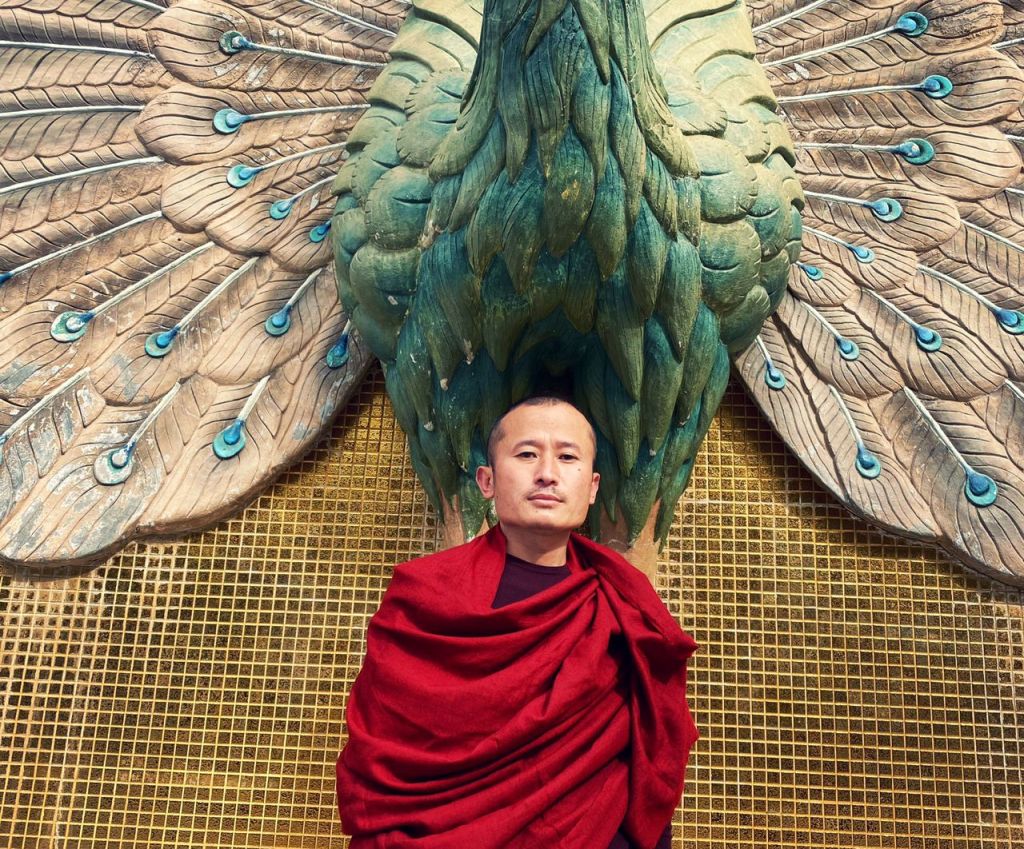


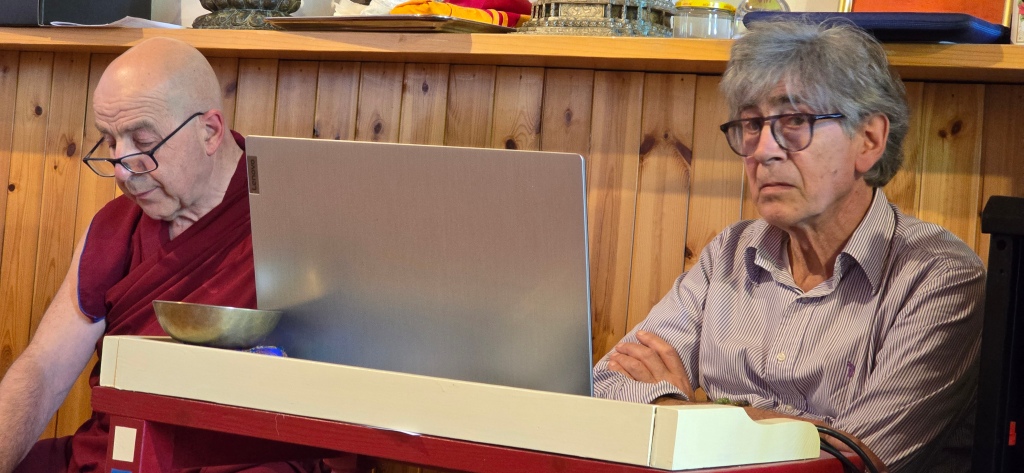
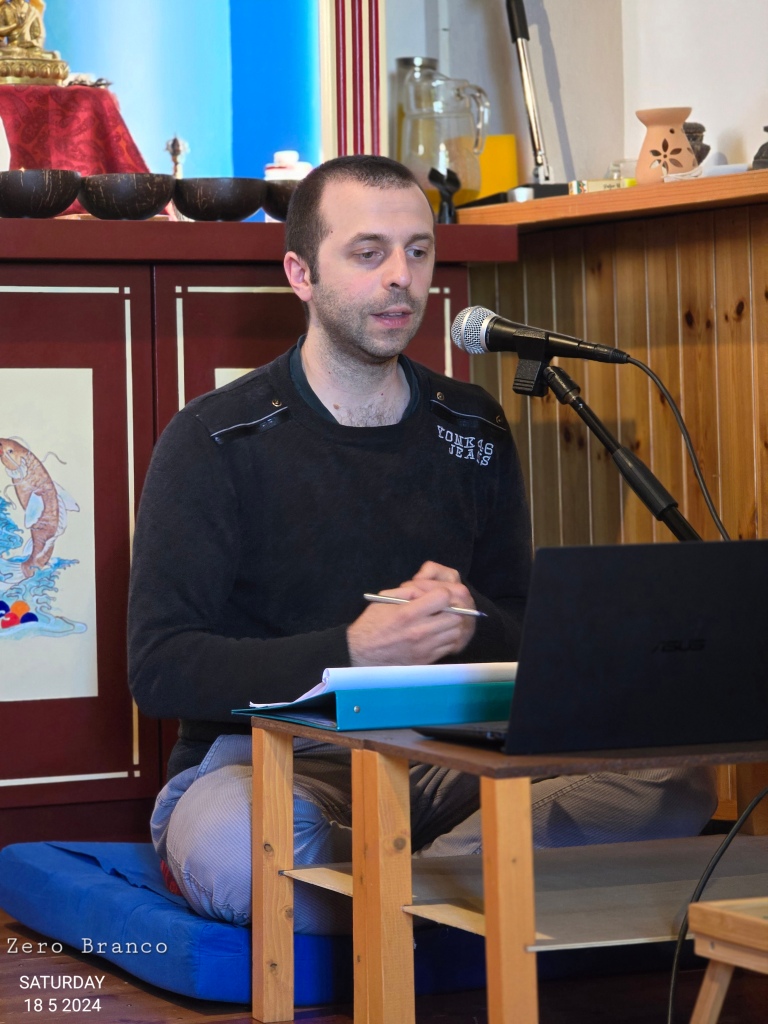

 The Garden of Maitreya