A Trip to Lama Tzong Khapa Institute

At the beginning of the month of September, I had the great joy and honor to be invited to attend the opening lecture for this new trimester of teachings unfolding at Lama Tzong Khapa Institute in Pomaia, Italy, within the Master’s program framework. I have been attending the Master’s program classes since early 2023 in the online environment, so receiving an invitation from my revered Teacher, Geshe Jampa Gelek, to be physically present in the teaching hall has been tremendous and wonderful, and enriching at all levels.

Life often puts lessons in front of us where we would not expect them to be put, and it was very much the case with this trip. Reaching Pomaia, from my country of residence (Romania) is not easy; flights are only available every two days (from Bucharest to Pisa) and from there onwards, a trip by train and by bus must be undertaken. Mind you, it can be a little challenging. I have been blessed with the ability to speak Italian, but even so, it took me a moment to get used to things around there.

I am most grateful for the day I spent in Pisa, due to my flight being late and the absence of good transport connections towards Pomaia; it was a logical thing to do, to stay overnight. I did well, for I had the opportunity to see one of the most beautiful, most astonishing, most incredible wonder of this world – the Leaning Tower of Pisa, which had been on my bucket-list since early childhood; I knew it was splendid, from stories and photographs; but to see it in reality – this overpasses any imagination. The Tower stands there, defying gravity, inclined by four degrees; you arrive in the Cathedral Square, you see it… and it just takes your breath away.

We can learn a Dharma lesson from everything that is around us, and seeing the Tower at the beginning of my trip to Pomaia has made me understand that there is beauty in what is not perfect (the tower’s inclination has been considered a fault for hundreds of years) and, perhaps, that things can be defined as perfect exactly because they have those so-called faults that make them unique. To be straight, firm and vertical might be splendid; it is what we usually expect a tower to be like – a beacon of stability. And to be inclined, as if doubting the consistency of the very reality around it, though logic-defying and astonishing – as one would not expect a tower to be – it is just as beautiful and just as splendid.
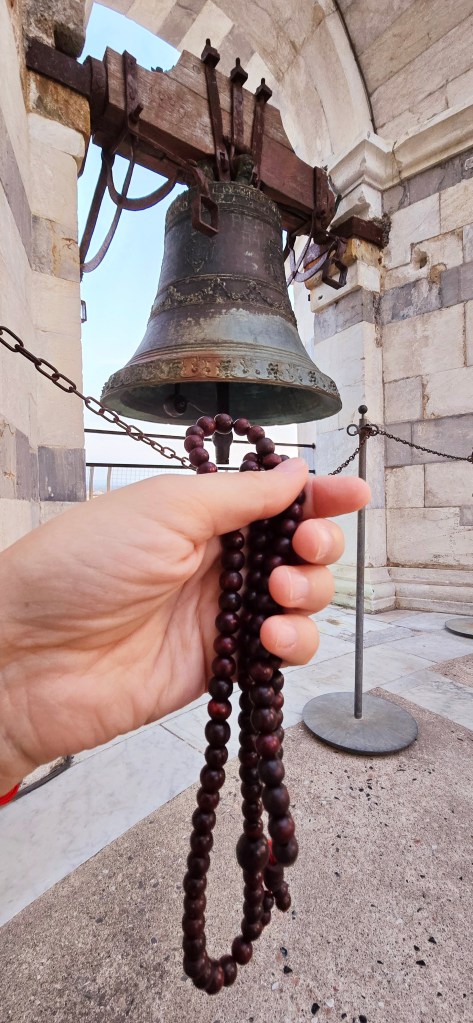
I gazed at it for hours; in the morning of my departure to Pomaia, I woke up very early and sat down on the Cathedral’s stairs, just contemplating the beautiful tower once more – an hour of grace and peace, which left me humbled and richer than I have been in years.

To reach Pomaia – and more specifically, Lama Tsongkhapa Institute is not easy. From Pisa Centrale Railway Station, you need to take a train to the town of Rosignano (a perfect little jewel by the Ligurian sea) and from there, either a bus (which comes rarely) or a taxi to Pomaia (a trip which lasts for about 20 minutes). I was lucky enough (and very grateful) for a friend to come pick me up from Rosignano and I reached Pomaia in the early morning of September 1, 2024.
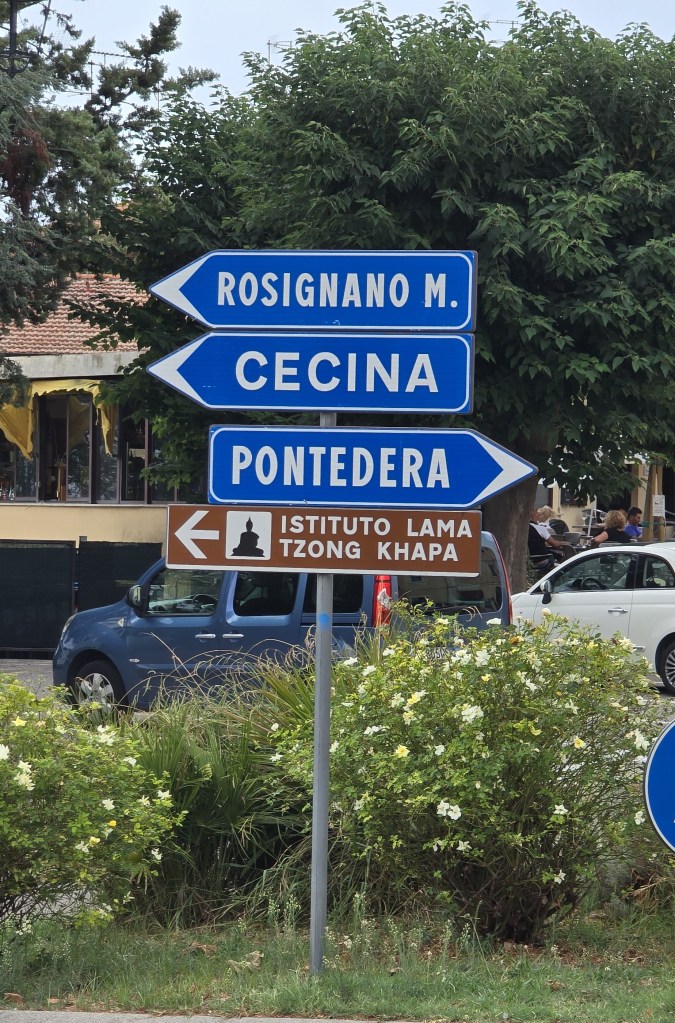
After paying homage to my noble Master, I went to visit the surrounding areas of Lama Tzong Khapa Institute which – I can assure you – they are just another piece of pure wonder. The buildings and stupas of the institute are built and decorated with perfect taste, and with respect for the surrounding nature. There are tall juniper and pine trees all around, making the whole area into a little forest, scattered with rocks and surprise-little stupas – and to my everlasting joy, with beautiful, well-fed cats. People who come by often build makeshift stupas by piling rocks one on top of another – their balance is sometimes precarious, so the people that come by afterwards, spend time to consolidate them. It would seem child’s play; but it is in fact, a very meaningful gesture through which each person makes a connection to the Dharma, an a purely intuitive way. May the Dharma knowledge of all beings that come to Pomaia increase and become higher and higher!

If you go to the Institute’s garden, you will also find a rock that smiles at you. You will smile at her; and I promise you, your soul will be warm, and you will want to never leave this blessed place. I made my own “tower” of rocks, and I vowed to repeat this exercise everywhere on my trips in nature, whenever I’d find rocks. It’s good for adults and for children; teach them to pile a few rocks up and to recite Om Mani Padme Hum, and you will have planted a very small Dharma seed in their mind – one that will flourish someday.

What exactly is the Lama Tzong Khapa Institute? The Lama Tzong Khapa Institute (ILTK) is situated in the serene village of which I have already told you about, Pomaia, Tuscany, approximately 40 km South of Pisa. The Institute is an esteemed branch of the Foundation for the Preservation of the Mahayana Tradition (FPMT), a global network of Gelugpa Dharma centers. The Institute is named in honor of Lama Tsongkhapa, the revered founder of the Gelugpa monastic tradition within Tibetan Buddhism. Over the years, it has been graced by teachings from His Holiness the Dalai Lama on several occasions.

Founded in 1977 by FPMT revered teachers – Lamas Thubten Yeshe and Thubten Zopa Rinpoche, the ILTK offers a wide range of courses on Tibetan Buddhism, primarily in Italian and English, with translations in additional European languages. Among these, the most distinguished is the Masters Program, a comprehensive six-year curriculum (formerly seven) dedicated to the in-depth training of future FPMT teachers, a program in which I am also enrolled.

A few words about my noble Master, Geshe Jampa Gelek – even though entire volumes would not be enough for me to properly speak of his kindness and wisdom.

Geshe Jampa Gelek was born in 1966 in Tibet. He graduated from Sera Je Monastic University in 1999, with the title of Geshe Lharampa. He is currently teaching Master’s program at Lama Tzong Khapa Institute, and he is one of the highly appreciated teachers within FPMT. He is visiting other centers in Italy (and not only) on a monthly basis, where he performs text analyses, he offers general teachings and empowerments. He has profound knowledge of Dharma, and he is renowned for the clarity of his teachings. He often performs sessions of questions and answers where the participants can ask any question, thus clarifying any difficult topic. He is lighthearted and always happy – following the tradition of all great teachers capable of chasing away any cloud with a single look. I have always felt immensely joyful to attend any of his teachings and grateful for every minute I was allowed to be in his presence: a rare gift.
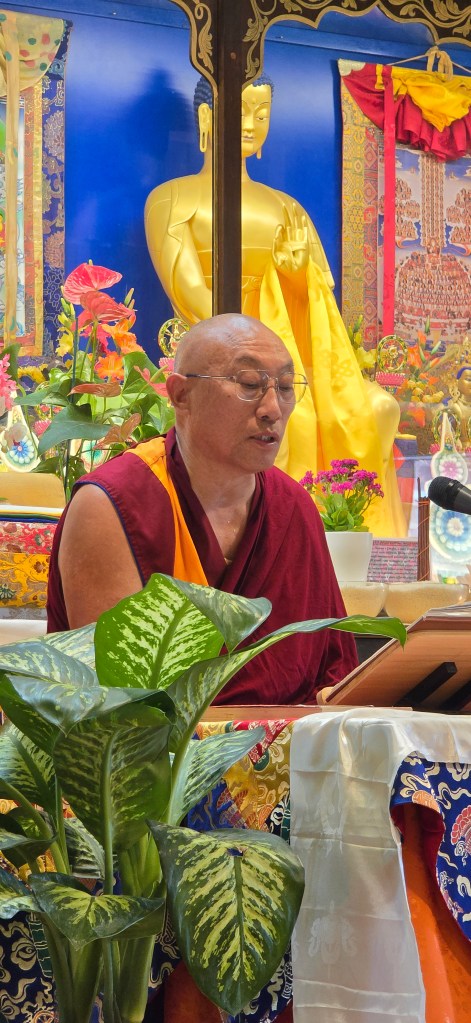
The purpose of my visit was essentially to meet all the friends at ILTK that I have met only online, and to attend the opening lecture of the Ornament for Clear Realization analysis – a part of the Master’s program currently unfolding at the Institute.

What exactly is the Ornament? Abhisamayalamkara, which translates into the Ornament for Clear Realization, is a fundamental Buddhist text of the Mahayana tradition, attributed to Maitreya and transmitted by the Indian Master Asanga, with commentaries elaborated by Haribhadra and Gyaltsab Dharma Rinchen, at their turn explained and elucidated by Geshe Jampa Gelek. If you think it is complicated, let me assure you… it is. The text provides a detailed study of Prajnaparamita, structed in eight categories and seventy topics. I have been studying it for over a year now, and my first contact with this text has caused me a sense of astonishment and even fear at not understanding anything. It was only after I had started doing transcripts of the oral lectures, after having spent countless hours on every page, that I began understanding it.

We, the students of the Ornament, understand very well that we probably need many lifetimes to completely and fully understand this text, but at least for now, we begin to acquire a general understanding, through the graceful help of our Teacher Geshe Gelek, his assistant Ven. Gyaltsen, the former assistant and translator of Ornament – Toh Sze Gee, and the interpreters currently performing translations in several languages (Filippo in Italian, Shahar in English). The study of the Ornament is a collective effort aimed at elevating our understanding and we are blessed.

I’ve had many moments of breakthrough while studying the Ornament, but those I cherish the most, useful to all readers, are those:

A few words about all the wonderful people I met during this wonderful trip:

I was so happy to meet Joan, the education coordinator! We had had a vast correspondence on the matter of transcripts, and I was glad to finally meet the person that has encouraged and cherished my work and inspired me to become better at it! It is thanks to his inspiring words that I did not give up.

Filippo! I rejoice in meeting Filippo face to face – I have learnt Italian grace to his crystal-clear translation, and I have spent countless hours transcribing from Italian. 

Shahar! So glad to have met Shahar. His voice is forever engraved in my mind and soul, due to translating after his wonderful, clean, wholesome interpretation of our Master’s speech, from Tibetan into English. 

Venerable Dechen – ah, beloved friend! To meet her in the middle of the street and share a hug and a chat, then to participate in class together with her! I have been friends with Dechen for a long time. I am overjoyed to have finally seen her – Venerable Dechen, who has also blessed my country with her presence and teachings. 
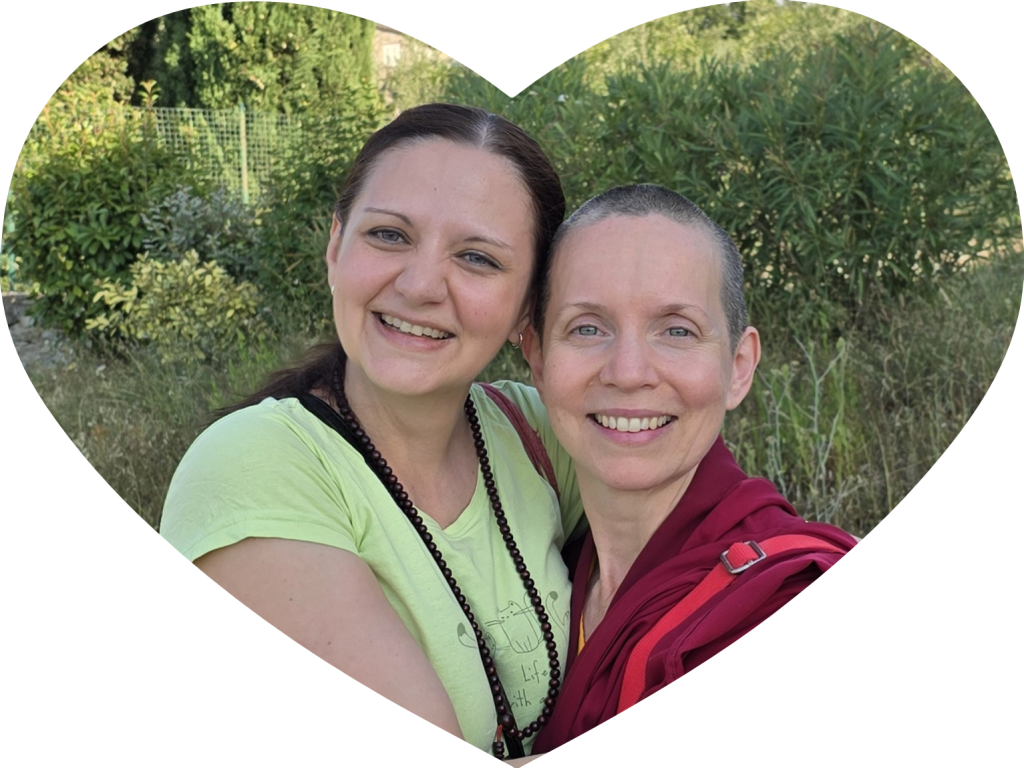
Venerable Raffaello, another treasured and cherished friend, whom I had the privilege to meet on previous Dharma trips in which both of us accompanied our Master, Geshe Gelek. So glad to have seen a precious Dharma friend once more. 

The Mother of Cats, Venerable Lhamo. I am absolutely certain that a person that takes care of animals is exceptionally good and pure. Only such people can devote hours of their day towards feeding and caring for those sweethearts – birds, cats, and anything else that comes around. Whenever I see such a person, I rejoice for I know I have met a true bodhisattva. Countless beings have made a connection with the Dharma, through her kindness. May she always be blessed! The sight of her feeding the doves and the cats will forever remain engraved in my heart. As it is said in the Dhammapada (verse 270): “One is not called noble who harms living beings. By not harming living beings one is called noble”.

Last, but not least – I want to mention the grace, helpfulness and generosity of my friend, Sherab Lotsawa. He is one of the researchers and translators of the Institute, often accompanying Geshe Gelek, Geshe Tenphel and other guests in the Dharma travels. As Geshe Gelek once characterized him, “Sherab has a very vast intelligence” and to that opinion I subscribe wholeheartedly. His name translates as “Wisdom” (Tib. Sherab = wisdom) and he is wise beyond words. I have lost count of the number of languages he can actually speak, and I am forever praising his research and linguistic skills. Each conversation with him has been an occasion for me to learn something new – and for this, I am grateful.

I wish I could have met Dir. Valerio, but he was away at the time of my visit. Perhaps next time.

Volumes of poetry could be written about the forests and stones around the Institute. With a sacred, secret life of their own, the tall trees and the splendid rocks, neatly arranged to form castles and circles and other odd and splendid shapes, they stop you in your tracks and cause you to gaze in wonder at how beautiful nature truly is. Go see those gardens and sit in silence, simply being, leaving all worries aside: it is what I have done, in solitude – and it has been a Dharma lesson in itself.

I have received from my Master’s blessed hands a book to carry back home to study: Madhyamakāvatāra by Chandrakirti that we will study next year in the Master’s program. I see this as a treasured prize, one that I hold most dear, and that I carried with great care from Pomaia to Bucharest, holding it tightly against my heart. My backpack was already heavy, so I made use of the clause that states that any passenger may bring reading material in the airplane; well, if my reading material weighed a good 3 kg, who could argue? And so, I am looking forward to study this utterly heavy book and to learn how all things are empty of any eternal self or soul. 

It was a meaningful trip back home – a time for myself, for recollection of thoughts and meditation. To be high above the clouds in the airplane is a good experience for a Buddhist – it gives us a glimpse into what calm abiding should be like, and how up there, high above the all-obscuring clouds, there is no turbulence – just the clear sky. May our mind become just as clear, just as calm, and may we face all life’s trips bearing the Dharma in mind, the blessing of our precious guru in the heart, and warm benevolence towards all beings.

I want to conclude this article with a piece of advice about Refuge, taken directly from the Ornament (Chapter 1: Exalted Knower of All Aspects; topic 2/70 – Mahayana Instruction).

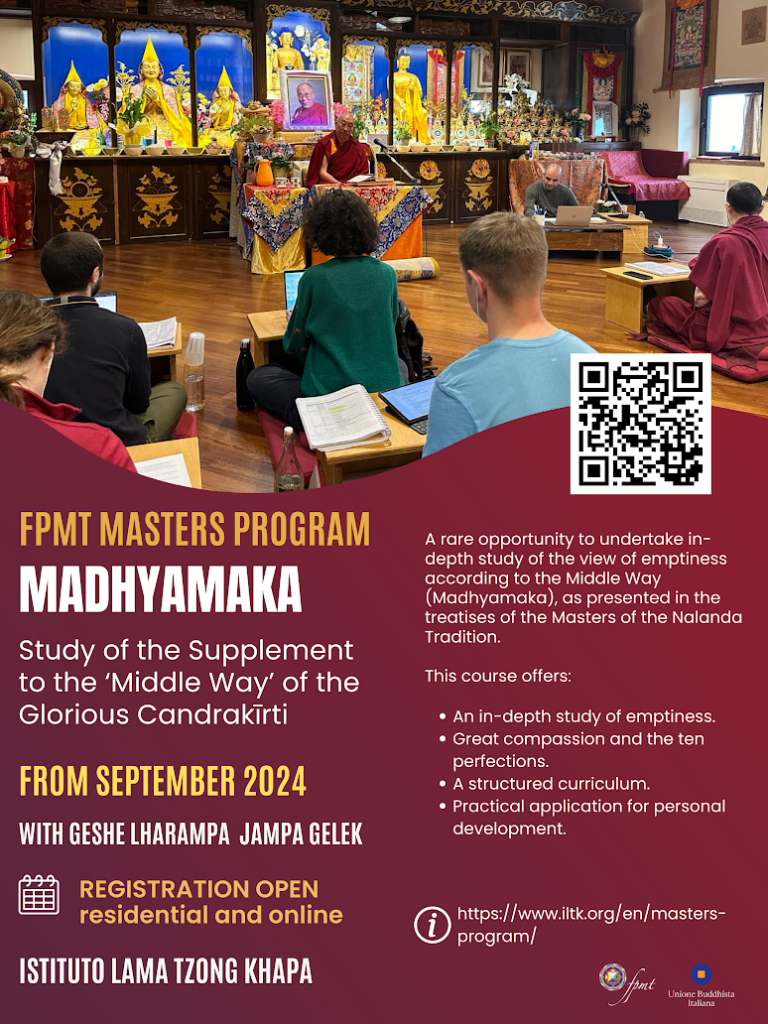
If you are interested in joining the Master’s program and study the Madhyamaka next year, please consult the ILTK Website.
With gratitude,

The Basic Buddhist Principles


Refuge

“I take refuge in the Buddha, Dharma, and the supreme Sangha until I reach enlightenment. Through the merit I gain from practicing generosity and other virtues, may I attain enlightenment for the benefit of all sentient beings!”

In Buddhism, taking refuge in the Three Jewels (Buddha, Dharma, and Sangha) is the first step that anyone embarking on the path of Buddhism must take. This act of taking refuge is crucial as it serves as the entry point to the Buddhist path.

Each religion has its own approach to taking refuge, but Buddhism stands out in its understanding of the object and method of refuge. In Buddhism, the object of refuge is seen as inseparable from oneself, and it emphasizes the importance of personal effort rather than blind faith or devotion. It is believed that relying solely on external objects of refuge will not lead to salvation.

A genuine understanding and internalization of the concept of refuge are essential for one to be considered a Buddhist. Fear and belief are said to be the driving forces behind seeking refuge, as one must first recognize their own limitations and seek help from external sources. Fear in this context refers to the fear of suffering in lower realms and the fear of suffering in Samsara. If one has already overcome all fears, there is no need to seek help.

Even if one intends to take refuge in the Three Jewels, without conviction and faith that the objects of refuge can provide protection, taking refuge is not possible. According to the Seventy Verses on Taking Refuge, “the Buddha, Dharma, and Sangha are the refuge for seeking liberation”.

The object of refuge in Buddhism is the Three Jewels – the Buddha, the Dharma, and the Sangha. These three entities are seen as essential for attaining liberation, as they provide guidance, teachings, and companionship on the spiritual path. Just as a sick person needs medicine, a doctor, and a caregiver, a Buddhist practitioner relies on the Three Jewels for support and guidance.

The reason he is considered a Buddha is because he is free from all fears, skilled in liberating others from fear, and has great compassion for all without bias. While the Buddha may be adept at liberating others from fear, without unbiased compassion for all living beings, there is a risk of only being able to protect some and not all.

In essence, we take Refuge in the Three Jewels with a strong belief in their qualities. Once we have taken Refuge, we should refrain from harming other beings, show reverence towards Buddha’s images and scriptures, and avoid disrespecting the Sangha.

Taking Refuge is the basis for all other precepts, purification of negative deeds, accumulation of merits, avoiding lower realms, protection from harm by non-human spirits, fulfillment of wishes, and swift attainment of Buddhahood.

 The Buddha

In Buddhism, taking refuge in the Three Jewels – Buddha, Dharma, and Sangha – is the gateway to the Buddhist path. Buddha is the one who shows the way of life, Dharma is the way of understanding that leads to Buddhahood, and Sangha is the community that lives in harmony and awareness. As Buddhists, we seek refuge in these Three Jewels until we attain the state of enlightenment. Taking refuge in the Three Jewels is not about relying on them to save us from the lower realms, but rather about following the teachings of the Buddha, practicing the Dharma, and seeking guidance from the Sangha.

The Buddha serves as our Teacher, and we must follow his teachings. The Dharma provides us with the path to enlightenment, which we must practice diligently. The Sangha, our spiritual friends, support and guide us along the path to enlightenment. By practicing techniques and wisdom, such as the eighty-four thousand heaps of Dharma taught by the Buddha, we can save ourselves.

I can guide you on the path to liberation, but ultimately, it is up to you to achieve it.

The Historical Buddha

The historical Buddha Sakya Muni, also known as Siddhartha Gautama, was born 2568 years ago to a royal family in Kapilavasthu. His birth is celebrated as a day of enlightenment and spiritual awakening for millions of people around the world. It is through the power of his omniscience and knowledge that the Buddha reached the state of enlightenment.

Buddha’s teachings of compassion, mindfulness, and inner peace have inspired countless individuals to lead more meaningful and fulfilling lives. His message of love and understanding transcends time and continues to resonate with people of all backgrounds and beliefs.

The Buddha taught that all living beings are fundamentally the same – ordinary beings continuously wandering in the cycle of existence. He discovered the truth about life after sacrificing many lifetimes, ultimately becoming the awakened one, the Buddha. His teachings are rooted in wisdom and compassion, aiming to help us understand the true nature of the mind and achieve liberation. By developing wisdom and compassion, we can follow the path to enlightenment.

In Buddhism, it is believed that the Buddha imparted a vast array of teachings, with the concept of TRUTH being the most significant. The entirety of the Buddha’s teachings can be categorized under the umbrella of TRUTH. Following his enlightenment under the Bodhi tree in Bodhgaya, the Buddha, at the behest of Brahma and Indra, delivered the sermon, The Four Noble Truths, to five disciples at Sarnath.

Within Buddhist literature, the teachings on the Four Noble Truths, the Eightfold Noble Path, and Karma – the universal law of cause and effect – are considered essential principles that every individual embarking on the Buddhist path must grasp. The Buddha offered eighty-four thousand sets of teachings as methods to cultivate mindfulness and discipline the mind. His teachings serve as a foundational tool for transforming negative emotions and mental afflictions into wisdom through various skillful means and methods.

The Gautama Buddha did not establish a religion called Buddhism; instead, he proclaimed that he had discovered a path that leads to the cessation of human suffering, known as the Noble Eightfold Path. The path the Buddha found was not taught by anyone; rather, it was discovered as a result of his own deeper understanding of things.

What the Buddha discovered 2568 years ago, known as enlightenment, was not transmitted to him by any divine being or someone with a higher realization. It was achieved through understanding the inherent nature of things. Siddhartha attained the perfect state of enlightenment as a result of gaining a direct experience of the true nature of things. For this reason, his teaching transcends the idea of religion, views, dogma, and philosophy, which are concepts that arose from discursive thoughts.

Buddha’s teaching is not a religion; it is a way of life and a method to develop a direct experience of the true nature of things, referred to as REALITY. The Buddha denied the idea of rituals and prayers because liberation is only possible through understanding phenomena as they are, by breaking the prison wall of IGNORANCE. The entire universe evolved as a result of dependent co-arising; nothing came into existence on its own. All things are impermanent, and there is no separate SELF-existing independently.

All living beings possess the Buddha nature, which is the capacity to awaken ignorance and become a Buddha if practiced as instructed. “The Buddha nature is present in all living beings” (Uttaratantra). To understand the true nature of things, we must look at them deeply. This deeper understanding of things gives rise to the development of AWARENESS, and through this, we can reach the other shore called liberation. It is important to be mindful of what we are doing, as this will help us do everything with awareness. Simply put, liberation is an understanding. As we understand, we become liberated.

The Four Noble Truths

Buddhism’s Four Noble Truths are considered noble because they lead to liberation from suffering. This fundamental teaching of the Buddha encompasses the entire Buddhist path. The Buddha delivered his first sermon to his five foremost disciples at Deer Park, Sarnath, 49 days after attaining enlightenment. The teachings of the Buddha, known as Dharma, were shared with all beings in the human and celestial realms.

The Truth of Suffering

Suffering is an inherent part of life, manifesting in various forms. Even in times of apparent well-being, feelings of insecurity and anxiety persist. This suffering is rooted in Samsara itself.

The Cause of Suffering

Ignorance and the craving mind are identified as the root causes of suffering. Everything arises due to specific causes and conditions, and the misconception of an independent and concrete self leads to ongoing suffering within the cycle of Samsara.

The Cessation of Suffering

Despite the constant suffering resulting from our misconceptions, the negative emotions and obscurations that cloud our understanding can be purified. Just as the sun is obscured by passing clouds, our true nature can be revealed through the removal of temporary afflictions, leading to the cessation of suffering.

The Path to the Cessation of Suffering

The Eightfold Noble Path is the path that leads to the end of suffering. By cultivating mindfulness, ethical living, and wisdom, one can follow this path towards liberation from suffering and the attainment of enlightenment. We often blame external circumstances and others for our suffering, failing to recognize that the root of our suffering lies within our own afflicted minds. True inner peace arises from within, not from external sources.

 The Eightfold Noble Path

The Eightfold Noble Path is the path that the Buddha traversed to reach the perfect state of enlightenment. It is the middle path, free from extremes, that every individual seeking enlightenment must practice. It is on this path that the Buddha attained enlightenment, allowing one to live in the present moment with awareness.

Thich Nhat Hanh, in his book “Old Path White Clouds,” describes the Noble Eightfold Path as the path of living in awareness, with mindfulness as its foundation. By practicing mindfulness, one can develop concentration, leading to understanding. This understanding, in turn, can liberate individuals from suffering and bring true peace and joy.

Right Understanding:

Through the right understanding, one develops a clear vision and wisdom, penetrating the true nature of things. This involves understanding the Four Noble Truths, the law of Cause and Effect, and seeing reality without delusions or distortions.

Right Thoughts:

Developing the right thoughts means resolving not to hold attachments, greed, anger, or ill will. It involves refraining from causing harm to others and cultivating pure intentions.

Right Speech:

Right speech involves speaking the truth and avoiding slander, harsh words, and idle gossip. It is about speaking with honesty and kindness, without causing harm.

Right Action:

Right action entails respecting all life, refraining from harming others and engaging in wholesome actions. It involves refraining from taking life, stealing, engaging in sexual misconduct, and harming living beings.

Right Livelihood:

Right livelihood means abstaining from trades that harm oneself or others, such as slavery, prostitution, animal breeding for slaughter, and trading in intoxicants or weapons.

Right Effort:

One should make efforts to avoid unwholesome thoughts, overcome existing unwholesome thoughts, and develop wholesome thoughts. This involves striving to let go of grasping thoughts and limited views.

Right Mindfulness:

Maintaining mindfulness of the body, feelings, mind, and phenomena allows for the development of concentration and awareness, enabling one to live in the present moment.

Right Concentration:

Through the right concentration, one can cultivate a calm and tranquil mind, seeking to realize the true essence of the mind and transform negative emotions. By following the Eightfold Noble Path, individuals can cultivate wisdom, compassion, and inner peace on their journey towards enlightenment.

 Karma (The Law of Cause and Effect)

Karma, the law of cause and effect, is a fundamental concept in the philosophical schools of Buddhism. It is part of a set of beliefs that form the basis of Buddhist philosophy. Karma plays a crucial role in the evolution of the universe and individual beings, determining the outcome of our actions and shaping our existence for better or worse.

The concept of karma is closely related to the idea of action and freedom of will in sentient beings. It forms the basis of Buddhist ethics, asserting that the entire universe is governed by a similar law. This law connects us to both our inner selves and the external world, influencing our existence in profound ways.

Every action we take has consequences, both in the physical world and within ourselves. Our present circumstances are believed to be the result of past karma, and our future is shaped by our present actions. The law of cause and effect is undeniable, impacting our existence in significant ways.

The theory of karma is based on the doctrine of causality, where all actions, whether positive or negative, lead to corresponding results. Different types of karma, such as good and evil, right and wrong, are determined by the intent and motivation behind our actions. Each individual is responsible for the consequences of their karma, as actions cannot be transferred to others and the results cannot be avoided.

While karma has no beginning, it can be brought to an end. The Buddha taught that the chain of karma can be broken through the practice of the eightfold path. This path offers a means to overcome the cycle of cause and effect and attain liberation from the consequences of past actions.

Cause and effect should be in complete harmony with one another. If we accept such a dictum, then we have reached a point where our behavior is bound to become morally sound. That is one of the reasons why Buddha‘s sermons during his first turning of the wheel of dharma are closely associated with moral conduct. There is no beginning to our intelligence and souls. So, our birth is not a beginning, and our soul is primordially veiled by ignorance.  And therefore the antidote to overcoming this ignorance should also be beginning-less.

Conclusion

It is through self-realization and understanding that we can transcend the illusions and find true meaning and fulfillment. We find ourselves lost in a world where truth is elusive and the fabric of reality seems distorted. Words and the external world can deceive us, appearing as mere illusions created by our own minds.

In our quest for purpose and significance, we navigate through a vast ocean of falsehoods. Paradoxically, the more we search, the more our vitality dwindles. We relentlessly pursue wealth and material possessions, believing they hold the key to our happiness. Yet, in the end, we are left with a profound sense of emptiness and despair.

Love and a sense of belonging are essential to our well-being. However, we find ourselves trapped in a never-ending cycle of suffering and longing, unable to escape its grasp.  In this samsaric existence, we are prisoners of our own creation. Our desires and egos bind us, compelling us to constantly strive and take. But amidst this entanglement, there exists a way out—a path towards liberation, truth, and self-discovery.

Let us break free from the chains of illusion and delusion that confine us. In doing so, we can uncover a profound sense of peace and freedom that transcends the confusion of the samsaric realm. Ultimately, it is our own awakening that holds the power to liberate us from the ceaseless cycle of birth, death, and the anguish of the Samsaric world.

Through self-reflection and introspection, we can unveil the eternal and unchanging essence that lies within us. Beyond the transient nature of the external world, there exists a deeper reality that transcends time and space. By connecting with this inner truth, we can cultivate a lasting sense of serenity and liberation.

Let us embark on this transformative journey of self-discovery and liberation. By shedding the illusions that bind us, we can break free from the relentless cycle of birth and death, and attain a state of enduring peace and fulfillment in our lives.

Note:

Through this article, I would like to bring out the outline of the Buddha’s teaching in a precise way by subsuming the core concepts of Buddhist ideas under a few selective topics. I have made every possible attempt to include and refer to available references carefully to make this article worth reading in a specific way. This article attempts to encourage the readers in preparing to embark on an introduction to Buddhist studies.

Nima Gyelpo

A short note about the author

My name is Nima Gyelpo and I am a Buddhist monk belonging to the Kagyu lineage. I have completed my graduation from one of the Kagyu monastic institutions in Sikkim and an MA degree in Buddhist studies, philosophy, and comparative religion from Nalanda University in India. I am passionate about sharing my knowledge and experiences with others, especially beginners who are interested in Buddhism. I hope that this article will be helpful to those seeking to learn more about this ancient and profound spiritual tradition.

A Dharma Journey

Geshe Jampa Gelek’s Visit in Romania, June 2024

In late June, our community had the profound privilege of hosting Geshe Jampa Gelek in Romania. His visit was marked by a public lecture on Karma, followed by two empowerments generously bestowed upon selected participants.

Before the public events, we dedicated several days to planning and organizing, focusing on research and future activities for the Romanian Gelug sangha. During this time, we received invaluable guidance from Geshe-la regarding the unique characteristics of each sangha group and how our efforts should be directed. His blessings upon our research and publishing endeavors for The Garden of Maitreya were both humbling and inspiring.

My personal journey into Buddhism began under Geshe Jampa Gelek’s guidance several years ago when I took Refuge with him. It was a great honor to receive the Dharma name Jampa Drolkar; Jampa (the Teacher always borrows half of their name to the new student, to conserve lineage) signifies Maitreya in Sanskrit, and it translates as love. Contemplating the profound meaning of this name, I resolved to channel my love, skills, knowledge, and technical expertise into The Garden of Maitreya project. With Geshe-la’s compassionate oversight, this initiative has flourished, aimed at benefiting all sentient beings. May they find enduring happiness and the causes for it through this endeavor!

Later on, I was delighted to reunite with my dear friend, Thubten Sherab, who accompanied Master Gelek to assist with translation duties (as my Tibetan proficiency is still developing). Sherab is a beloved figure within our Buddhist community here in Romania, having resided here for several years and having conducted numerous introductory courses on Buddhism that have inspired many individuals to embark on the Path.

His presence continues to be a source of joy for his countless friends, who cherish any opportunity to spend time with him. Beyond his role as a cherished companion, Sherab is a researcher of remarkable depth and precision, capable of seamlessly navigating rituals and empowerments. His scholarly acumen is evident in his ability to effortlessly quote extensive passages from revered Buddhist texts such as those by Shantideva or Nagarjuna, and his adeptness at swiftly resolving any challenges that arise. His translation proficiency is to be praised; he speaks no less than seven languages, and is able to understand any Tibetan dialect, including the ever-so-difficult Kham.

I am immensely proud to count myself among Sherab’s friends, grateful for his friendship and inspired by his unwavering dedication to the study and practice of Buddhism.

Alexandra, known as Thubten Saldron in her Buddhist practice, has graciously hosted us in Pitesti. Her boundless kindness and deep devotion to the Dharma leave me at a loss for adequate words. Saldron’s dedication is exemplified by her generous offering of an entire floor of her home for Dharma activities. It is within this serene and meticulously arranged gompa that we are privileged to conduct our empowerments. Every detail reflects her care and reverence for the teachings.

I am filled with gratitude for my friendship with Saldron. Our connection, fostered by the benevolence of Master Gelek during his previous visits, has enabled us to achieve much together. Through shared experiences and collaborative efforts, our bond has deepened, paving the way for meaningful accomplishments in service to the Dharma.

Saldron’s unwavering support and the tranquil space she provides for our practice are a testament to her genuine commitment to the path and to the flourishing of the Buddhist community in Pitesti. Her presence enriches our gatherings, fostering an atmosphere where spiritual growth and camaraderie thrive.

In the grace of my Master’s presence, I was blessed with the profound opportunity to receive the oral transmission of the Sojong vows—a dream I had cherished for a lifetime. This transmission holds immense significance for me, as it now forms an integral part of my personal practice and spiritual journey.

The impact of these vows is profound. On one hand, they simplify life by providing clear guidelines and principles to follow. They serve as a compass, guiding my actions and decisions towards greater mindfulness and virtue. Yet, on the other hand, they also bring challenges. With the acceptance of these vows comes increased responsibility—to uphold the standards set forth, to conduct myself with utmost care and integrity, and to fulfill the noble tasks entrusted to me by my teachers and the lineage.

I am deeply aware of the weight of these responsibilities and the need to honor them with sincerity and dedication. Each day presents an opportunity to live in accordance with these vows, to deepen my understanding of their significance, and to integrate their teachings into every aspect of my life.

May I tread this path with humility and steadfastness, guided by the wisdom and compassion of my Master and the lineage of enlightened beings who have transmitted these teachings through generations.

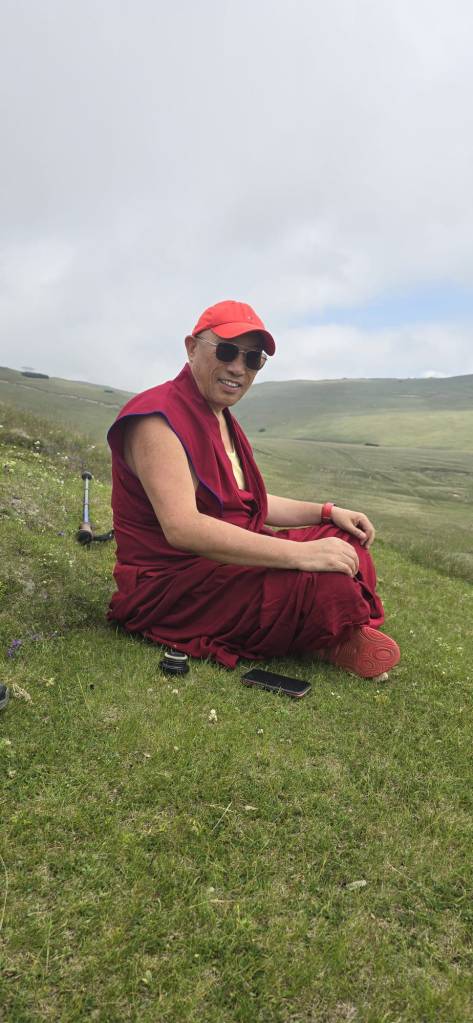
We arrived in Pitesti on Thursday, June 27, following a delightful journey through the scenic Bucegi Mountains. Without having to depict the serene beauty of our mountains and the grace of my Master’s presence on this beloved land, I will just share two photos.

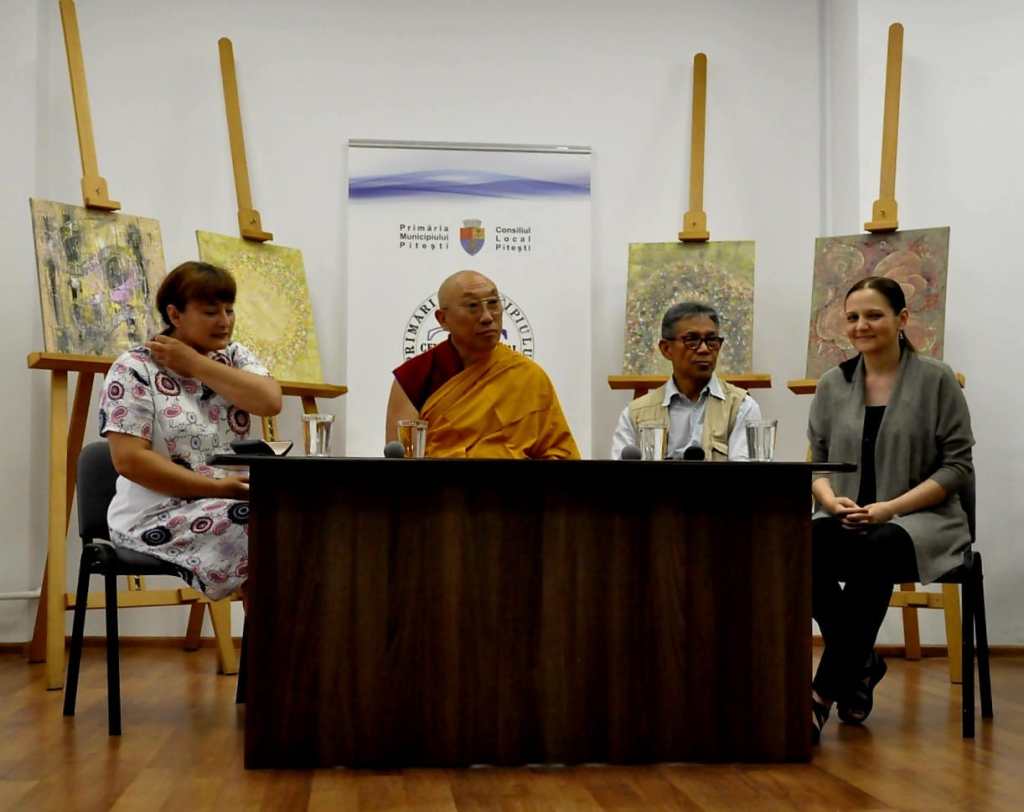
Our destination was the Pitesti Cultural Center, where we were warmly received by Carmen Salub, the director who has graciously hosted us in previous years. Carmen’s presence has always been a source of joy and appreciation for me, characterized by her warmth, friendliness, and unwavering enthusiasm.

During our visit, Carmen took a seat in the front rows, graciously honoring us with her attentive presence throughout the lecture. Her colleagues from the technical department ensured that the event was meticulously recorded and broadcasted, ensuring that the teachings reached a broader audience beyond the venue.

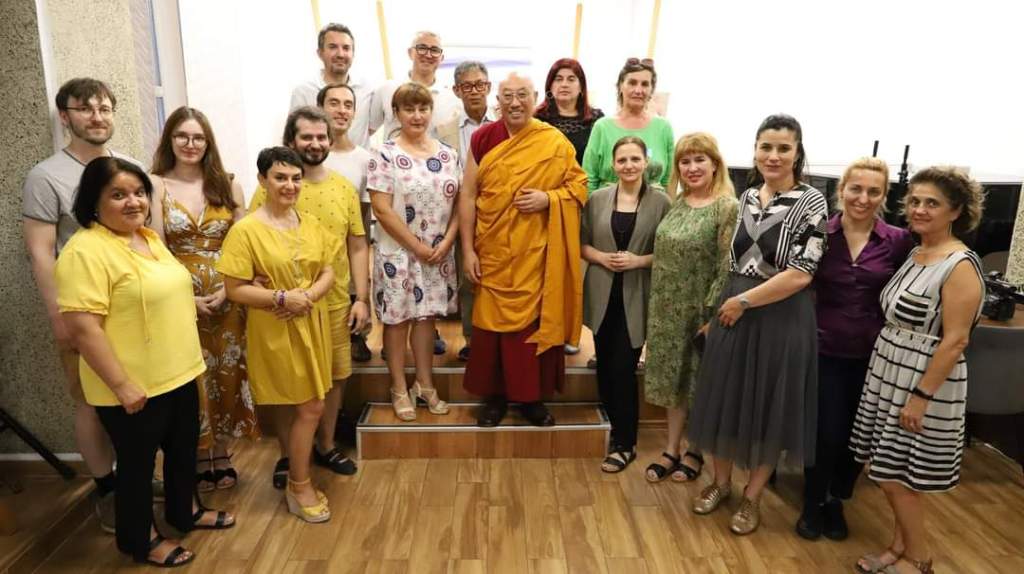
One of the highlights of our visit was capturing a new group photograph with Carmen. This photograph holds a special place in our hearts, joining the cherished collection of memories we have accumulated over our visits to Pitesti. Carmen, we extend our heartfelt gratitude to you for your warm hospitality and support. We look forward to the possibility of returning next year and continuing our meaningful exchanges and collaborations in the spirit of friendship and shared dedication to the Dharma.

In the following days, we were honored to partake in two empowerments, experiences that have profoundly enriched our spiritual journey. These sacred rituals, though detailed accounts cannot be provided here, have been pivotal in our lives, representing a rare and cherished opportunity.

For those unfamiliar with empowerments, they are sacred ceremonies within Buddhist traditions where a qualified teacher transmits blessings, teachings, and permissions to practice. These rituals forge a deep connection between the disciple and a lineage of enlightened beings, granting authorization to engage in specific meditations, rituals, and teachings essential for spiritual development.

Empowerments are considered transformative, purifying obstacles and empowering practitioners on their path towards enlightenment. They are moments of profound spiritual growth and purification, marking significant milestones in one’s commitment to the Dharma.

We are deeply grateful for the dedication and guidance of our teacher, Geshe Jampa Gelek, whose tireless efforts made these empowerments possible. His wisdom and compassion have illuminated our path, and we carry forward with boundless gratitude for the blessings received.

May these empowerments continue to inspire and guide us as we strive to embody their teachings in our daily lives, nurturing inner peace and compassion for the benefit of all beings.

Without adding any other personal thoughts, I invite you to read the transcript of the public lecture on Karma, a vast and important topic that has been detailed carefully and in an easy-to-understand manner.

Link to Transcript:

A Teaching on Karma

Special thanks to Dharma colleagues: names dictated by Geshe Jampa Gelek, and held deep in our hearts by all of us.

Thubten Saldron and Paula

Mihai Rapcea

Iordan Butuc

George Plesa

Daniel Maricescu

Dr. Anne Plesuvescu for the precious help

A warm thought to Alexandru Boru, our Mountain guide

May your merits be ever enhanced!

With loving-kindness,

Veronica ANGHELESCU

A Touch of Grace

His Excellence, Khenpo Karma Wangyel in Romania

During the beautiful month of May, Romania experienced an extraordinary spiritual event with the honored visit of Khenpo Karma Wangyel. His Excellence Khenpo-la serves as the resident Khenpo for Europe within the revered Yeshe Khorlo Nyingma Tradition. Appointed by the esteemed Gangteng Rinpoche, Khenpo-la has been living in France since 2011. This visit marked his inaugural journey to Romania, bringing along a wave of enlightenment and profound teachings that touched our hearts.

Khenpo-la conducted an extensive and enriching four-day teaching series, meticulously focusing on the nine Jhanas. These teachings were comprehensive and well-structured, as they illuminated numerous Buddhist concepts, providing a wealth of knowledge to practitioners at all levels. Among the many topics discussed were the Turnings of the Wheels of Dharma, the Four Noble Truths, and the 16 aspects of the Four Noble Truths—areas that are often less familiar to Western practitioners but are fundamental to a deep understanding of Buddhist philosophy.

One of the highlights of Khenpo-la’s teachings was his exploration of the vehicles of the hearers, solitary realizers, and bodhisattvas. His profound insights into the path towards Buddhahood provided attendees with a clear understanding of these vehicles, helping to demystify the complexities of these paths. Each Jhana was meticulously examined from four different perspectives, ensuring that the teachings were well-rounded and accessible to all attendees, regardless of their prior knowledge or experience. This particular aspect was something I appreciated profoundly, as many of us attendees here, in Romania, are without any doubt… beginners.

Khenpo-la delivered his teachings in Tibetan, a language rich with the nuances of Buddhist thought, and that I feel privileged to also study and speak. I felt immensely grateful to assist my translating colleagues in this significant task. Special recognition goes to the Lotsawa, Andrzej Rybszleger, who joined the sessions via Zoom, providing an invaluable service by ensuring the teachings reached a broader audience.

Additionally, my friend Mihai Rapcea played a pivotal role in this event. Mihai not only provided Romanian translation for non-English speaking participants, but also was instrumental in inviting Khenpo-la to Romania, sponsoring his stay and managing many other intricate logistics of his visit, to which I was very happy and honoured to participate.

Khenpo-la’s presence in Romania was a true blessing… a touch of grace. His wisdom was shared with graceful simplicity and clarity, demonstrating a profound care to ensure everyone comprehended and benefited from his words. His ability to convey complex doctrines in an accessible manner was deeply appreciated by all of us.

The visit of Khenpo Karma Wangyel has significantly strengthened the bond between Romania and the Dharma. The teachings he imparted have sown seeds of wisdom and compassion that will undoubtedly grow and flourish in the hearts of those who attended. The profound impact of his visit is a testament to the timeless relevance and transformative power of the Dharma; we remain hopeful for his return in the near future.

His teachings have not only enriched our understanding of Buddhism but have also fostered a deeper connection to the path of enlightenment. The Romanian Buddhist community looks forward to welcoming Khenpo-la again… we hope, in the very near future! It feels as though we have only just begun.

In conclusion, Khenpo Karma Wangyel’s visit was a momentous occasion for Romania. It provided a unique opportunity for practitioners to deepen their understanding of Buddhist teachings and to experience the profound wisdom of a highly esteemed teacher. The success of this visit is a testament to the collaborative efforts of all those involved, and it marks the beginning of a promising new chapter in the spiritual journey of the Romanian Buddhist community.

Veronica Anghelescu

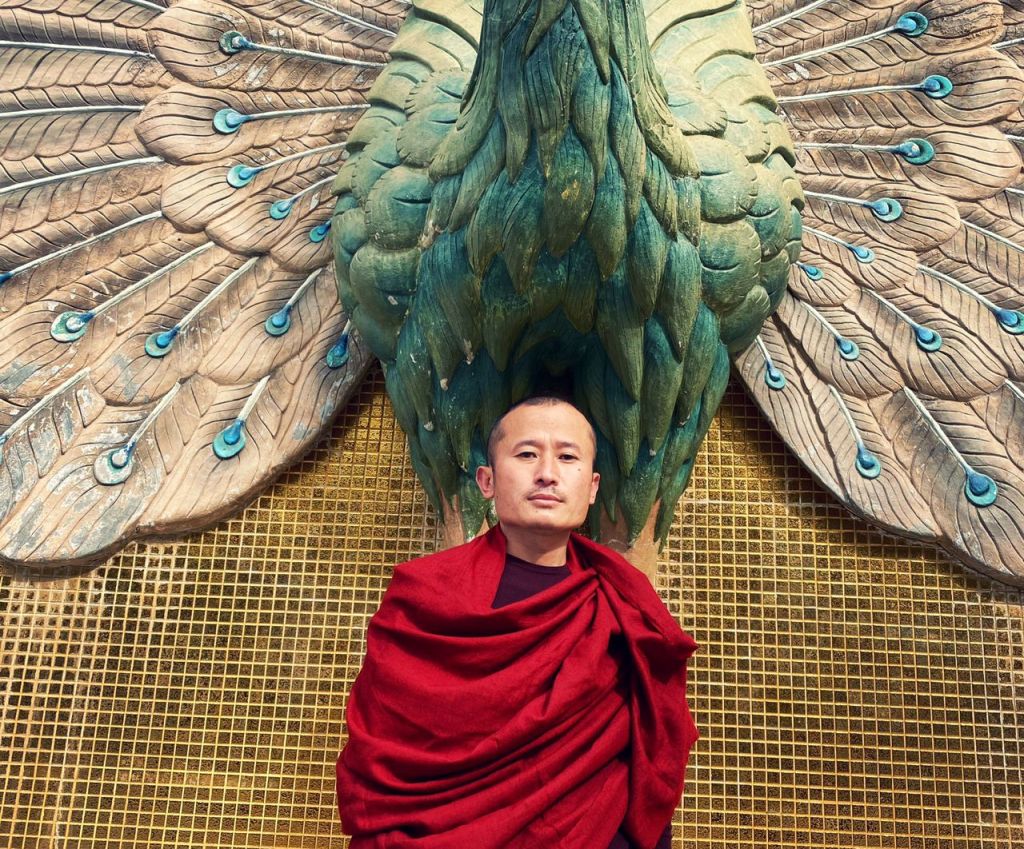
In the photo: Khenpo Karma Wangyel and Mihai Rapcea

Three Points of Focus

In present times, we could say that Romania is a fortunate country, with many Geshes from Tibet, India and Nepal coming to provide teachings for our local Sanghas. Over the past 10 years, with the exception of the Covid Lockdown, there hasn’t been a month without a honored guest among us. 

Romania is a predominantly Christian country, with the majority of its population being followers of Orthodox Christian Confession. However, other religions have their focus groups and followers; we all live in an atmosphere of mutual respect, understanding, and growth. We have had the opportunity to organize many intercultural dialogues, where Buddhist teachers met and discussed with the representatives of the Orthodox Christian church, in formal, academic settings. Ideas where exchanged and discussed, debated and analyzed. Apart from what individualizes each religion, we have often seen and agreed upon the fact that we have many things in common – which are cherished and treasured. All religions have a moral and ethical code of conduct, and the similarities between Buddhism and Christianity are worth being investigated and observed, and – why not? – followed by both parties. 

Each religion has three points of focus: the ritual, the corpus of texts and – last, but not least – that which we feel. Each person finds a rightful, appropriate place within those paths. As the Romanian philosopher Mircea Eliade stated, religion is more than a product of culture and history; religion involves “the social man, the economic man, and so forth”, but those elements, “those conditioning factors do not, of themselves, add up to the life of the spirit.”

Just like each person finds a way to live, enrich and valorize their spiritual life and experience, I too have found my place in the field of studies, translations and transcripts. My mind is inclined towards theorizing; this inclination has resulted in a life of study and two doctoral degrees. My path is Buddhist; in my present field of study, I have dedicated my energy to transcribing teachings and making them accessible to the public wanting to be acquainted to the general principles of Buddhist philosophy – especially to the people living in non-Buddhist countries. 

The Teachers visiting Romania often choose topics of general interest, which allow the public to take the first steps into the Buddhist philosophy. It is often fascinating to see the amount of questions received at the end, the curiosity of people who get acquainted with such a different way of thinking. The teachings are important and precious – a treasure that I am to transcribe and keep safe, so that those gems of wisdom reach as many people as possible. 

A study I have conducted in the past six months among my fellow students have shown me the fact that people at large prefer to have written texts. An oral teaching is a gift; from my point of view, its written expression is no less valuable, as it is able to reach those who, for various reasons (logistical, medical or otherwise) cannot listen. 

May you find teachings that speak to your heart.

Veronica ANGHELESCU