
From a Seed in a Lantern, to a Stupa in our Garden…
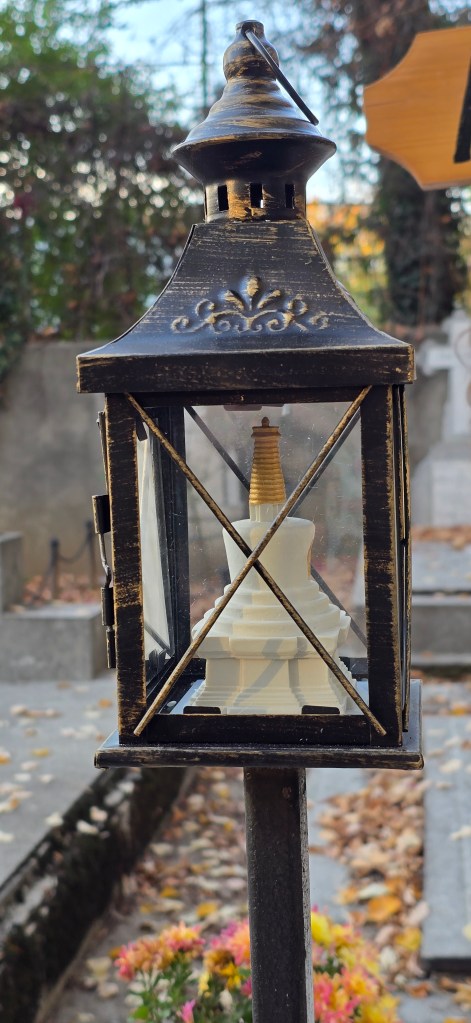
There is a small stupa in our cemetery-garden in Bucharest. It sits inside a lantern, for protection from the rain and the wind, on the corner of my Father’s grave. Ven. Tenzin Gendun blessed it beautifully last year, and since then it has been quietly brightening our souls each time we gather there for practice.
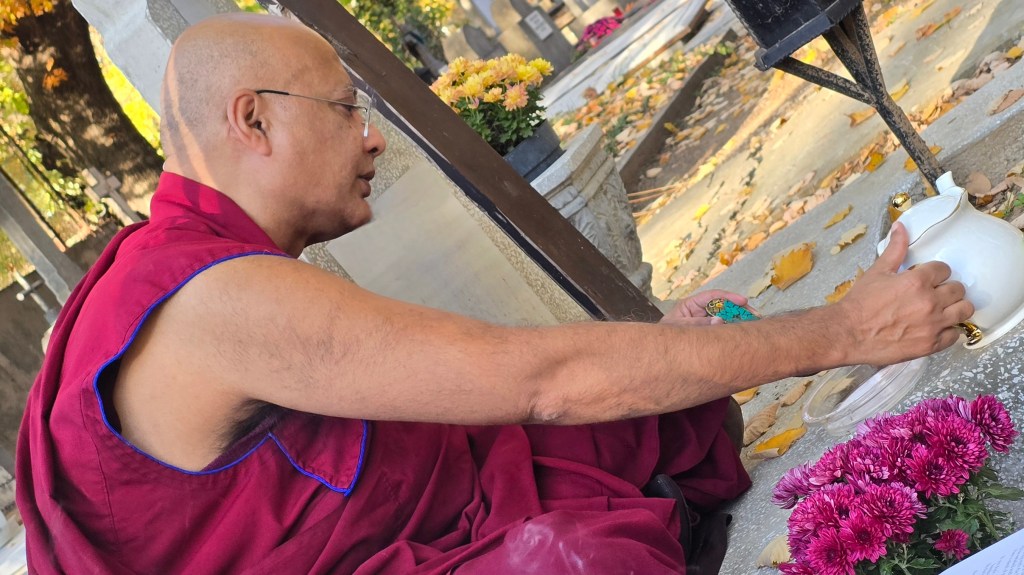
It is small. Like a seed.
My Father would have been immensely happy to see it there. He always supported my choices, always; he is the one who gave me my first Tibetan bowl. There is something quietly perfect about that small stupa sitting on the corner of his Resting Place, like a continuation of his blessing, like his hand still on my shoulder, saying go, do it, this is good.
And from this small seed… something bigger began to grow.
The Vision That Grew
We had always wanted a stupa in Bucharest… A bigger one. Outside, in the open air, where people could approach freely; where anyone walking past, anyone with no idea what they were looking at, could still receive the blessing of simply being near it, hearing the wind move around it, walking through its shadow on the grass.
The small stupa in the lantern was already doing this quiet work in its own way. But then we realised: this very cemetery, this very ground that has already welcomed us so kindly, could welcome a much larger stupa too.
So we asked. And we were granted permission, and two plots of land in this same cemetery were concessioned to us, side by side, for 200 years.
We took care of the land slowly and with love. We made it beautiful. We removed the insects carefully, one by one, gently relocating them; we explored the soil with great Respect, and the human remains we found were honoured and reinterred with all the dignity they deserved. A stupa cannot rise on a place that has been disturbed without care. The ground itself must be ready.
A Kadampa Stupa from Nalanda
We asked Nalanda Monastery in France to give us a Kadampa stupa, one of the eight traditional types, and they agreed. This is the stupa that is now being polished and painted at Nalanda, under the blessed hands of our Teacher, Venerable Tenzin Gendun; monk, painter, quiet artisan of holy objects, whose hands are the perfect hands for this work.
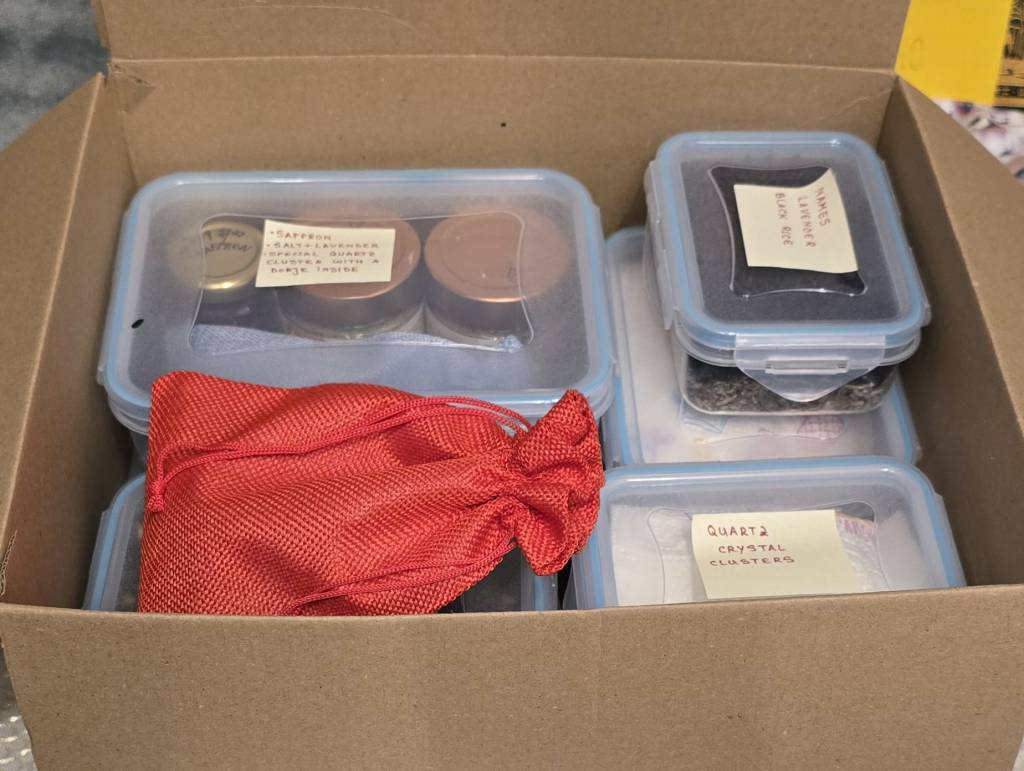
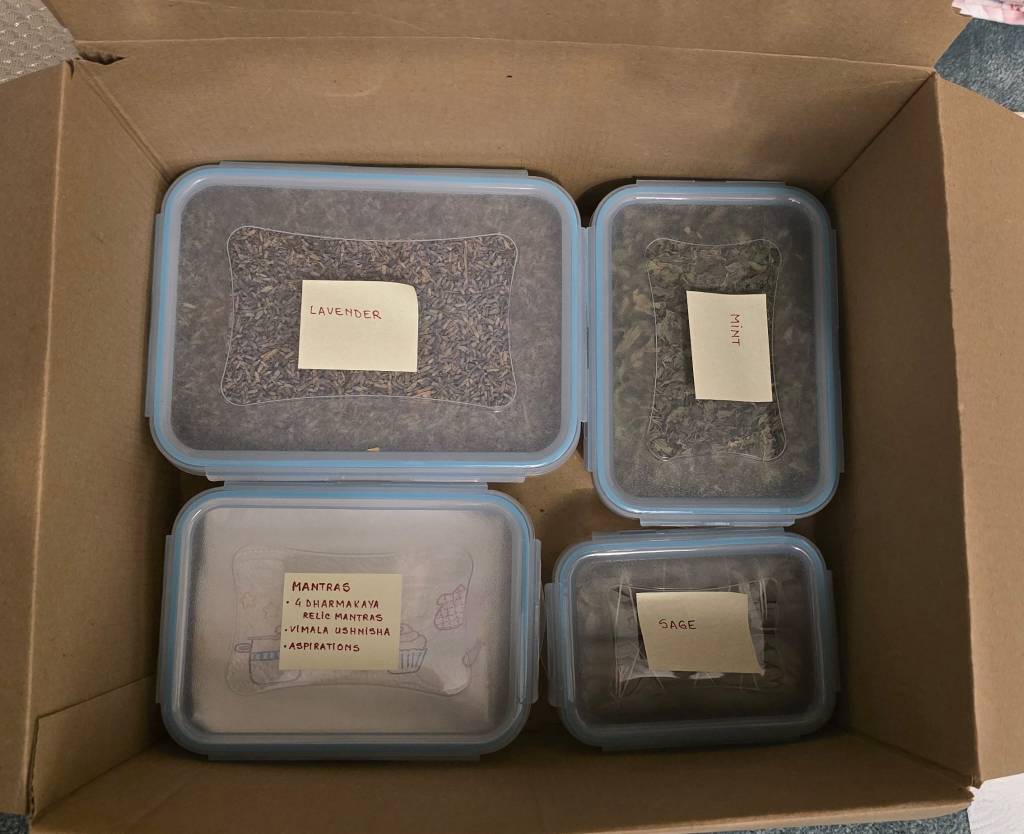
Ven. Gendun then taught us, patiently, how to gather the ingredients to send to Nalanda. And here I want to pause, because this is something most people never get to see, and most practitioners never get to understand: what actually goes inside a stupa, and why.
What Goes Inside a Stupa, and Why
Lama Zopa Rinpoche, who is the great architect of all the stupa-building in FPMT, taught extensively on this from the Shälkar Melong (The White Crystal Mirror) and from the Kangyur. Every single ingredient has a meaning. Nothing is decorative; everything is a cause.
At the absolute centre, in the heart, go the Four Dharmakaya Relic Mantras: Stainless Pinnacle Deity, Secret Relic, Zung of the Completely Pure Stainless Light, and the 100,000 Ornaments of Enlightenment. These are the primary relic of the Buddha, higher than any bone fragment or robe fragment, because they are relics of the Dharmakaya itself. As Rinpoche says, “they are what make holy objects most powerful and beneficial… it is like having thousands of atomic bombs to purify the negative karma.”
Around the central mantras, Rinpoche specifies that the stupa should contain mantras of all classes (Highest Yoga Tantra, Yoga Tantra, Charya, Kriya), mantras of the great lineage gurus, sutra mantras, the Dependent Arising mantra, and the 100-syllable mantra. The Verses of Auspiciousness and the mantras of the wealth deities and Dharma protectors go in the lotus.
Then come the texts. Just above the throne and below the vase, volumes of Dharma are placed. Where possible, the Kangyur goes uppermost (because it is the direct word of the Buddha), then the Tengyur (the great commentaries). Between the pages, fragrant substances such as saffron are offered, and the texts are wrapped in yellow cloth.
And then come the physical offerings, the ones we gathered with our own hands here in Bucharest and sent to France:
- Mantra rolls, scented with saffron water, rolled correctly, and covered in yellow cloth
- Lavender, camomille, mint, and many fragrant dried herbs (“many types of fragrant dried herbs,” Rinpoche writes; “many types of medicinal herbs”)
- Gems and precious stones (amethyst, agate, and others), because the stupa is the body of the Buddha, and the Buddha is adorned
- Sand from sacred mandalas, and gems that had been offered upon mandalas in previous practices, because these objects are already imbued with the prayers of past sessions and bring that merit with them
- Scented oils, because fragrance is itself an offering to the holy
- Precious metals (gold, silver), because the stupa contains “many types of metals,” symbolising wealth dedicated to the Three Jewels
- The Romanian flag, because this stupa is going to live in Romania, on Romanian soil, and a stupa belongs to its place. Rinpoche speaks of “water, earth, and stones from special and holy places”; this flag carries our land’s intention into the heart of the stupa.
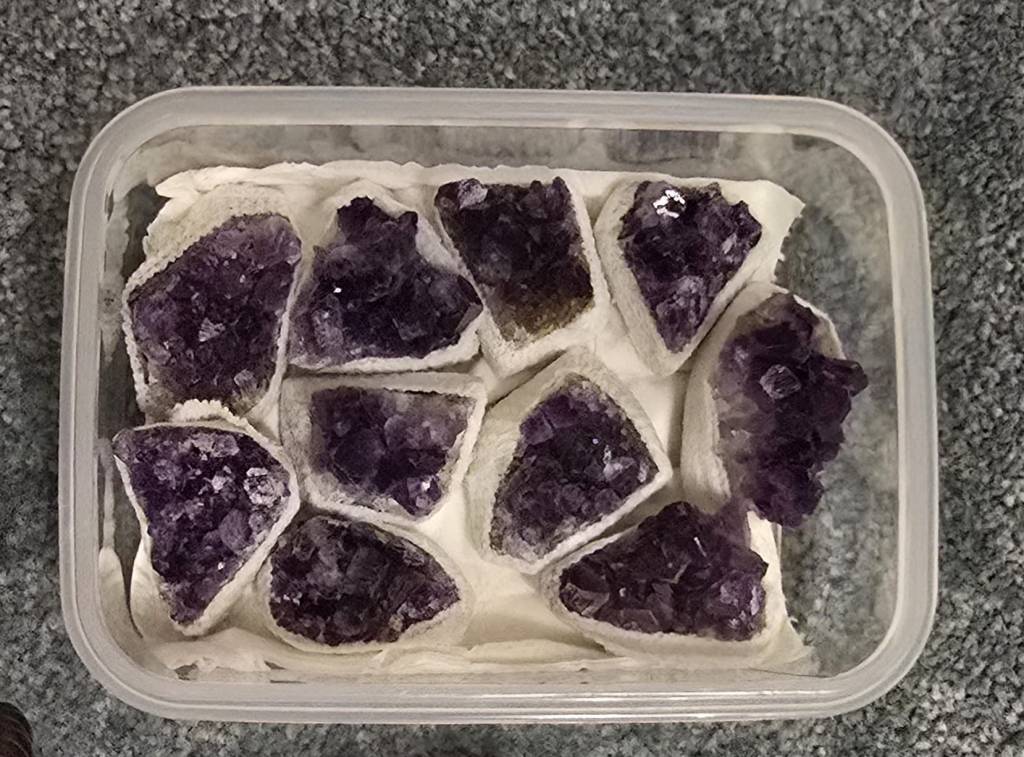
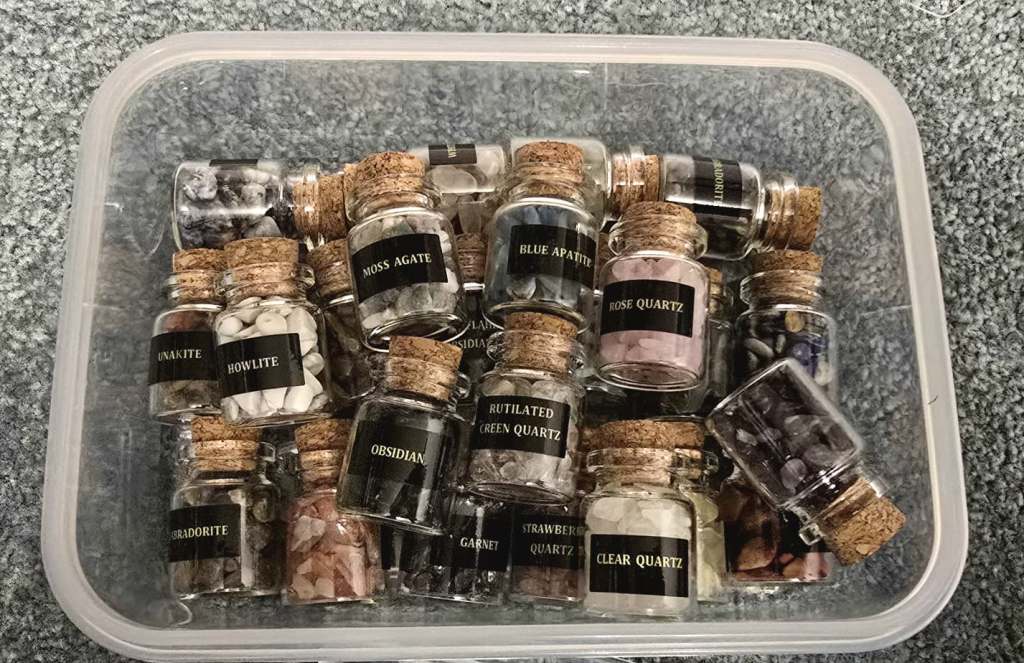
To this, in Lama Zopa’s full traditional list, can also be added: many types of coins, dried flowers, crystals, nine wealth vases (for larger stupas), many kinds of fertile soil, water from melted snow, sea water, fragrant substances, many types of cloth, nuts and dried fruit, honey, many kinds of incense, and “any kind of precious objects, even tiny.”
That last line is one of my favourites in the entire text. Even tiny. Nothing offered with devotion is too small to matter.
The Photos From Inside
After we sent the ingredients to Nalanda, Ven. Gendun blessed them all and placed them inside the stupa beautifully, with the precision and reverence only he carries. And then… he sent us the photos.
So grateful for the photos.
To see the inside of a stupa is so wow. To see all of these substances, these mantras, these tiny precious things, arranged with such love inside the form that will hold them for centuries… I have no other word. Wow.
This is something most practitioners go their whole lives without seeing. And we have it. We have proof of what is inside our stupa, in case anyone, in any future generation, ever wonders.
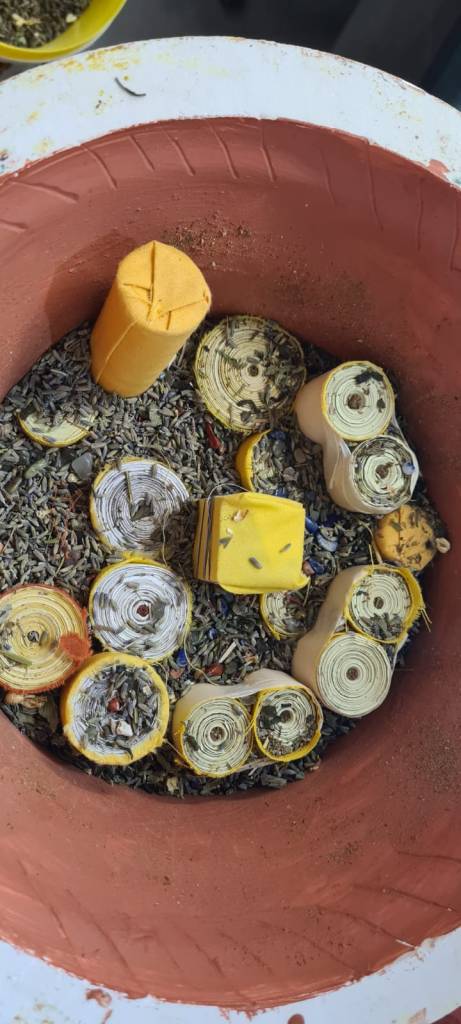
The Throne is Being Built Now
While Ven. Gendun finishes the painting and polishing at Nalanda, here in Bucharest our friends at the cemetery are helping us build the Throne on which the stupa will sit.
The Throne is not just a base. According to the Shälkar Melong, “in the throne, place weapons, clothes, trees, food, and precious things,” and the traditional list is enormous: auspicious signs at the base, Tibetan special substances, Dharma texts and tsa-tsas chosen by a lama, mantras (scented with saffron water, rolled, and covered in yellow cloth), water and earth and stones from special and holy places, many types of coins, many types of metals, dried flowers, fragrant dried herbs, medicinal herbs, crystals, precious stones, fertile soil, water from melted snow, sea water, the remains of the life tree (leaves, branches, wood shavings), fragrant substances, cloth, nuts and dried fruit, honey, incenses, and any precious thing, even tiny.
In other words: the Throne is itself a second body of offering beneath the body of the stupa. It is a whole world of merit underneath, supporting the holy form, feeding its presence into the soil of Bucharest.
We will be filling it with elements lovingly contributed by our Sangha friends, our family, and our community. Every coin, every stone, every herb you offer becomes part of the stupa’s body forever.
What is Coming – The Schedule
This is the moment to mark your calendar… because each of these dates is a once-in-a-lifetime opportunity for merit:
June 13-14: Groundbreaking Ceremony with Geshe Sherab This includes the blessing of the Treasure Vase; the central wealth vase that will sit at the very top of the throne contents, just below the stupa itself. As Rinpoche teaches, “the treasure vase and the substances of the treasure become emptiness… a great treasure vase that grants all wishes.” Being present for this blessing is being present for the moment the wishes inside our future stupa begin to be born.
June – July: Collecting Elements for the Throne This is the moment for every friend of Maitreya, every member of our Sangha, every person who has ever wanted to participate in the creation of a holy object that will stand for two centuries, to bring their offering. A coin. A crystal. A pinch of soil from a place that mattered to you. A pressed flower from your garden. A small fragment of metal. Anything offered with devotion belongs in the Throne.
July: Casting the Foundation and Preparing the Throne The physical work begins. The earth is prepared. The Throne is built.
August 17-20: Assembly, Filling, and Consecration This is the culmination. The Throne is filled and consecrated. The stupa is mounted on the Throne. The Rab Nä consecration ceremony is performed, as taught in the Shälkar Melong, transforming the entire holy object into a living presence of the Buddhas.
After August 20, Bucharest will have a fully consecrated Kadampa stupa, standing in open air, in our cemetery-garden, accessible to anyone, freely, for the next 200 years… and beyond.
And the Small Stupa in the Lantern
That small one will still be there too. On the corner of my Father’s grave. Tiny, faithful, lit by its lantern; the seed from which everything else grew.
Sometimes I think it will be the happiest of all of them when the big one finally arrives. Like a small lamp watching the sun rise.
And my Father, somewhere, smiling.
— Veronica Sonam Drölma

