
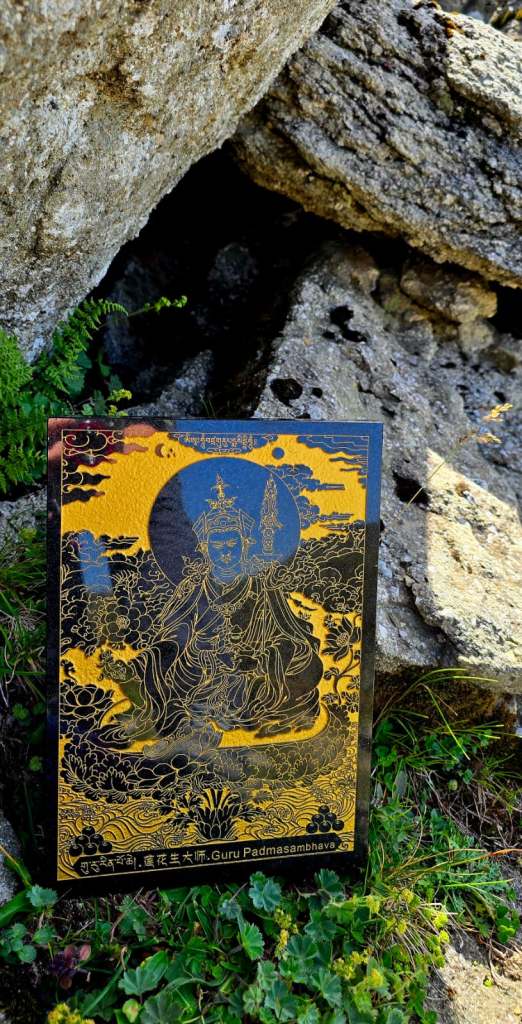
Every plaque begins the same way: as a small (but heavy!) engraved image, carried a long way, waiting for the one crevice in the whole mountain that seems to have been shaped for it. Each one carries the likeness of Padmasambhava, etched in gold on black ganite.
The plaques are not to be left in the open (with some exceptions) where feet and curiosity would disturb them. They are placed deeper in, wedged into fissures that hold them the way a mountain holds anything it intends to keep: quietly, permanently, without announcement. Or in rivers, Or in the ocean. Or buried. The exact places are rarely marked on any map. Some of us simply remember them, the way you remember a face.
Where this devotion comes from
My devotion to Padmasambhava did not arrive as an idea. It grew out of contact, plaque after plaque, mountain after mountain, voyage after voyage, until it became something I carry rather than something I believe. It grew out of the signs that keep appearing whenever I place one: the rainbows in the spray of a waterfall with no rain in sight, the sense of wellbeing that settles over a place once the plaque is fitted into its rock, the good energy that seems to gather there afterward, as though the mountain itself exhaled. My own heart, becoming vast as an ocean.
I cannot always explain these things, and I have stopped needing to. What I can say is that each placement deepens a connection that already runs very deep: to the one who is said to ride the light of the rising and the setting sun, who comes, in the old promise, at dawn and at dusk, for those who hold devotion. Padmasambhava’s activity does not ask for proof. It asks only that the door be left open, and then it walks in on its own.
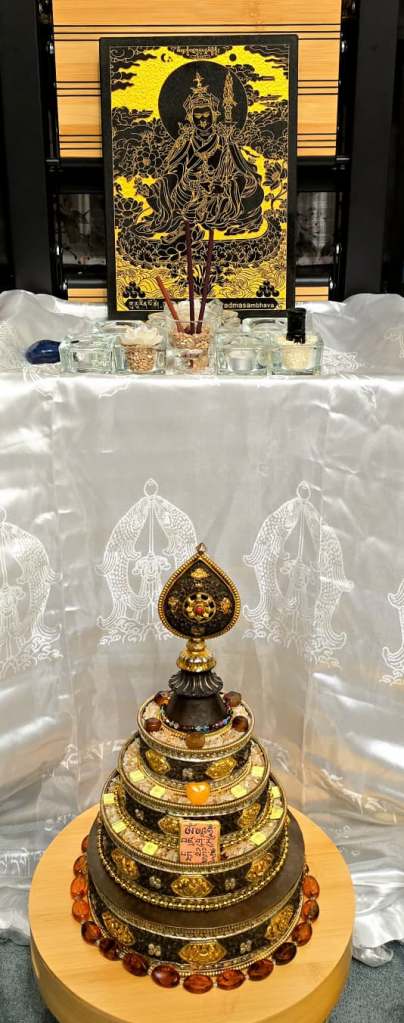
Today’s plaque: a gift from Naomi Norma Levine
This plaque came to me from Naomi Levine, in the UK; I went to her, and received it from her own hands, which felt important, the way it always does when a sacred object passes from one person’s hands to another’s rather than through the post.
But who’s Naomi?
Naomi Levine has traveled through Bhutan, Nepal, Tibet, Sikkim and Ladakh since 1978, and spent five years living at Sherabling Monastery in northwest India. During that time she visited remote, mountain-top monasteries, crossed through Tibet, and studied with Buddhist lamas. She is recognized as an expert on Buddhist sacred objects, and her writing on the subject, first published in 1993, has stood for decades alongside accounts like Andrew Harvey’s A Journey in Ladakh and Peter Matthiessen’s The Snow Leopard: less a travelogue than the record of a spiritual search and what it uncovered along the way. She offered me a book. How fortunate I am!
To receive a plaque of Padmasambhava from someone who has spent a life among these objects, who understands what they hold and why they matter, is its own kind of blessing, before the plaque has even left for the mountain.
Before sunrise, on the train
Placements like this almost always begin before dawn. I took the early train out, and somewhere along the way I turned the camera sideways and filmed the sun lifting off the horizon, a slow lateral climb of light over the hills. I thought, as I often do at that hour, of the lines from the Sampa Lhündrup:
དུས་ངན་སྙིགས་མའི་མཐའ་ལ་ཐུག་པའི་ཚེ༔
dü ngen nyikmé ta la tukpé tsé
Now, when this degenerate dark age reaches its final depths,
ནངས་རེ་དགོངས་རེ་བོད་ཀྱི་དོན་ལ་བྱོན༔
nang ré gong ré bö kyi dön la jön
At dawn and at dusk you come, for those who have devotion,
ཉི་ཟེར་འཆར་སྡུད་མདངས་ལ་བཅིབས་ཏེ་བྱོན༔
nyizer char dü dang la chib té jön
Riding on the rays of the rising and the setting sun,
ཡར་ངོ་ཚེས་བཅུའི་དུས་སུ་དངོས་སུ་བྱོན༔
yarngo tsé chü dü su ngö su jön
And on the tenth day of the waxing moon, you come in person.
There is something exact about watching a sunrise while holding those words: the verse promises that he rides exactly this light, and there I was, riding toward the mountain on a train carrying the very rays the prayer describes.
The climb, ah, the climb!
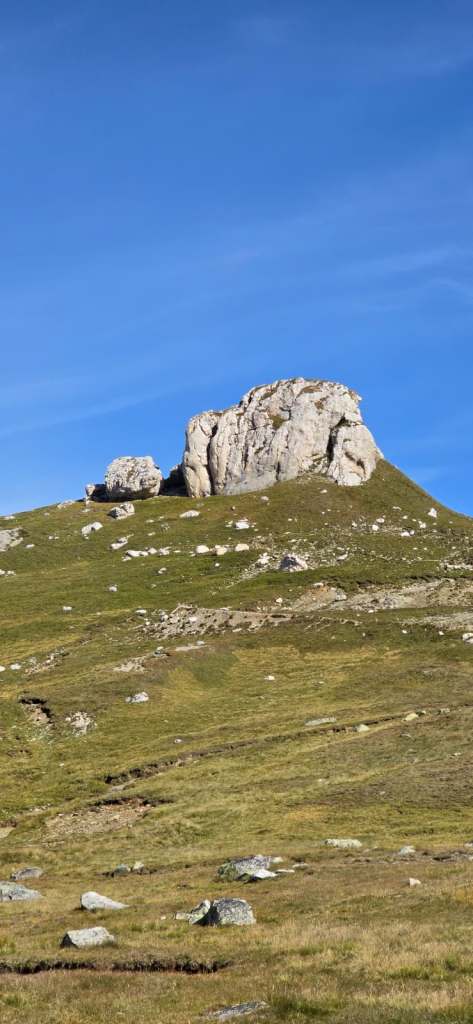
The Bucegi plateau sits high above the Prahova Valley, a broad, wind-scoured tableland of grass and limestone and granite outcrops well above 2,000 meters, crowned by Omu Peak at 2,505 meters, one of the highest points in the Southern Carpathians. I began my trek toward Omu, but I did not want to reach the summit itself; it draws too much foot traffic, too many people passing through in a day, and a plaque needs quiet, not a crowd.
So I turned off the main trek and moved farther out across the plateau, until I found a cluster of rocks with good, deep fissures, the kind a plaque can be pressed into and trusted to stay. I placed it there, at an altitude of 2,328 meters. The exact coordinates I’ll share privately with the project’s managers, as I always do; some things are better held close.
Rest, rainbows, small flowers
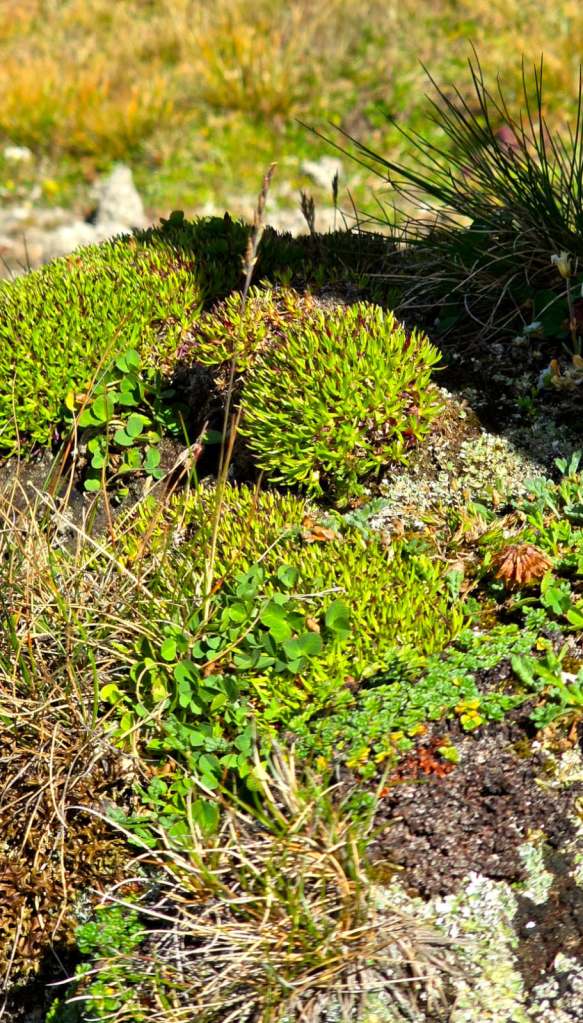
Afterward I sat and rested a while, letting the placement settle the way I do every time. The sun was strong, the light kept breaking into small rainbows across the rock, the way it so often does around these plaques, and tiny alpine flowers pushed up between the stones, indifferent to the altitude. It is a strange, plain kind of joy, sitting on a mountaintop with nothing to do but notice.
The sheep, and a mantra
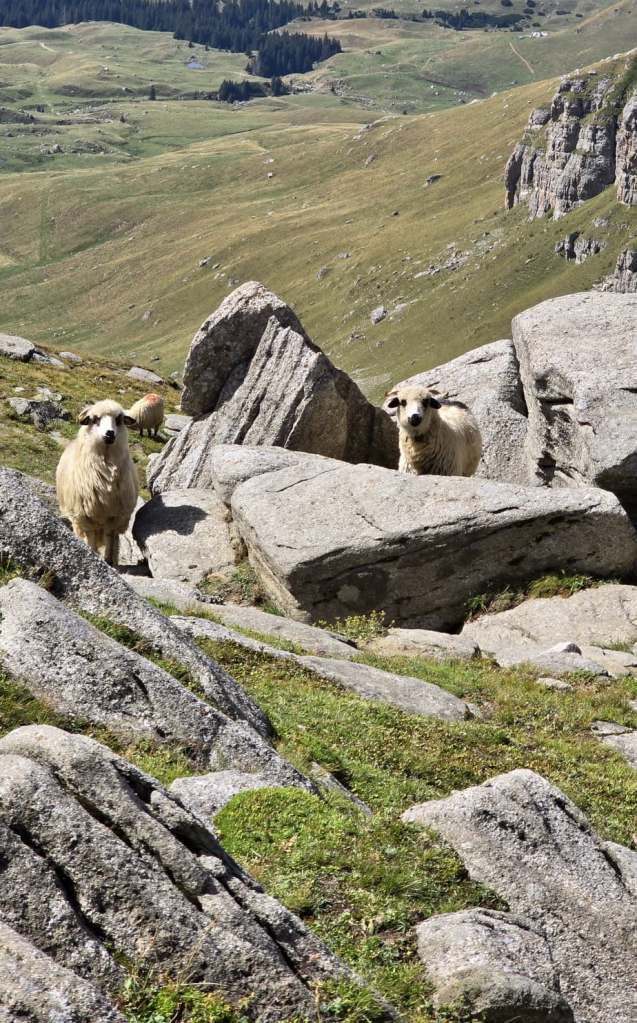
I sang the Medicine Buddha mantra, quietly, mostly for myself, and within a few minutes a large flock of sheep had gathered nearby, watching me with open curiosity, ears forward, utterly astonished. I laughed, and something in my chest loosened; my heart felt more serene than it had all morning. There is a particular… grace in animals choosing to come closer rather than flee.
A dedication
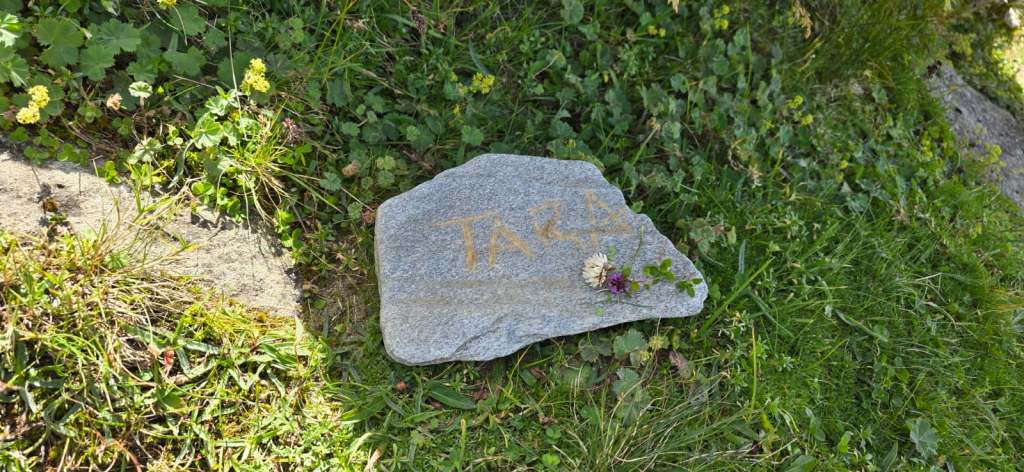
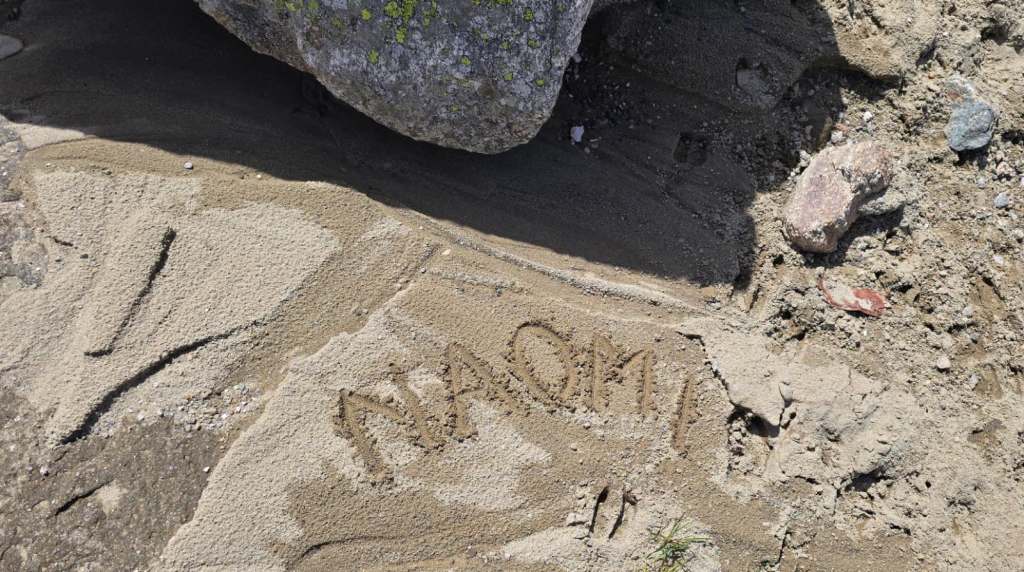
I dedicate the merit of the placement to Naomi Norma Levine, and to her fur baby, Tara, the dog who passed away only a few weeks ago. It feels right.
The stone stupa
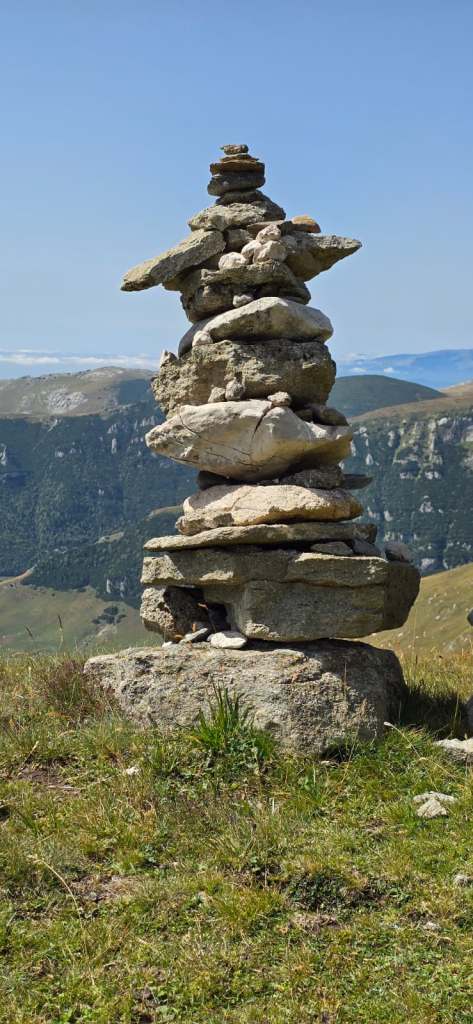
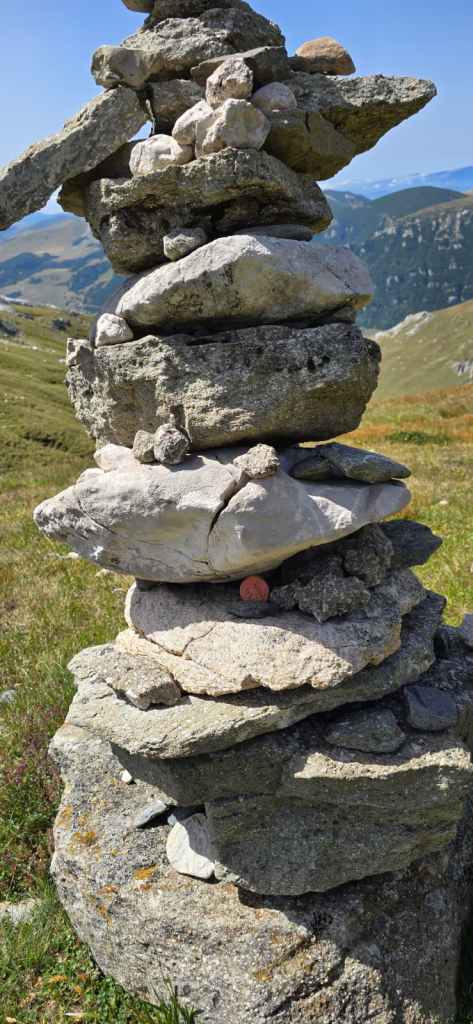
In another corner of the plateau stands a stupa made entirely of stacked rocks, one balanced on the next, no mortar, nothing but patience and an eye for balance holding it together. People do this everywhere, instinctively; I have seen the same clusters of small stone towers at Istituto Lama Tzong Khapa in Italy, and at countless overlooks and passes around the world. I think the gesture is older than any one tradition: stacking stones is a way of marking that a place mattered enough to leave something behind, of turning a passing moment into something that stands after you’ve gone, a small defiance of impermanence built from the most impermanent-seeming material there is. It says, simply, someone was here, and it meant something.
This particular stupa is 170 centimeters tall and genuinely remarkable, an unlikely piece of engineering built by hand and instinct rather than plan. Within it, I placed a small, carefully crafted Padmasambhava tsa tsa of my own, tucking it into the gaps between the larger stones, so that this quiet monument to the impulse to build and remember now also holds a specific blessing inside it.
Descent
Coming down, the cable car swung past Jepii Mici, those vertical, wrathful rock walls that rise straight out of the forest and take lives without discriminating between the careful and the careless. They are magnificent in the way only truly indifferent things can be: the temples of this world that owe nothing to anyone. My only mountains.
I prostrate.
Veronica Sonam Drölma
Garden of Maitreya
Bucharest, Romania

