
Un raport despre Ceremonia de Inaugurare a Pământului Stupei din București – Garden of Maitreya, 14 iunie 2026
În ziua de 14 iunie 2026, sub un cer minunat de iunie, pământul Bucureștiului a primit ceva ce nu mai îmbrățișase niciodată: începutul unei Stupe.
Condusă cu o blândețe și o răbdare minunate de către Geshe Thubten Sherab, Ceremonia de Inaugurare a terenului pe care se va construi Stupa noastră s-a desfășurat în pace și cu deplin succes. Pentru cei prezenți, a fost o ocazie unică… momentul în care un proiect purtat în suflet atâta amar de vreme… a fost așezat, în sfârșit, în pământul de sub picioarele noastre.
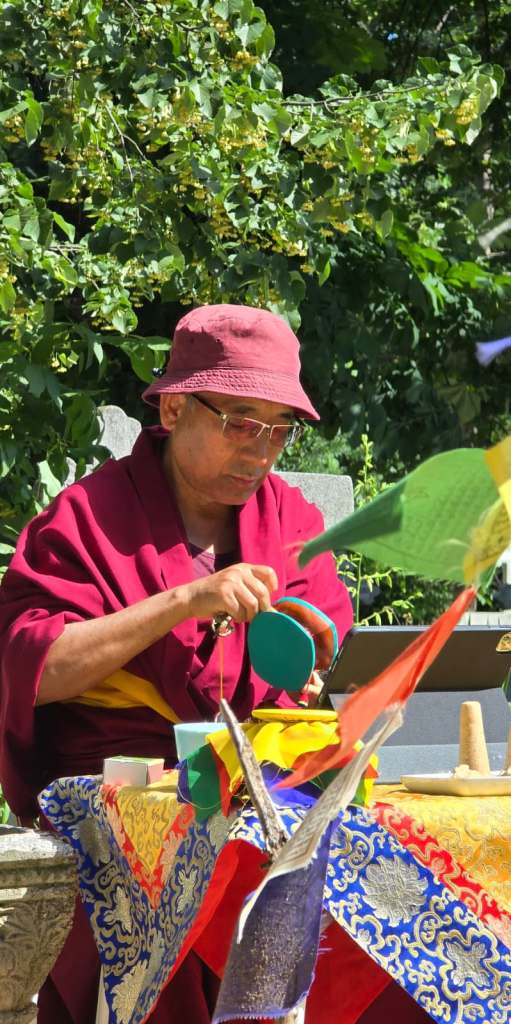
Ce este o Ceremonie de Inaugurare a Pământului?
În tradiția buddhistă, începerea construcției unui obiect sacru nu este, pur și simplu, un moment important al unui proiect. Este o secvență ritualică completă; este un act de devoțiune. Înainte de a mișca o singură piatră, pământul însuși trebuie… consultat.
Tărâmul pe care îl locuim nu este pustiu. Conform înțelegerii buddhiste, fiecare loc este sălaș pentru ființe nevăzute de ochii obișnuiți: nāga, protectori ai pământului, spirite locale al căror tărâm se întretaie cu al nostru. A tulbura pământul înseamnă a acționa din ignoranță; a o face cu ceremonie potrivită înseamnă a invita armonia, a așeza o temelie bună chiar din primul moment al proiectului.
Ceremonia de Inaugurare a Pământului există, astfel, pentru a îndeplini trei lucruri: a cere permisiunea celor care sălășluiesc în pământ; a purifica și a binecuvânta locul, și a stabili fundația spirituală pe care se va înălța Stupa. Totul trebuie făcut cu grijă, pentru că semințele plantate în acele ore reverberează prin întreaga viață a obiectului sacru.
Ceremoniile
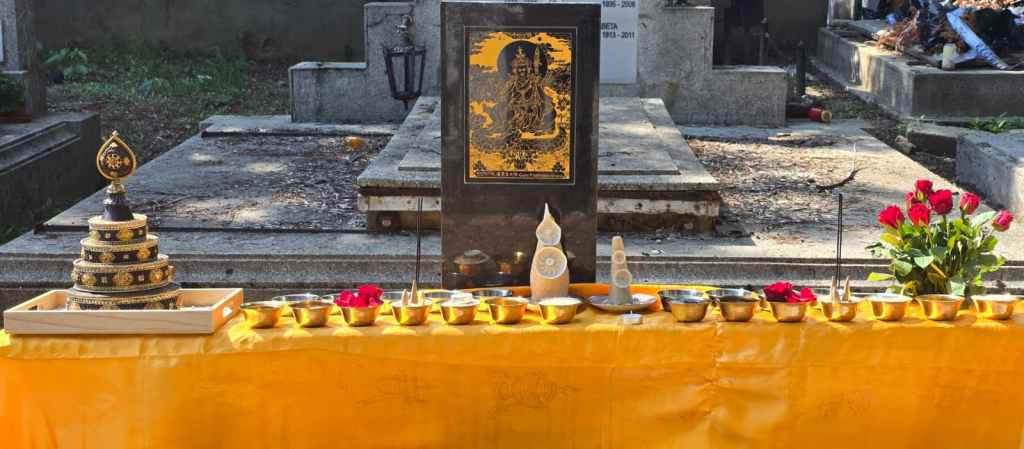
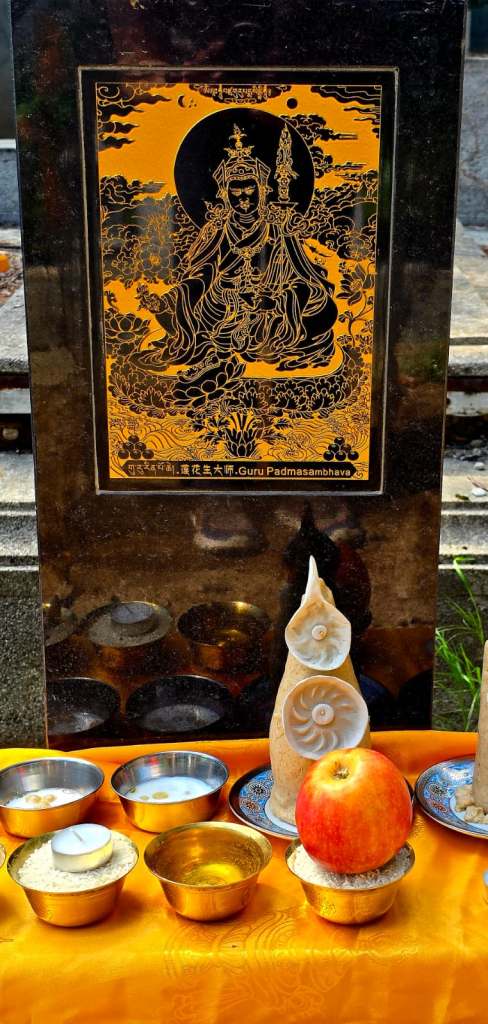
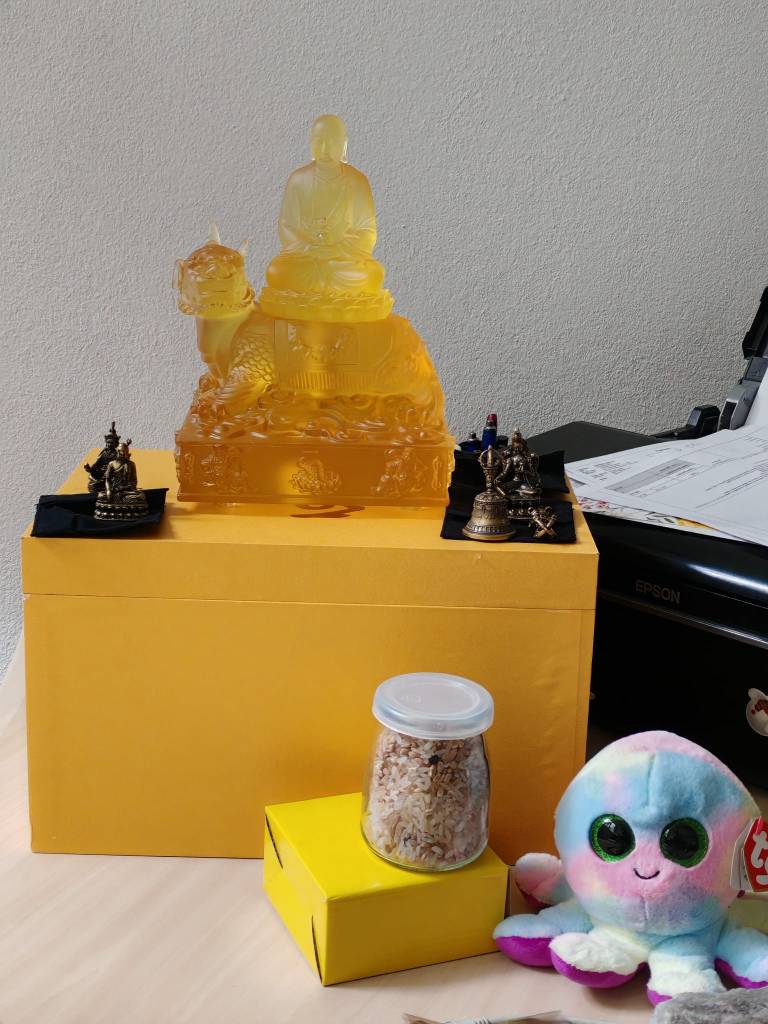
Ofrande înaintea plăcii lui Guru Rinpoche
Ceremoniile s-au deschis cu ofrande puse înaintea plăcii lui Guru Rinpoche – Padmasambhava, marele maestru care a adus Vajrayāna din India în Tibet și ale cărui instrucțiuni privind construirea obiectelor sacre rămân autoritate până în ziua de azi. Guru Rinpoche a fost cel care a dat indicațiileprecise pentru vasele de comori, care a învățat metodele de îmbunare a ființelor pământului, care a expus beneficiile nemăsurate ale ridicării stupelor pentru folosul tuturor ființelor sensibile. Prezența sa, invocată la pragul acestei lucrări, a fost deopotrivă o binecuvântare și o aducere aminte a tradiției în care se înscrie ceremonia. Și pentru mine, prezența sa are o semnificație personală profundă.
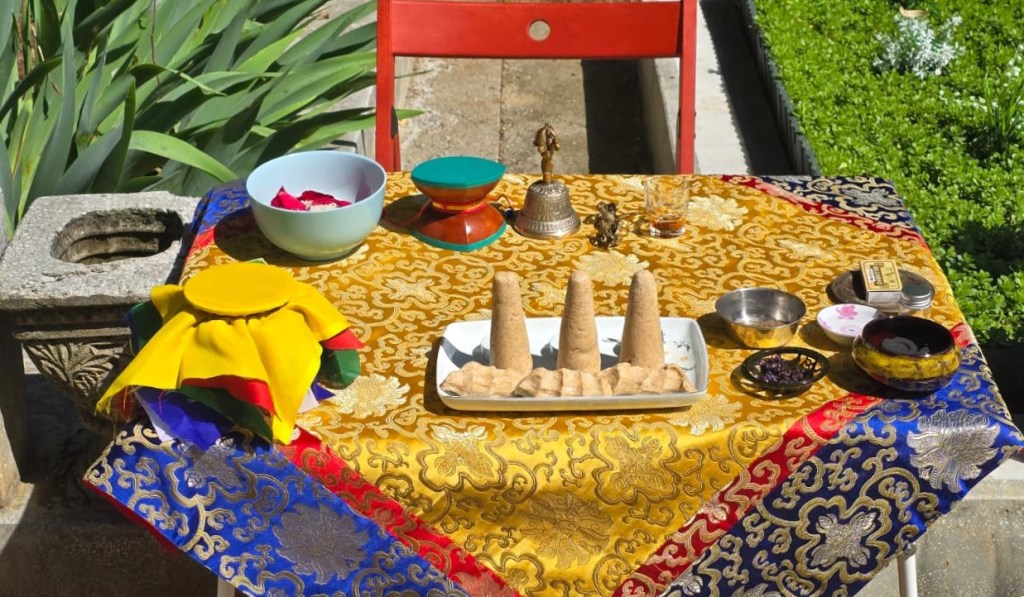
Gektor: izgonirea obstacolelor
Un gektor; torme rituale făcute din tsampa și unt, modelate după specificații precise; acestea au fost oferite ca parte a ceremoniei de îndepărtare a obstacolelor.
Ritualul gektor este străvechi și profund semnificativ: este oferit forțelor perturbatoare, influențelor nefaste și ființelor care altfel ar putea interfera cu puritatea lucrării, rugându-le să se retragă, sau să accepte ofranda și să își retragă opoziția. Este un act de generozitate chiar și față de forțele adverse; obstacolele nu sunt… izgonite, ci abordate; ființele nu sunt… expulzate, ci primesc ceva în schimbul cooperării lor. Pacificate.
Ofrande pentru spiritele locale
Spiritele locale: protectorii pământului și stăpânii acestui colț anume al Bucureștiului; ele sunt ființele al căror tărâm îl pătrundem de fiecare dată când săpăm pământul; permisiunea lor nu este… presupusă, ci trebuie cerută cu respect. Această parte a ceremoniei este,conform tradiției FPMT, esențială pentru succesul și auspiciozitatea întregului demers.
Un proiect început fără această recunoaștere riscă obstacole la fiecare pas următor; un proiect început cu aceste ofrande… intră în lume cu cooperarea lumii nevăzute, nu cu rezistența ei.
Ofrande pentru Nāga
Un set separat de ofrande a fost dedicat nāgașilo – ființele apei, ale pământului și ale tărâmurilor subterane, care au o influență deosebită asupra echilibrului mediului, sănătății și fertilității pământului. Nāgașii sunt sensibili și trebuie doar rar tulburați; sunt, deopotrivă, capabili de o binecuvântare extraordinară atunci când sunt cinstiți cum se cuvine.
În cosmologia buddhistă tibetană, împăcarea nāgașilor nu este periferică unui proiect de construcție; este centrală acestuia, mai cu seamă atunci când pământul va fi deschis și un obiect permanent va fi așezat în el. Ofranda către nāga la Consacrarea Pământului a fost un act de recunoaștere: știm că sunteți aici; venim cu respect; ceea ce construim, construim și pentru folosul vostru.
Stabilirea locului vasului Nāga
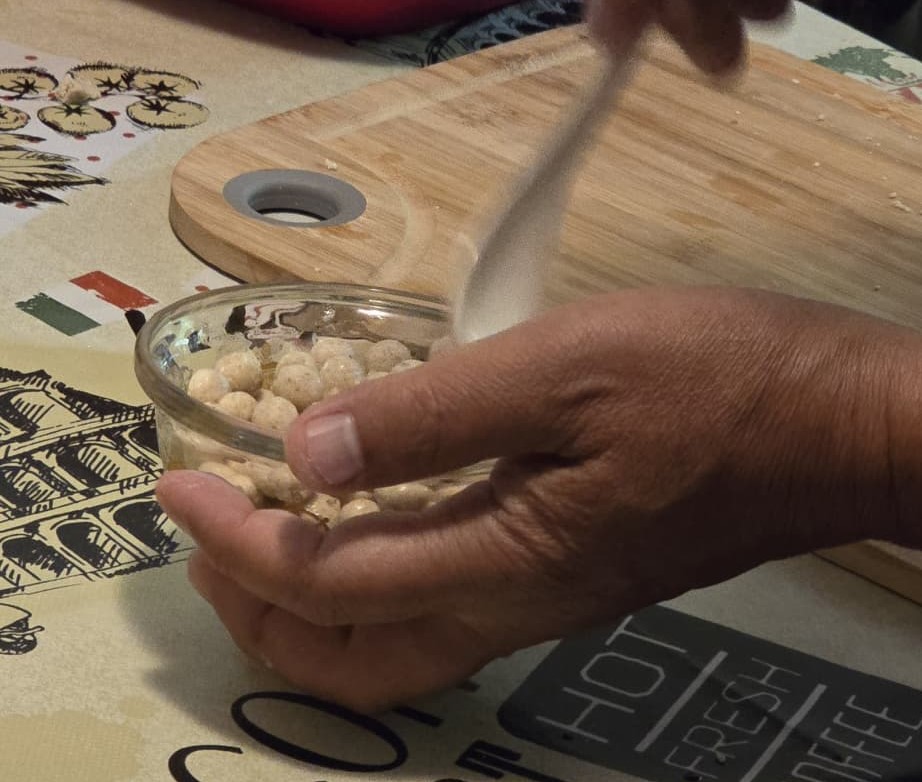
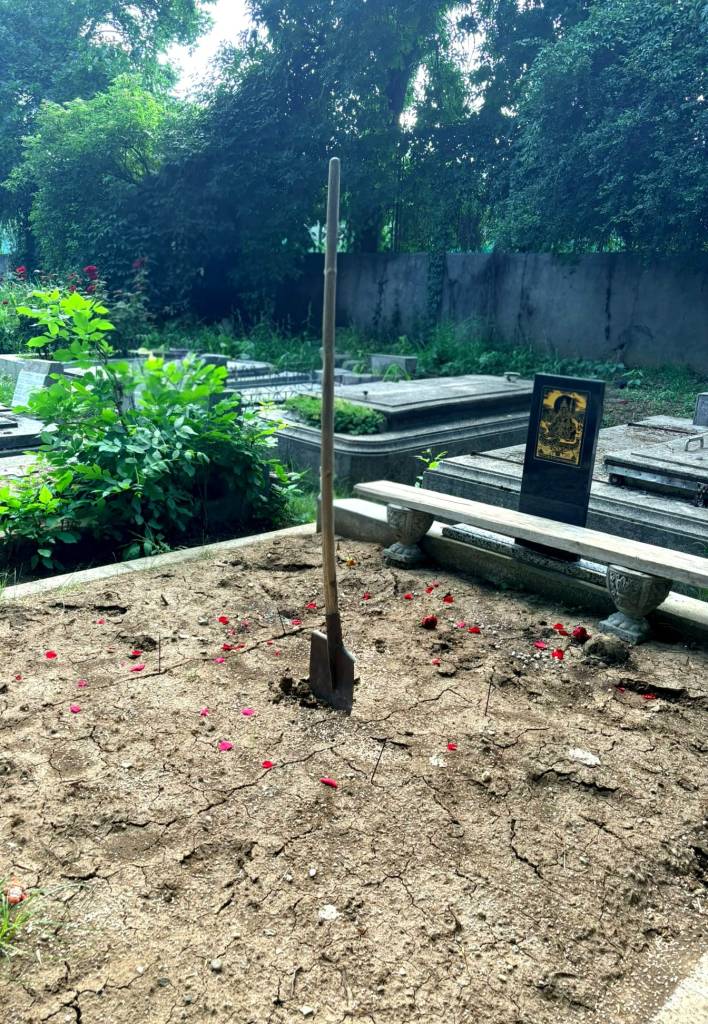
Unul dintre cele mai importante acte rituale ale ceremoniei a fost stabilirea formală a locului exact în care vasul nāga va fi îngropat sub fundația Stupei.
Vasul de comori este o tradiție care se trage direct din instrucțiunile terma ale lui Guru Rinpoche. Un vas pregătit și consacrat conform acestor instrucțiuni, umplut cu substanțe sacre; cristale ce susțin esența vitală a tărâmului Nāga, medicamente prețioase, mantre și materiale consacrate; este îngropat în inima fundației, nu doar ca ofrandă, ci ca obiect viu de binecuvântare continuă. Așezat în pământ, el își răspândește efectele în exterior și în profunzime, armonizând mediul, pacificând dezechilibrele și stabilind relația stupei cu tărâmul de dedesubt. Ne-a fost oferit din Nepal; suntem profund recunoscători binefăcătorului care a dorit să rămână anonim.
Prin marcarea și stabilirea formală a acestui loc în timpul Consacrării Pământului, ceremonia a recunoscut ceva important: stupa nu începe la nivelul solului. Ea începe sub pământ, în întuneric, cu o ofrandă către cei a căror lume nu o vom vedea niciodată.
Prezența lui Geshe Thubten Sherab
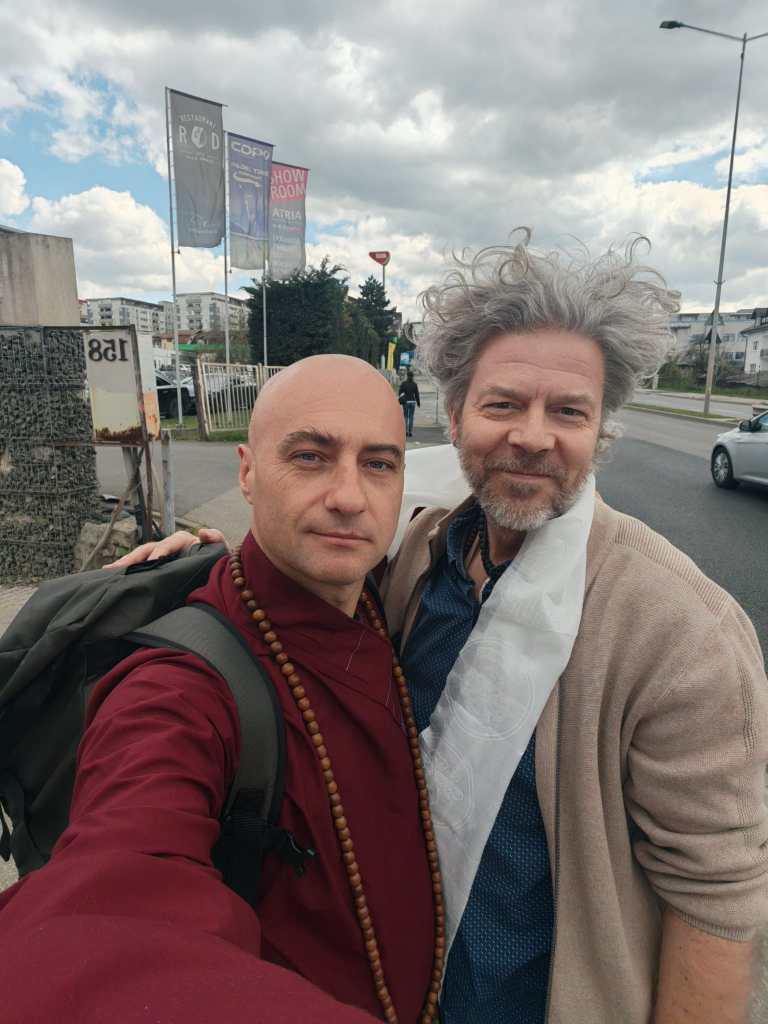
Toate acestea au fost conduse de Geshe Thubten Sherab, a cărui prezență a făcut posibilă ceremonia în sensul ei deplin. În tradiția buddhistă tibetană, un proiect de Stupa necesită implicarea și îndrumarea unui învățător calificat; ritualurile de consacrare și binecuvântare a locului nu pot fi îndeplinite fără autoritatea spirituală și transmisia pe care le poartă un Lama realizat. Geshe-la a condus fiecare element al ceremoniei cu căldură și precizie, asigurându-se că fiecare act a fost îndeplinit… exact așa cum trebuie.
Bunătatea sa a fost ea însăși o învățătură: așa se face lucrarea Dharmei; cu grijă, cu generozitate… fără grabă.
Ce urmează
Ceremonia de Consacrare s-a încheiat. Pământul a fost întrebat; permisiunea a fost dată; lumii nevăzute i-a fost oferit ce i se datora. Locul vasului Nāga este stabilit. Semințele Meritului nemăsurat au fost plantate.
Ce urmează este asamblarea tuturor părților; munca lentă, răbdătoare și plină de bucurie de a construi o stupă pentru orașul București – prima stupă FPMT care se va înălța vreodată în capitala României. Corpul Stupei, deja turnat la Mănăstirea Nalanda de către neprețuitul nostru Profesor, Ven. Tenzin Gendun, a fost deja umplut cu imagini sacre, mantre și relicve conform indicațiilor precise ale lui Lama Zopa Rinpoche, și a fost consacrat; așteaptă să fie expediat, dar și-a început deja lucrarea; lucrarea pe care orice Stupă o îndeplinește prin simplul fapt de a exista: plantând semințele eliberării în mințile tuturor celor care o privesc, o circumambulează, se gândesc la ea, sau pur și simplu trec pe lângă ea.
Așa a învățat Padmasambhava: Toți cei care depun efort cu trupul, cuvântul și mintea lor pentru Stupă vor avea fiecare binecuvântare a trupului, cuvântului și minții sacre a buddhașilor intrând în trupul, cuvântul și mintea lor.
Pământul a fost spart. Să fie toate auspicioase. 🙏
Cu profundă recunoștință față de Geshe Thubten Sherab, față de toți cei care au participat la cele două zile de ceremonie, și față de toți cei a căror generozitate și aspirație fac posibil acest proiect, semnează:
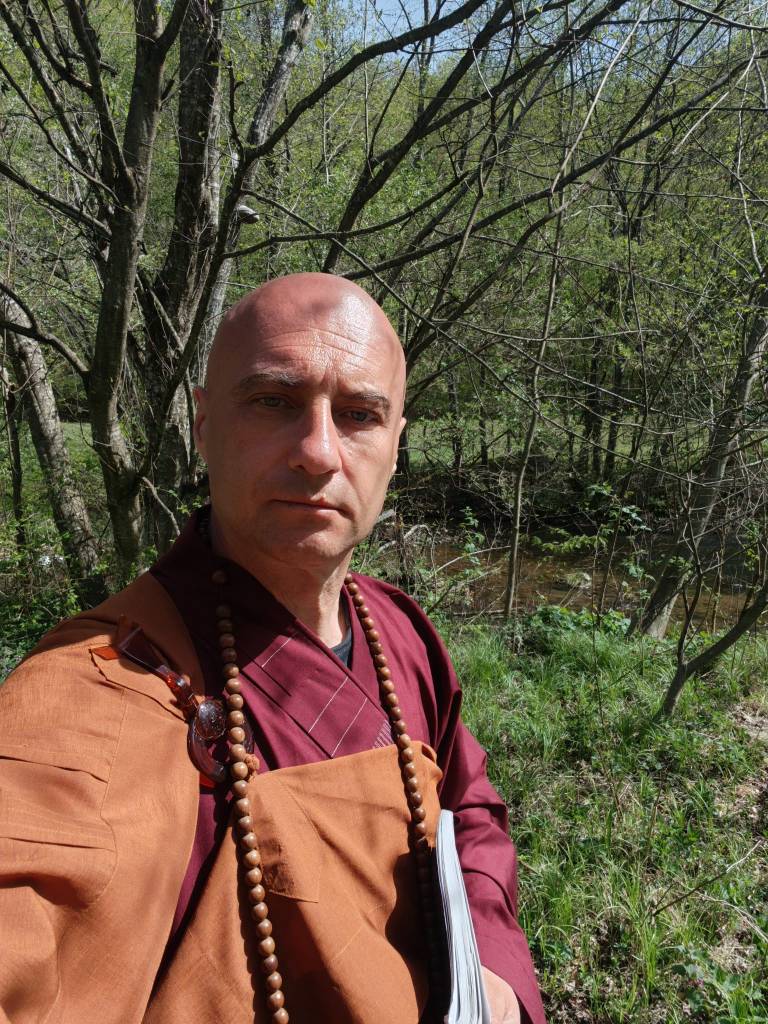
V. A. Sonam Drölma
Garden of Maitreyaa, București
 gardenofmaitreya.com